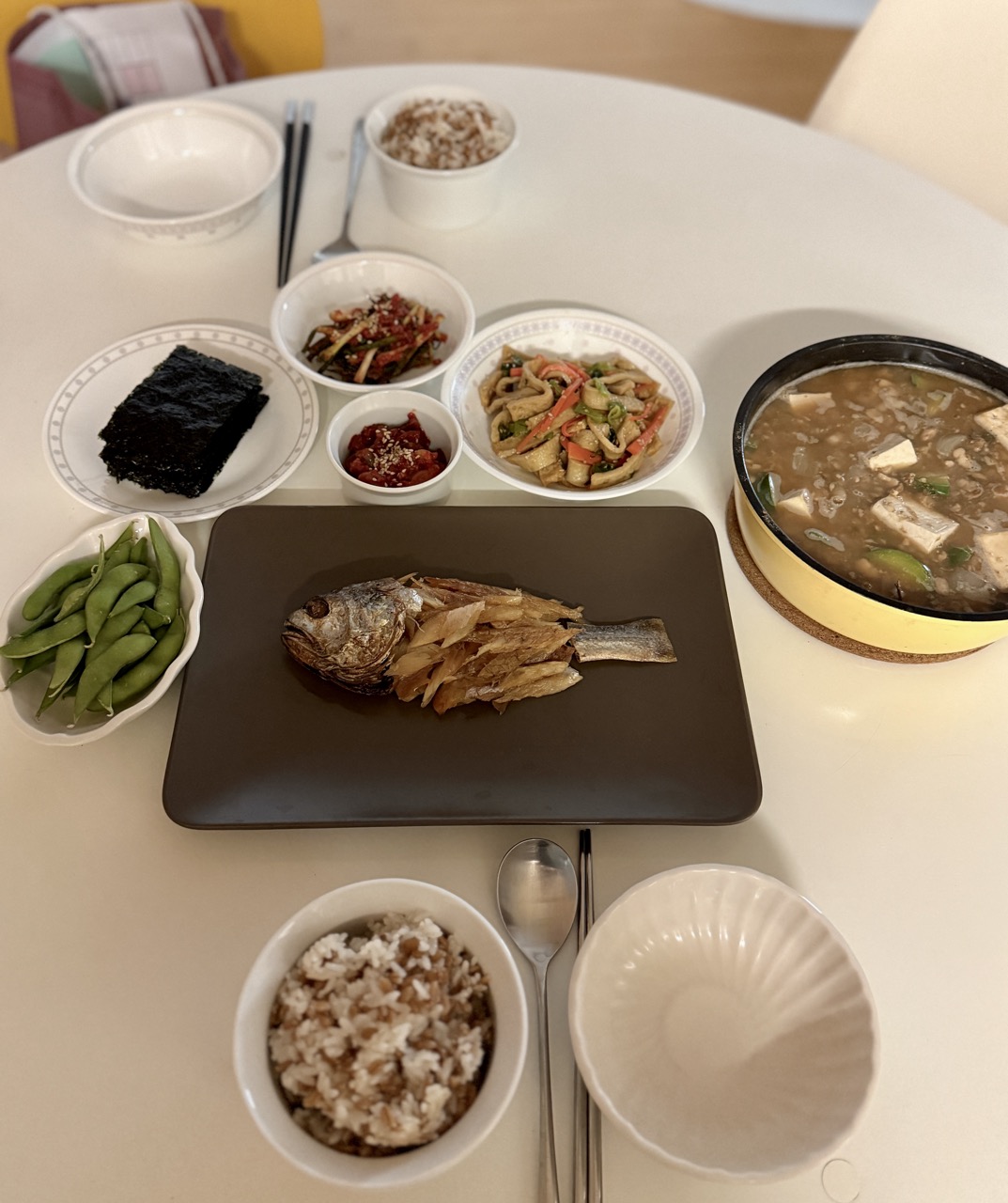
Filling Our Souls at the Weekend(Korean Comfort Food)
During the week, I love exploring the newest and hippest restaurants in Seongsu-dong. But when the weekend rolls around, I truly believe that as Koreans, we need a heart-warming, home-cooked meal to find the energy to survive the upcoming week.
This is exactly why I cook at home on the weekends—to comfort and encourage my family who worked so hard throughout the week.
For my husband, who always craves real Korean home-style dishes like Doenjang-jjigae (soybean paste stew) and Kimchi-jjigae (kimchi stew), these meals are like vitamins that fill his soul.
Today, I’m excited to introduce the home-cooked meals we enjoyed this weekend! The dishes I make are super easy and flexible, so you can easily try them at home without going to a Korean restaurant. You can add or leave out ingredients as you like! If you love Korean food but want to save some money, follow along with these simple, budget-friendly recipes.
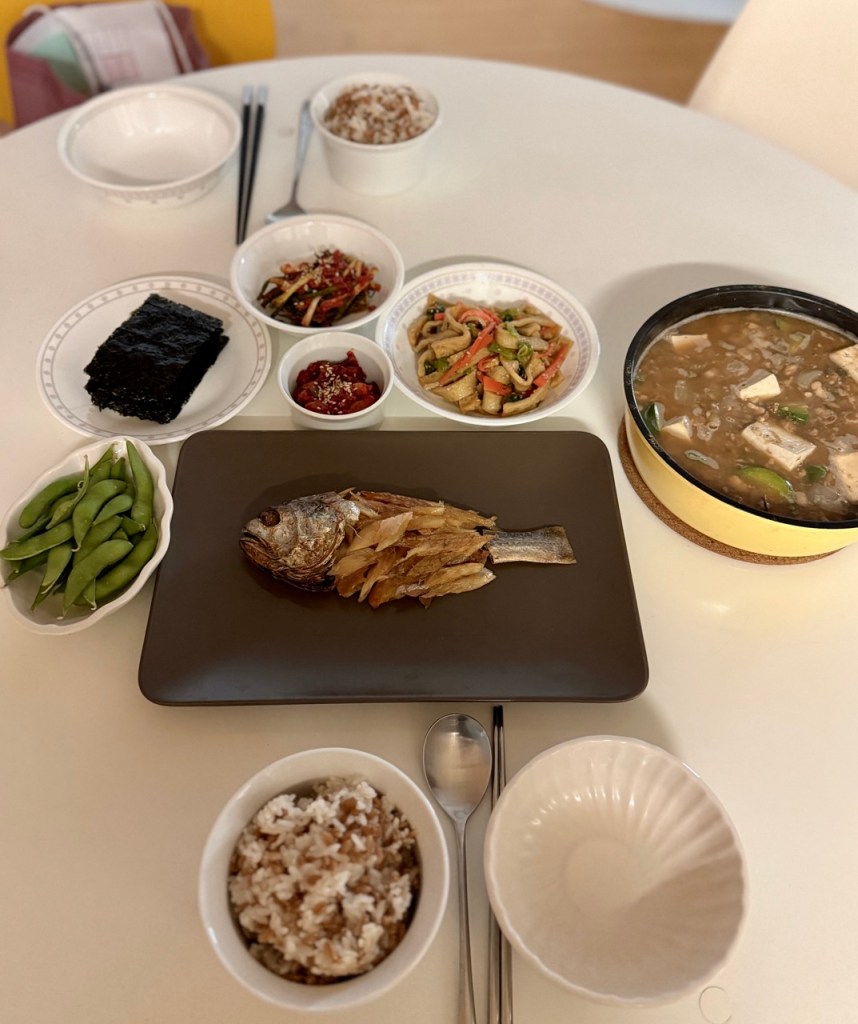
The Ultimate Korean Soul Food Table: Farro Rice and Savory Stew
Here is the lineup for our comforting weekend meal: Freshly cooked rice with ancient grains, rich fermented soybean stew, grilled dried yellow croaker, stir-fried fish cakes, green onion kimchi, and crispy seaweed.
It really is the quintessential, traditional Korean home-cooked meal!
What is Farro?
For health, I always mix white rice with other grains. Today, I added Farro. Farro is an ancient, nutrient-dense grain that has been enjoyed for thousands of years. It has a delightful chewy texture and a nutty flavor, and it’s packed with fiber and protein, making the rice much healthier!

The main dish today was Cheonggukjang. You can think of it as a cousin to the more famous Doenjang-jjigae (soybean paste stew). While Doenjang is aged for months, Cheonggukjang is fermented for just a few days. This creates whole, soft soybeans and a much richer, deeper flavor. It does have a strong, pungent aroma, but once you taste its deep, savory umami, you will fall in love!

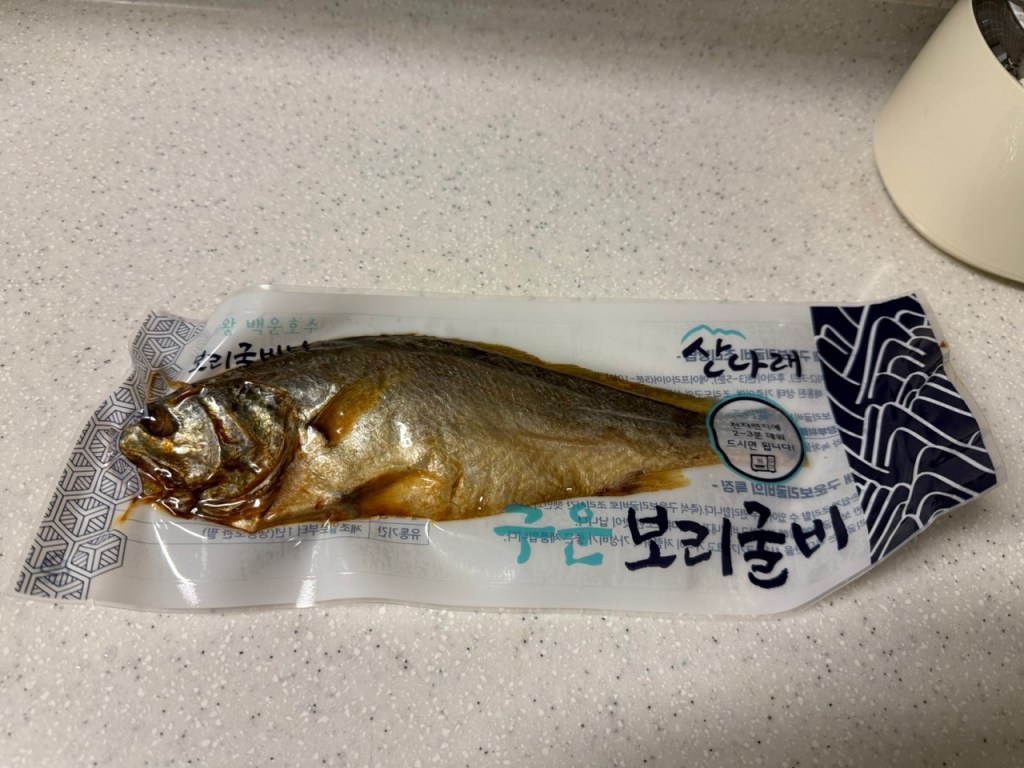
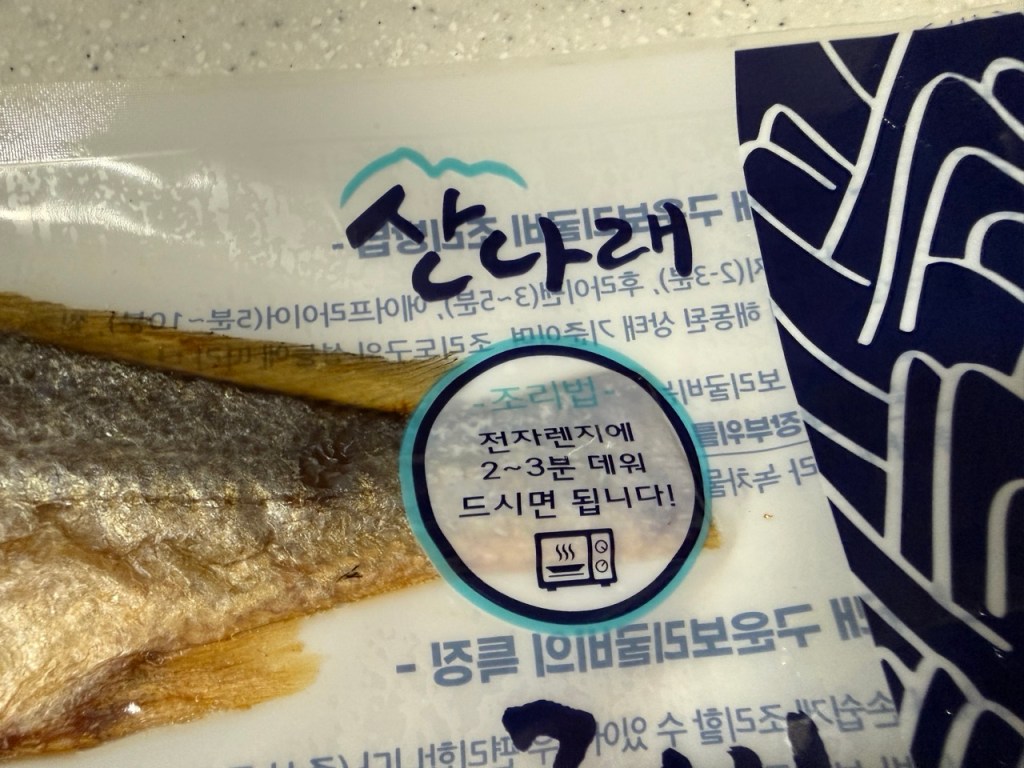
I also served Bori-gulbi (dried yellow croaker). Nowadays, it comes pre-cleaned, so I just popped it in the microwave for 2 minutes! In the hot summer when you lose your appetite, placing this savory fish on top of rice soaked in cold green tea is an absolute game-changer.
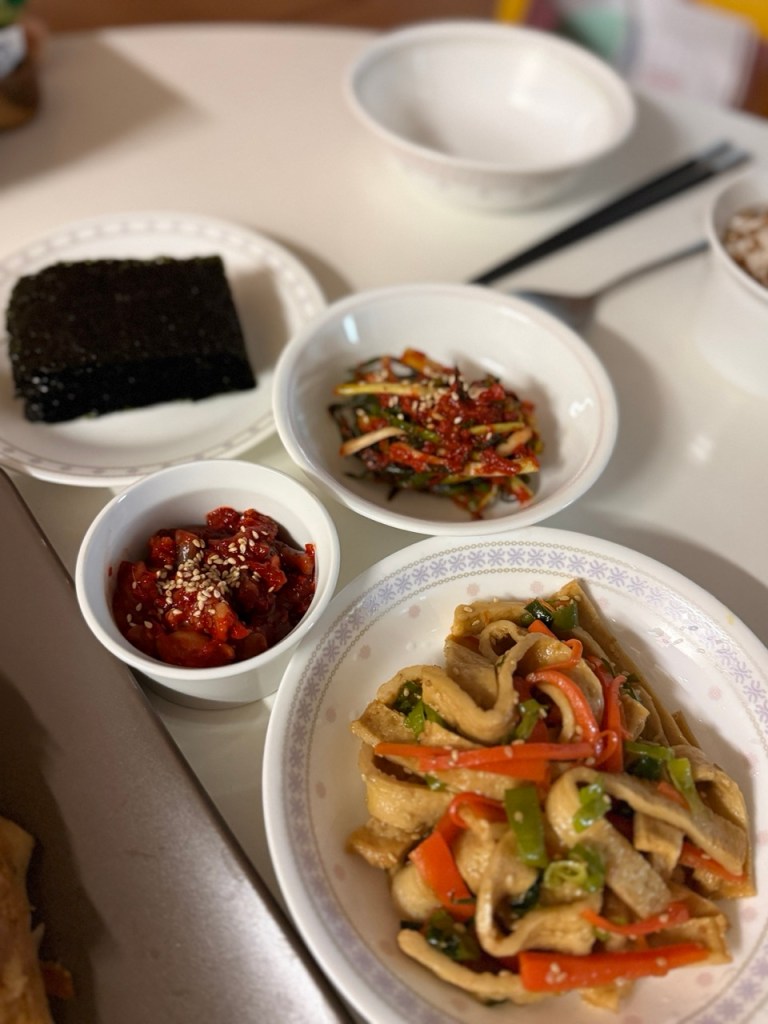
To complete the meal, I quickly made some stir-fried fish cakes (Eomuk-bokkeum) with leftover veggies in soy sauce and sugar, and put out some crispy seasoned seaweed (Gim). And of course, the grand finale was the green onion kimchi (Pa-kimchi) that my mother made for us last week! My son already requested Jjapaghetti (black bean instant noodles) for later because Pa-kimchi and Jjapaghetti are a legendary, heavenly match in Korea!
Ready to cook a warm, comforting Korean meal in your own kitchen? Don’t worry this is super simple and highly customizable!

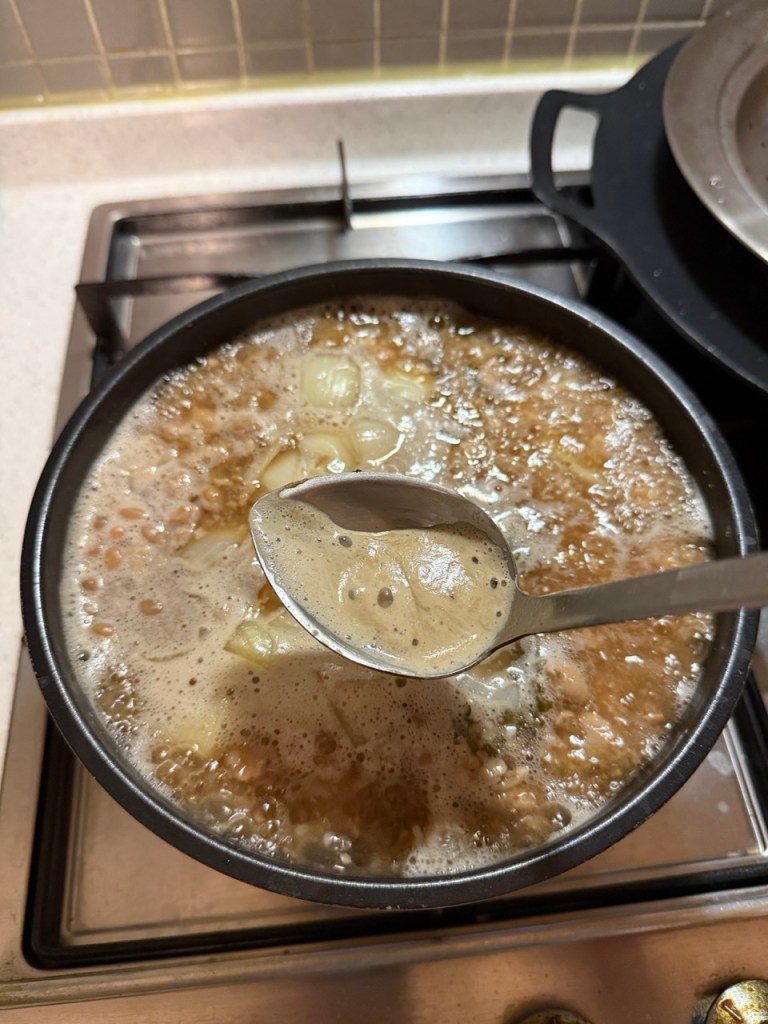
First, let’s get the Cheonggukjang going. Cheonggukjang is just like making Doenjang-jjigae.
I introduced how to make Doenjang-jjigae in my previous post, so please refer back to that! To make Cheonggukjang, all you need to do is buy the fermented soybean paste separately and add it to the base.
To be honest, I’m not entirely sure if you can easily find Cheonggukjang at Korean markets abroad. It’s not as widely available as standard soybean paste. However, if you travel to Korea and see it on a restaurant menu, I highly recommend giving it a try! Yes, the smell can be a bit strong and pungent at first, but the flavor is completely different(like a durian!) —it offers a deep, comforting nuttiness from the whole soybeans that you just can’t get anywhere else.
My Favorite Kitchen Hack for Perfect Stew
When boiling Doenjang or Cheonggukjang, you might notice a lot of foam rising to the top. To get a cleaner, more refined taste, simply skim the foam off with a ladle!
I actually use a special foam-skimming ladle that I bought in Japan, and it is an absolute game-changer. The clever design lets the broth flow back into the pot through tiny holes while trapping only the foam. Japanese kitchen tools really are top-tier when it comes to practical details!
The Secret to a Perfect Meal: Making Bori-Gulbi Easy
I prepared this Bori-gulbi (dried yellow croaker) from a super convenient package that comes pre-cleaned. All you need to do is place it on a microwave-safe dish and pop it in for exactly 2 minutes! It’s incredibly easy, right?
To make it even more comfortable for my family to eat, I took a few minutes to carefully remove all the tiny bones before putting it on the table ^^

5-Minute Stir-Fried Fish Cakes]
Ready for a super quick side dish? Let’s make Eomuk-bokkeum (Stir-fried fish cakes). It’s incredibly easy, budget-friendly, and a staple in every Korean home!
<Ingredients>
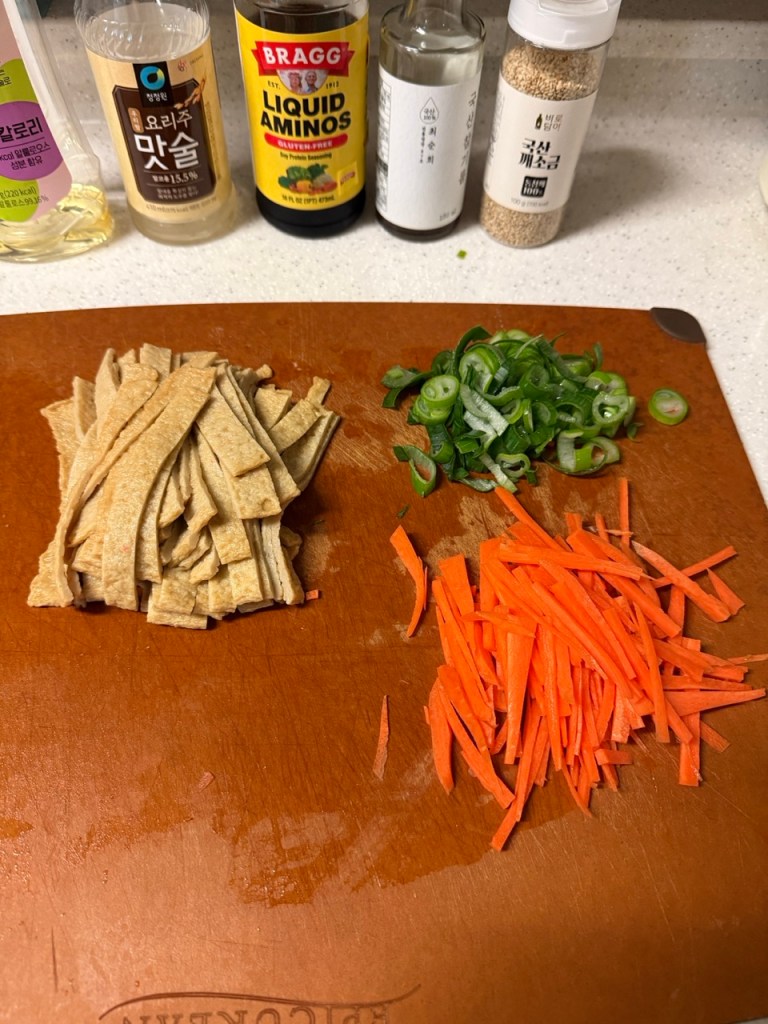
- 1 pack of flat fish cakes (rectangular shape)
- 1/2 onion
- 1/2 carrot
- 1 stalk of green onion
- 2-3 spoons of soy sauce
- 1-2 spoons of sugar
- Sesame oil
- Toasted sesame seeds


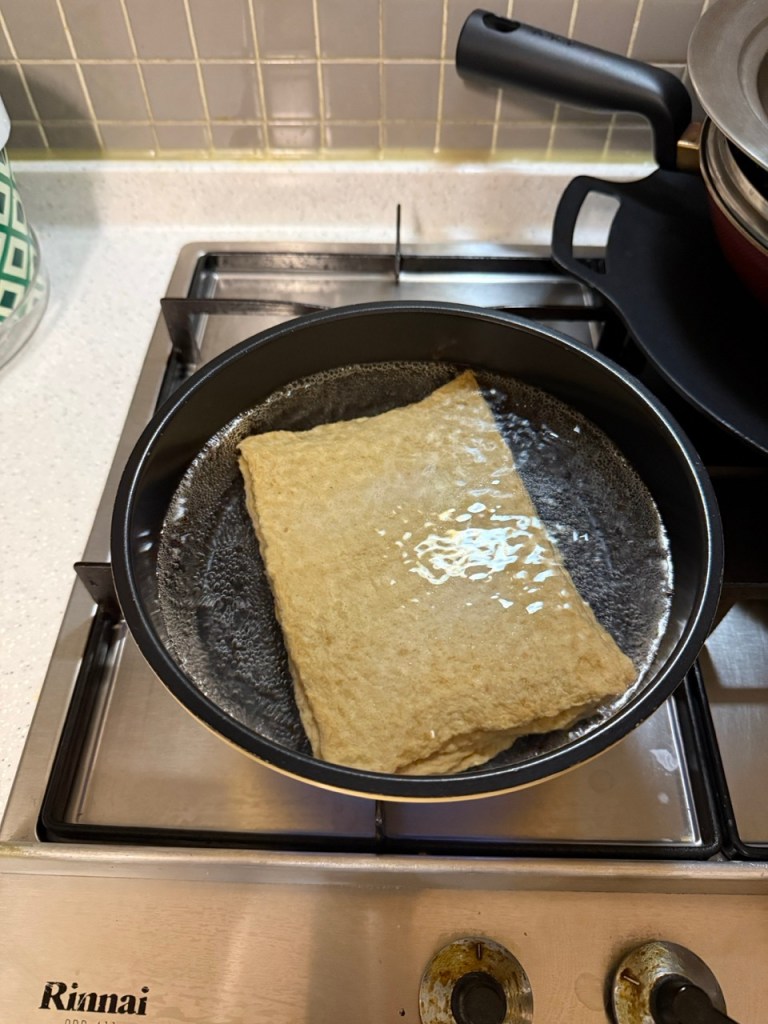
1. Prep the Fish Cakes: To remove any excess oil or impurities, blanch the fish cakes in boiling water for about 1 minute. Drain them and cut them into bite-sized pieces.
2. Chop the Veggies: Slice the onion and carrot into thin strips.
3. Chop the Green Onion: Finely chop the green onion.
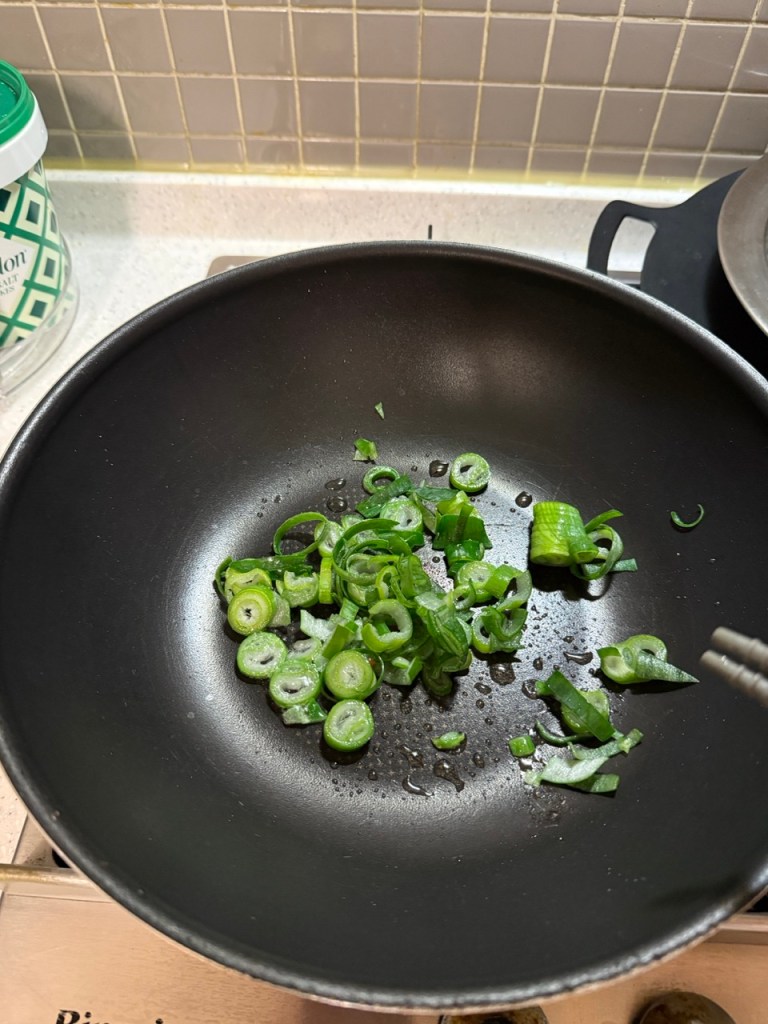
4. Make Scallion Oil: Heat some cooking oil in a frying pan, add the chopped green onions, and stir-fry to create a fragrant scallion oil.
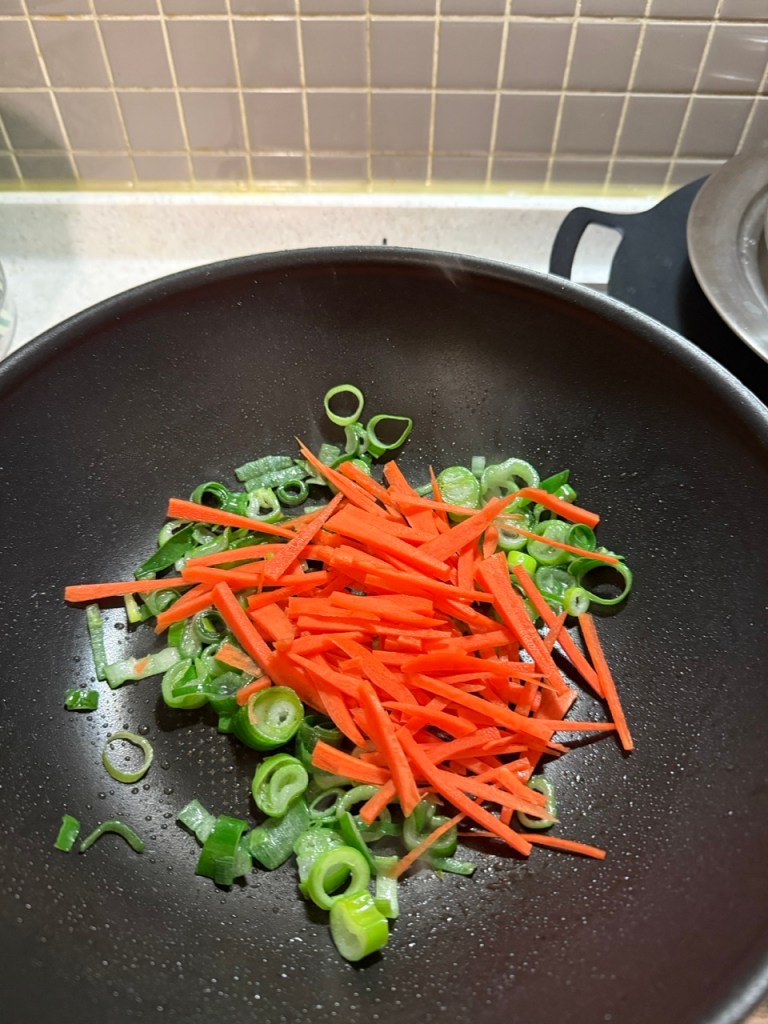
5. Cook the Hard Veggies First: Add the carrots first since they take longer to cook, then toss in the onions and stir-fry together.
6. Add Fish Cakes: Once the veggies are slightly softened, add the cut fish cakes and toss them well to coat with the oil.
7. Soy Sauce Trick: Push the ingredients to one side of the pan. Pour the soy sauce into the empty space and let it bubble for a few seconds to create a rich, smoky flavor. Then, mix everything together!
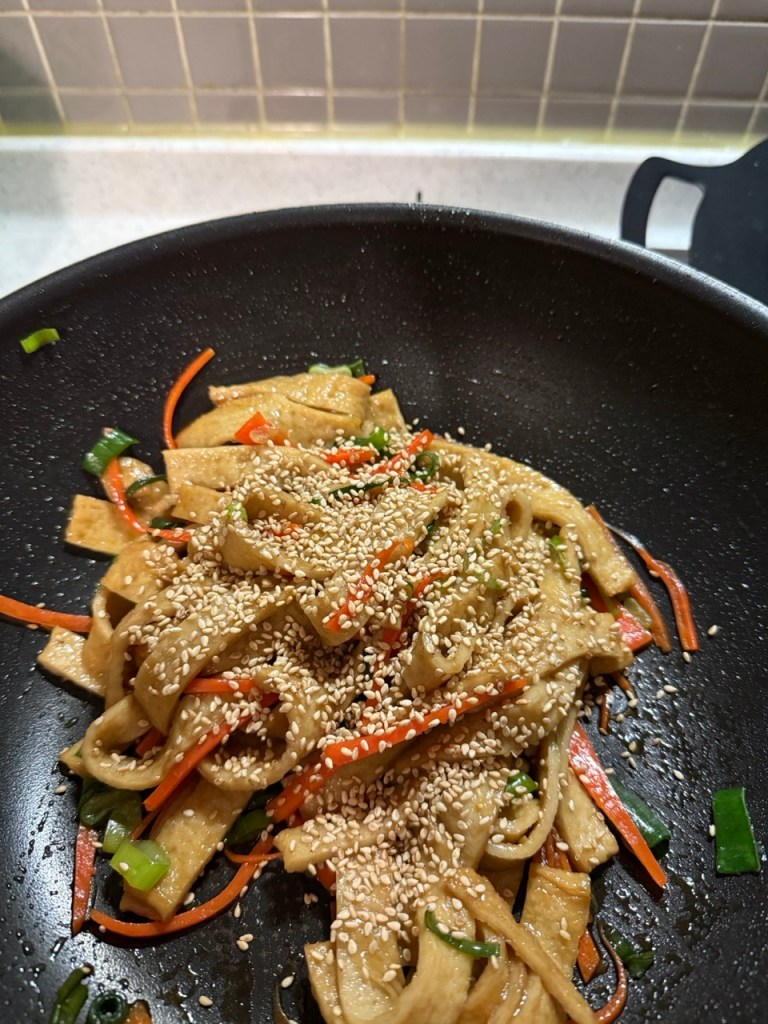
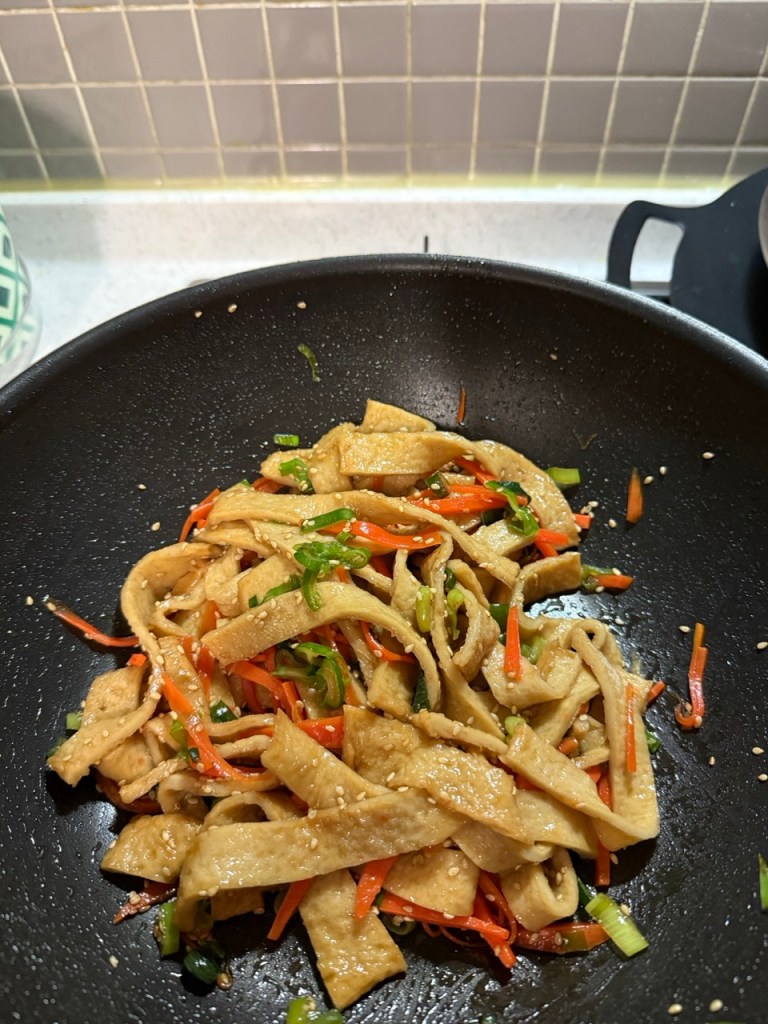
8. The Finish: Add the sugar and stir-fry well. Turn off the heat, drizzle 1-2 spoons of sesame oil, and sprinkle toasted sesame seeds on top. And you’re done!
The Power of Food: Filling Our Hearts and Souls
How did you like today’s traditional Korean table?
While it’s wonderful to prepare a full spread like this, don’t feel pressured if it feels overwhelming! You can absolutely just make one of these dishes and enjoy it with a warm bowl of rice for a perfectly satisfying Korean meal. There is no need to make everything at once! The most delicious and healthy meal is the one that fits your own taste and capacity.
My family shared such a warm, comforting time over this home-cooked weekend meal. I truly believe this is the incredible power of food—to eat heartily and gain the energy to face whatever comes next! I hope you all share delicious food with your loved ones and have an energetic, wonderful day ahead!
Bye for now!
Leave a Reply