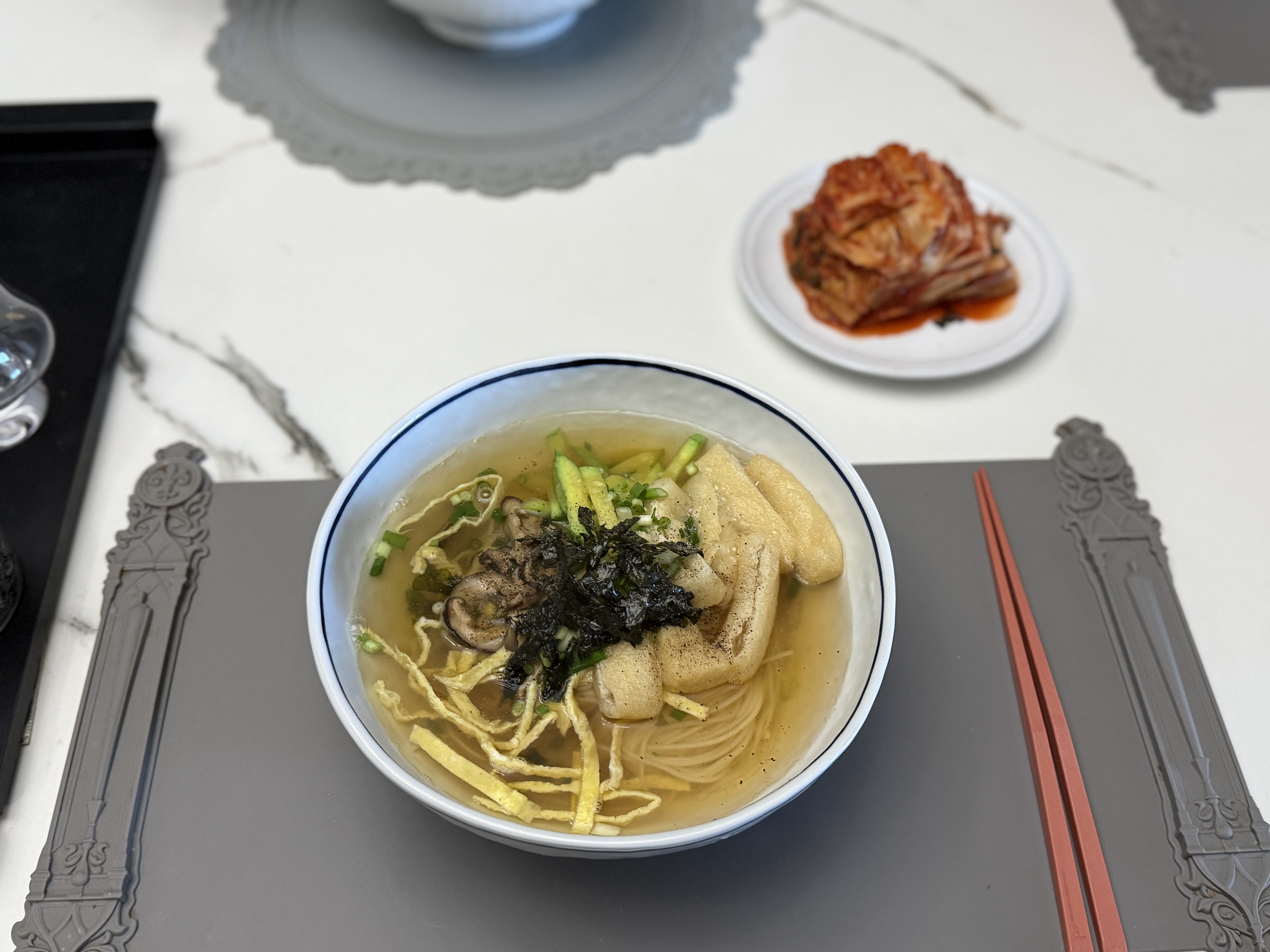

‘Janchi-guksu’ is a comforting, warm noodle dish. It features thin noodles served in a clear, savory broth made from anchovies and dried kelp.(However, I’m going to use convenient broth tablets today^^) Topped with stir-fried zucchini, carrots, shiitake mushrooms, and egg garnishes, it is seasoned to taste and served with a flavorful soy-based seasoning sauce on the side.
<Ingredients to Prepare>
■ Noodles 100g (Somyeon -thin wheat noodles-):One serving of noodles is about the size of a quarter (25-cent coin) in diameter.
■ Broth Tablets :1 broth tablet to 500ml (approx. 2 cups) of water
■ Toppings: Zucchini, carrot, shiitake mushroom, egg
■ Season the broth with soup soy sauce (Guk-ganjang)
■ (optional) Seasoned Seaweed Flakes , Kimchi


- Add 1 broth tablet to 500ml (approx. 2 cups) of water and let it simmer over medium-low heat to prepare your base.
- Bring 1L (approx. 1 quart) of water to a boil and cook the somyeon noodles for 3 minutes and 30 seconds. Once cooked, rinse them thoroughly under cold running water and shake off any excess moisture. (Keep a cup of cold water nearby, as the starchy water can easily boil over. Whenever the bubbles rise too high, pour in a splash of cold water to calm it down.)
- Set the noodles aside for a moment and let them stand by.
- Add the zucchini, carrots, and shiitake mushrooms to the boiling broth. Once the vegetables are tender, gently crack an egg into the pot and stir lightly to let it cook through.
- Taste the broth as you go and add 1/2 to 1 tablespoon of soup soy sauce (Guk-ganjang) to adjust the seasoning. (Since this is the final seasoning, please adjust the amount to your personal taste.)
- To finish, place the prepared noodles into a serving bowl and pour the hot broth over them.
*If you have some seasoned seaweed flakes (Gim-jaban), sprinkle them on top as a garnish. It will make the dish even more delicious! - And finally, the perfect pairing for Janchi-guksu: Kimchi! If you have some, be sure to enjoy it together.

The name “Janchi-guksu” (Feast Noodles) comes from the fact that it was traditionally served at “Janchi,” or celebratory feasts. In the past, wheat flour was considered a precious and rare ingredient in Korea. Because of this, these noodles were a special dish reserved for important occasions like weddings, birthdays, and 60th birthday celebrations.
Additionally, the long shape of the noodles symbolizes “Longevity” (a long and healthy life). At wedding receptions, it is served with the heartfelt wish that the couple’s life together will last just as long and happily.
Janchi-guksu is a wonderful dish that offers both great flavor and a beautiful meaning. It’s actually one of the simpler Korean recipes once you try it, so please give it a go with a light heart!

I just found a photo that suddenly brought back memories, so I wanted to share it with you. It’s a picture of my son when he was little. That day, I had boiled some noodles to make Janchi-guksu, but before I could even put them in the broth, he was already busy stuffing his face with just the plain noodles! Haha. It’s not like I wasn’t feeding him, but even now as a teenager, he still loves eating plain, simple noodles just like that.
I think kids just naturally love all kinds of noodles—spaghetti, ramen, guksu, you name it. Maybe it’s the fun of slurping them up? Anyway, for me, Janchi-guksu is a dish that comes with these precious memories.
And I can’t leave out my grandfather! My maternal grandfather absolutely loved noodles. (I think it’s in the genes because my mom is a huge noodle lover too. She might not eat much of other foods, but she always finishes two servings when it comes to noodles!) Whether it was Janchi-guksu, Bibim-guksu (spicy noodles), Kal-guksu (hand-cut noodles), or ramen—he loved anything made with noodles.
That’s why every time my mom makes Janchi-guksu, she always says, “My father really used to love noodles so much.” Just as my mom thinks of her father whenever she sees noodles, I think I will also remember my mom through this dish in the future.
A simple bowl of noodles might just be a meal to some, but to me, it’s a bowl full of my grandfather’s smile, my mother’s longing, and my son’s playful childhood. It’s amazing how a single dish can carry the weight of three generations and hold so many different stories.
The steam rising from the warm broth feels like a warm hug from the past. I hope that one day, when my son makes Janchi-guksu for his own family, he’ll look back on these days and smile, just as I do now.
What about you? Is there a dish that tastes like a specific memory or a person you miss? Please share your stories in the comments—I’d love to hear them!
Until next time, stay warm and eat well.
Best,
MJay from Korea
Leave a Reply