
So far, I’ve shared some glimpses of everyday Korean home-cooked meals and a few of my favorite restaurants, but I realized I haven’t really talked about where we go to grab a drink!
To be honest, I’m a big fan of social gatherings. I love catching up with friends and colleagues over a glass or two.
I think you’ll find the Korean drinking culture quite interesting because it’s a bit different from other places. I actually lived in London for a year when I was about 22. Back then, hanging out at a pub was mostly about the drinks—just enjoying a pint or two with friends. Maybe it’s because I was young, but the vibe felt so different from what I’m used to here in Korea.
In Korea, it’s all about the food! We usually have plenty of hearty dishes, which we call “Anju,” that basically double as a full meal while we drink. Well, at least that’s how it is for me! haha
Recently, I went to a pretty unique place with my friends. It was a spot with an “Emokase” concept!
What is Emokase?
You might be wondering, what on earth is Emokase? The word is a fun combination of “Emo,” which means “aunt” (a friendly way to address middle-aged women in Korea), and “Omakase,” the Japanese term where you leave the menu entirely up to the chef.
So, in an Emokase setting, you don’t really look at a menu. Instead, the “Emo” (the owner) serves a continuous stream of her best dishes based on the freshest ingredients of the day. It feels less like a formal restaurant and more like visiting a relative’s house where she just keeps bringing out delicious food until you’re completely full!
The Perfect Harmony of Food and Drinks
Recently, a senior colleague of mine invited us out, saying they wanted to treat us to a meal at this specific spot.

The price was 50,000 KRW per person, which is roughly $38 USD. As soon as we sat down, I was so excited to see what kind of Anju courses would be served for that price.
Get ready, because I’m about to show you the unbelievable amount of food we devoured. You might find yourself wondering, “How can Koreans eat this much?” haha.

The first dishes to hit the table were Cockle Bibimbap (Kkomak–bibimbap) and White Ground Soybean Stew (Kongbiji–jjigae).
The Cockle Bibimbap was packed with fresh, chewy cockles seasoned in a savory and slightly spicy sauce, all mixed with rice. It was the perfect way to start the meal and line our stomachs before the drinks really started flowing.
Alongside it, we had the White Ground Soybean Stew. This stew is made from finely ground soybeans, giving it a creamy, grainy texture that’s incredibly comforting. It has a mild, nutty flavor that really balances out the bolder tastes of the other dishes. Honestly, it felt like a warm hug for my stomach!
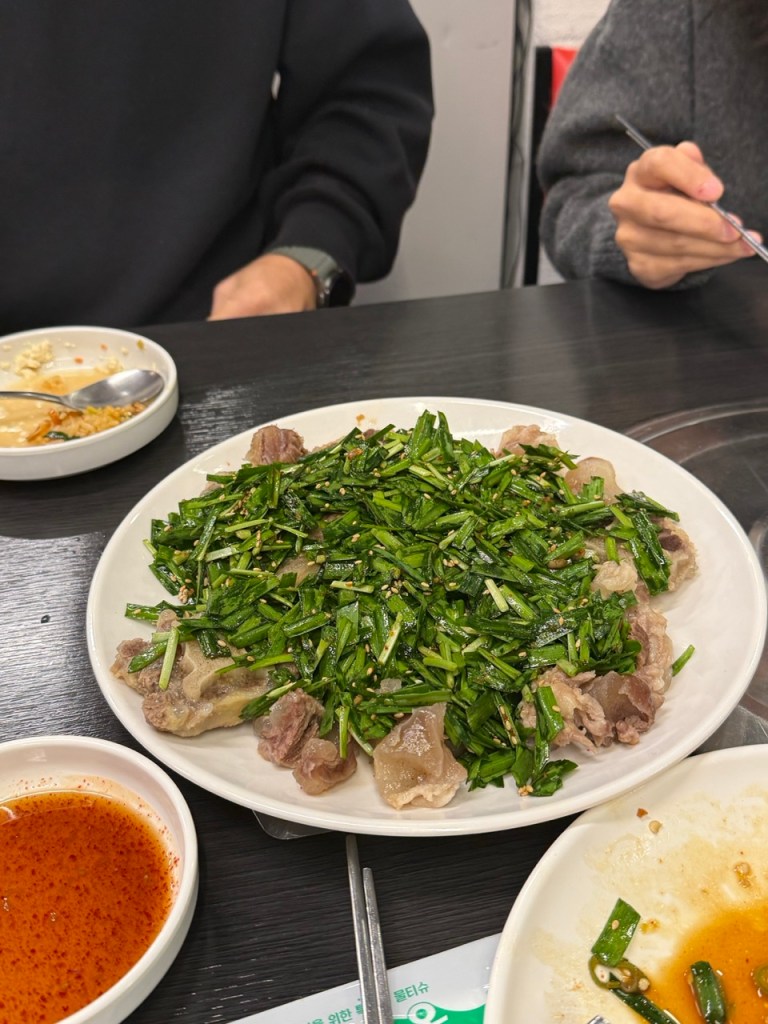
Next up were Braised Ox Tail and Beef Tendon (Sujji–jjim).
The ox tail was incredibly tender, literally falling off the bone with every bite. Together with the beef tendon, which has a wonderful chewy and gelatinous texture, it felt like a boost of pure collagen!
I think these ingredients might be a bit unfamiliar to many of you. To be honest, they are actually quite pricey, so it’s not something I get to eat every day either!
It’s the kind of comfort food that makes you feel like you’re fueling up while you enjoy your glass. If you’ve never tried beef tendon before, the unique texture might surprise you, but it’s definitely a favorite among Korean foodies.

Next up was Bossam, which is the same boiled pork dish I showed you recently when I introduced some great restaurants near the SM Entertainment headquarters.
In case you missed it, Bossam consists of thick slices of pork belly that have been boiled in a flavorful broth until they are incredibly tender. You usually wrap the meat in a fresh cabbage leaf with some spicy radish salad and salted shrimp. It’s a classic Korean comfort food and one of the most beloved “Anju” dishes because it’s so satisfying without feeling too heavy.
We are nowhere near the end of this Emokase yet!
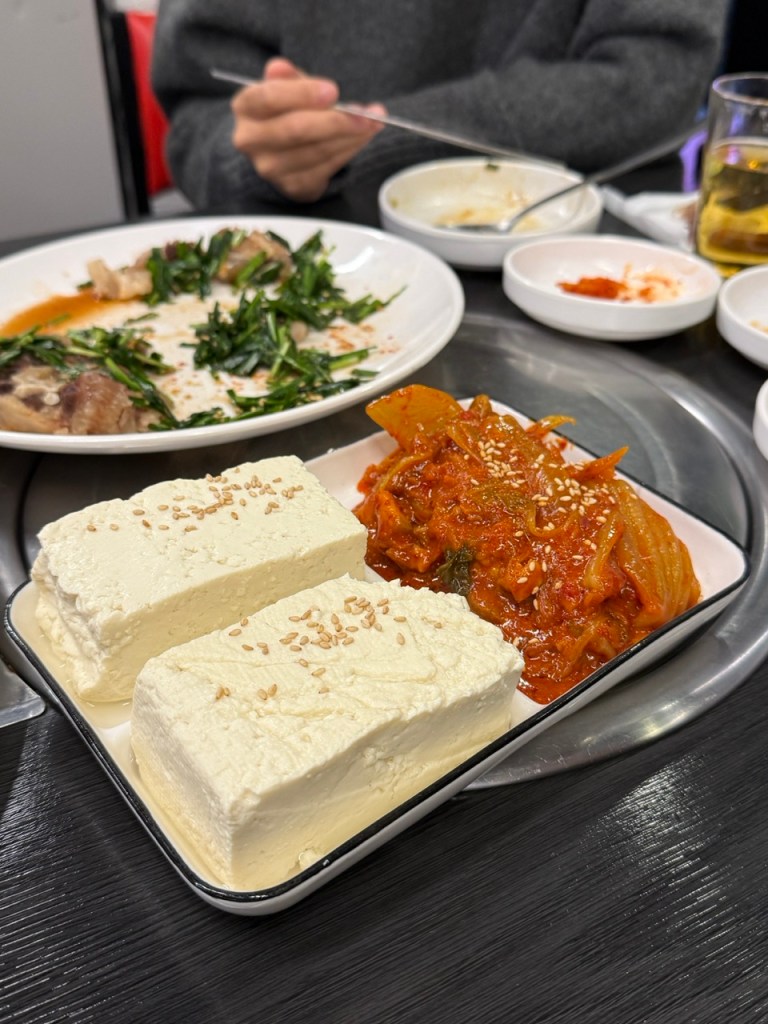
The protein parade continued! This time, it was Tofu Kimchi (Dubu–kimchi).
This dish features warm, blanched tofu served with kimchi that has been lightly sautéed in oil. It is a legendary Anju that is famously known for being the perfect match for Makgeolli (Korean rice wine).
Although we were drinking Soju that day, just looking at the Tofu Kimchi made me automatically crave a bowl of sweet Makgeolli!
We are now moving on to the carbohydrate stage! (And trust me, everyone, we still have a long way to go!)
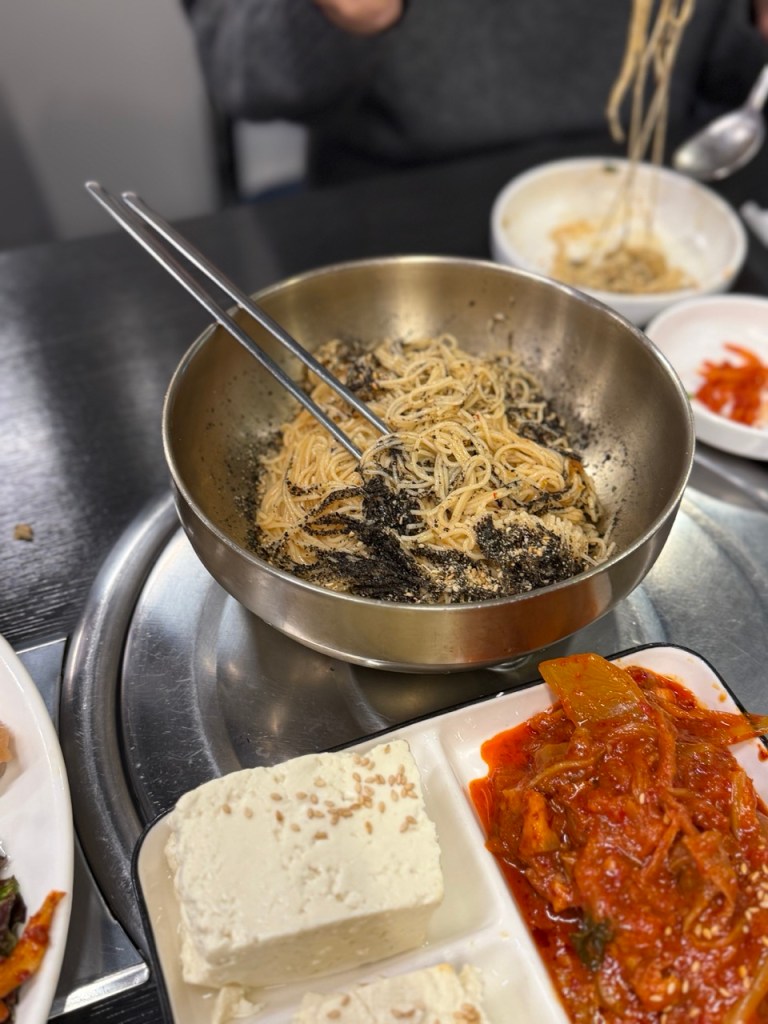
Next up was Perilla Oil Noodles (Deulgireum–guksu).
These noodles are tossed in a generous amount of toasted perilla oil, giving them an incredibly nutty and rich aroma that hits you the moment the dish arrives. It’s a very simple yet sophisticated dish, usually topped with some crushed seaweed and toasted sesame seeds to add even more depth to the flavor.
It’s the kind of dish that makes you realize how amazing simple ingredients can be when they are high quality!
In Korea, it’s a classic move to transition from heavy protein dishes to some hearty carbs to really round out the meal. Just when you think you might be full, these comforting flavors find a way to make you hungry all over again.

Next, we were served Galbitang (Short Rib Soup) to warm our stomachs and give us a little breather.
On other days, I’ve heard they sometimes serve spicy stews, but since the menu entirely depends on the owner’s mood and the freshest ingredients of the day, we got this comforting beef soup instead!
It was exactly what we needed to soothe our palates before moving on. The broth was clear and savory, with the tender meat just melting away. It’s one of the best things about Emokase—you never quite know what’s coming next, but it’s always a pleasant surprise.

The next dish was Chapagetti, loaded with plenty of onions and succulent shrimp.
If you’re a fan of Korean culture, you might already know Chapagetti—it’s our favorite instant version of Jajangmyeon (black bean noodles). But this wasn’t just your basic instant noodle dish. The “Emo” leveled it up by stir-frying it with a mountain of sweet onions and fresh shrimp, giving it a rich, smoky, and much more premium flavor. (And even topped it off with a fried egg!)
In Korea, finishing a long night of drinking with a savory noodle dish like this is almost a ritual. The combination of the salty black bean sauce and the sweetness from the onions was the perfect “carb kick” to end the feast!
But wait, we’re still not finished yet!

And then, the ultimate Korean soul food I mentioned just yesterday appeared—Tteokbokki!
Just when we thought we couldn’t possibly eat another bite, out came a steaming plate of spicy rice cakes. There is something about Tteokbokki that makes it impossible to resist, no matter how full you are. The chewy rice cakes coated in that signature sweet and spicy sauce are the perfect way to wrap up a night of drinking.
Seeing it served at the end of this epic course felt like the perfect, nostalgic finale to our Emokase journey.
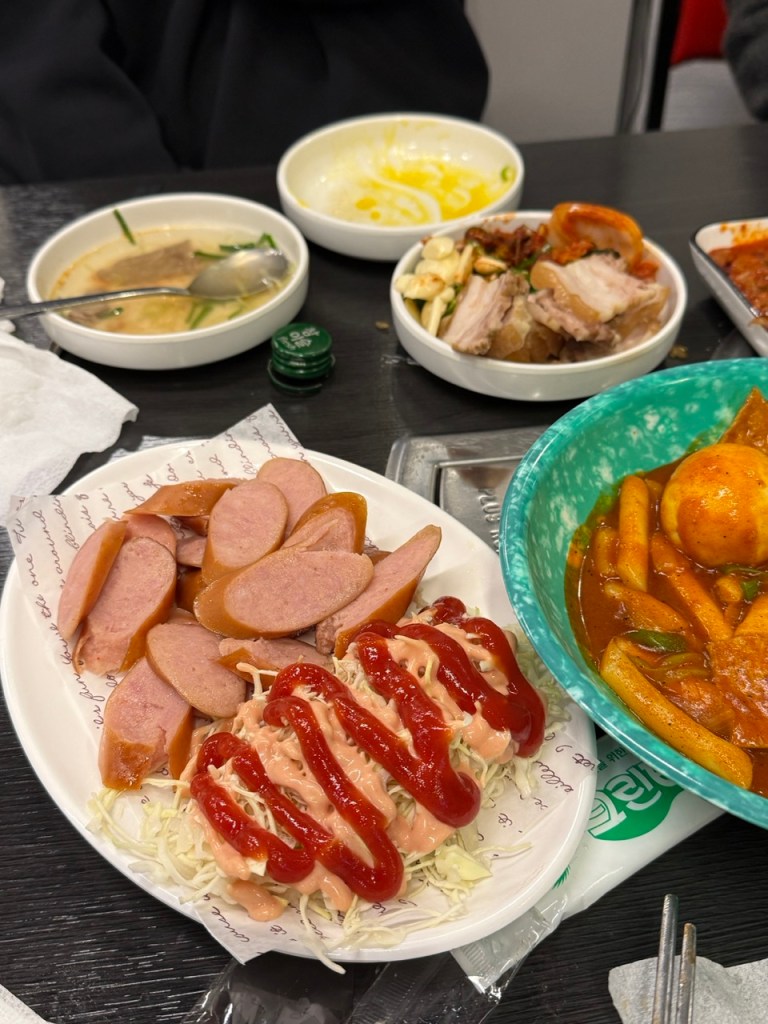
Our two-hour marathon of eating and drinking was finally drawing to a close. But of course, there was one more surprise: a classic platter of Sausages and Cabbage Salad.
In Korea, this is a very nostalgic “old-school” Anju. The sausages were perfectly grilled, and they came with a side of shredded cabbage topped with a simple dressing of ketchup and mayonnaise. This combination is a total throwback for many Koreans, reminding us of the casual pubs from years ago. It’s light, crunchy, and the perfect finger food to munch on while finishing up the last of our drinks and conversations.

And the grand finale of our feast was… drumroll, please… Toast!
You might find it surprising to see toast served at the end of a long course of Korean food and alcohol, but it’s actually a legendary “finishing move” at many classic Korean drinking spots.
This wasn’t just any plain toast, though. It was thick slices of bread, golden-brown and toasted to perfection, often sprinkled with a bit of sugar or served with a sweet jam. After all the spicy, salty, and savory flavors we had throughout the night, that simple, buttery sweetness was the perfect way to wrap everything up. (And did any of you catch that? This is the same type of toast I shared a homemade recipe for just a couple of days ago! )
I wonder if anyone noticed! Hehe. It’s funny how a simple piece of toast can be such a superstar, whether you’re making it at home or enjoying it as the grand finale of a massive Emokase feast. It really is the perfect sweet treat to settle your stomach after all those savory flavors.
2 Hour Epic Journey with 10 Incredible Dishes
This “Emokase” was more than just a meal—it was a true showcase of Korean hospitality and variety.
It’s rare to find a place where the food keeps coming with such heart and generosity, making every drink and every conversation feel even more special. I hope this journey through ten different dishes gave you a little taste of the vibrant and endless world of Korean drinking culture!
Thank you for joining me on this flavorful marathon. I’ll be back soon with more delicious stories and local tips to help you eat like a local in Korea. Until next time, happy eating!
MJay
Leave a Reply