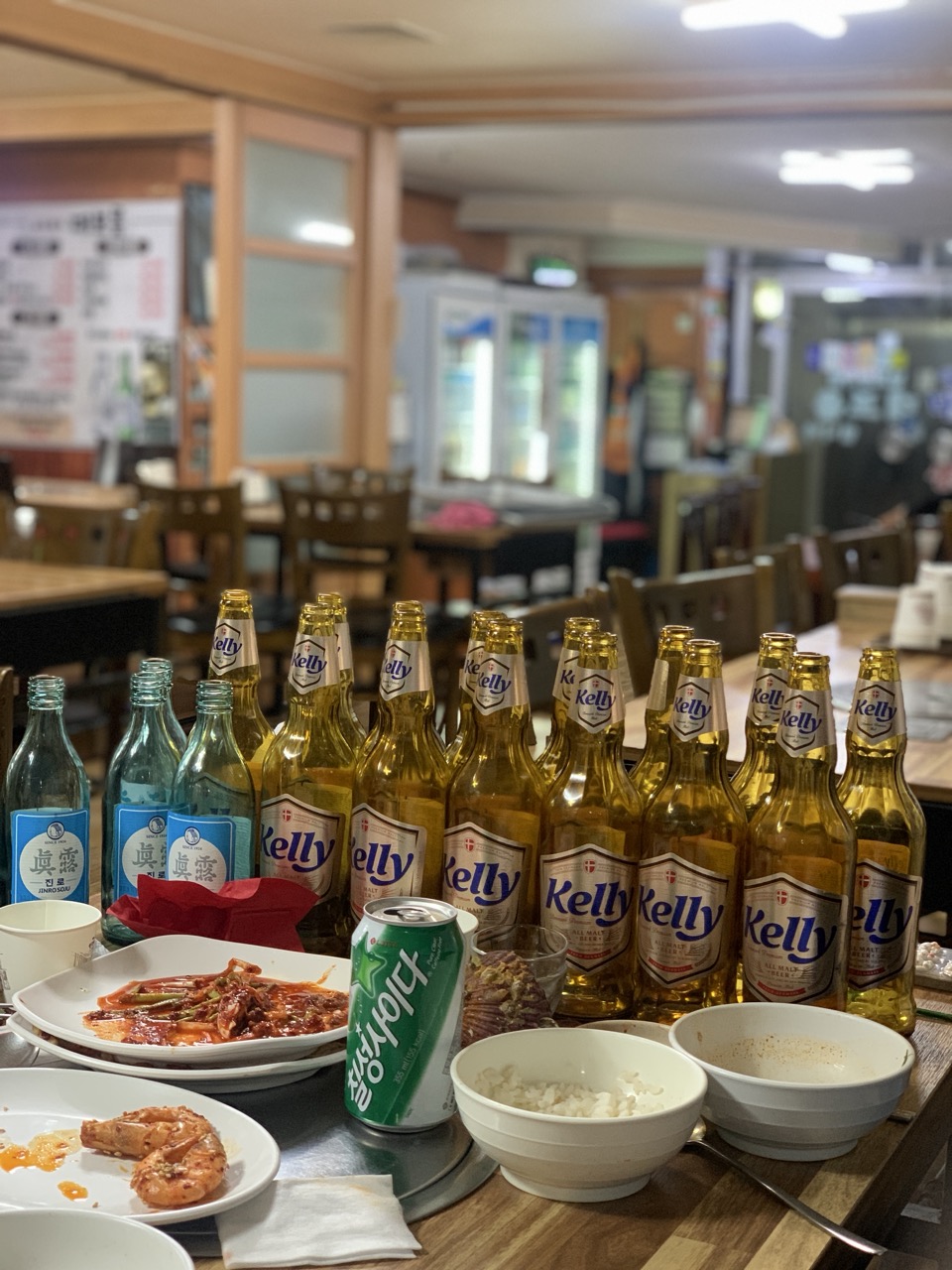
Yeouido’s Best Kept Secret – “Daeboreum” Imokase
Last time, I introduced the never-ending course of “Imokase,” and I was so thrilled to see how much you all loved the concept of the “Auntie-chef’s Choice.” It seems the idea of dishes constantly appearing “at the chef’s discretion” really sparked your curiosity!
While my previous post focused on the bustling vibes of Gangnam, today we’re heading to Korea’s Wall Street: Yeouido. Nestled among the towering skyscrapers of the financial district is a hidden gem known only to the locals—a place called “Daeboreum.”
Stepping into the Underground Soul]
The location of Daeboreum might feel a bit unexpected at first. While most famous restaurants sit prominently on the first floor along the main streets, in Korea’s major office districts, the real treasures are often buried underground. These places don’t need to lure people in with flashy storefronts—they are the daily “canteen” for thousands of office workers who already know exactly where the good food is.
As you enter the building and head down to the B1 level, you’ll experience a dramatic shift. Leaving behind the sleek, cold skyscrapers of Yeouido, you’ll step into a vibrant, retro atmosphere buzzing with energy. The narrow corridors are already thick with the irresistible aroma of sizzling Samgyeopsal (pork belly) from the neighboring spots.
This isn’t the polished Seoul you see in travel brochures; this is the “real” Seoul where Korean office workers truly let loose after the sun goes down.

The Feast Begins – Flavors of Jeolla Province
Alright, we’ve taken our seats! Our group consisted of five hungry friends. While you can order dishes individually from the menu, we went straight for the “Chef’s Choice” course at 35,000 KRW (approx. $26 USD) per person.
The menu varies slightly depending on the season, but Daeboreum has a distinct culinary root: Jeolla Province. In Korea, Jeolla–do is legendary for having the most flavorful and bountiful food. It’s particularly famous for dishes using fresh, seasonal seafood—which happens to be my absolute favorite when I’m out for drinks with friends.
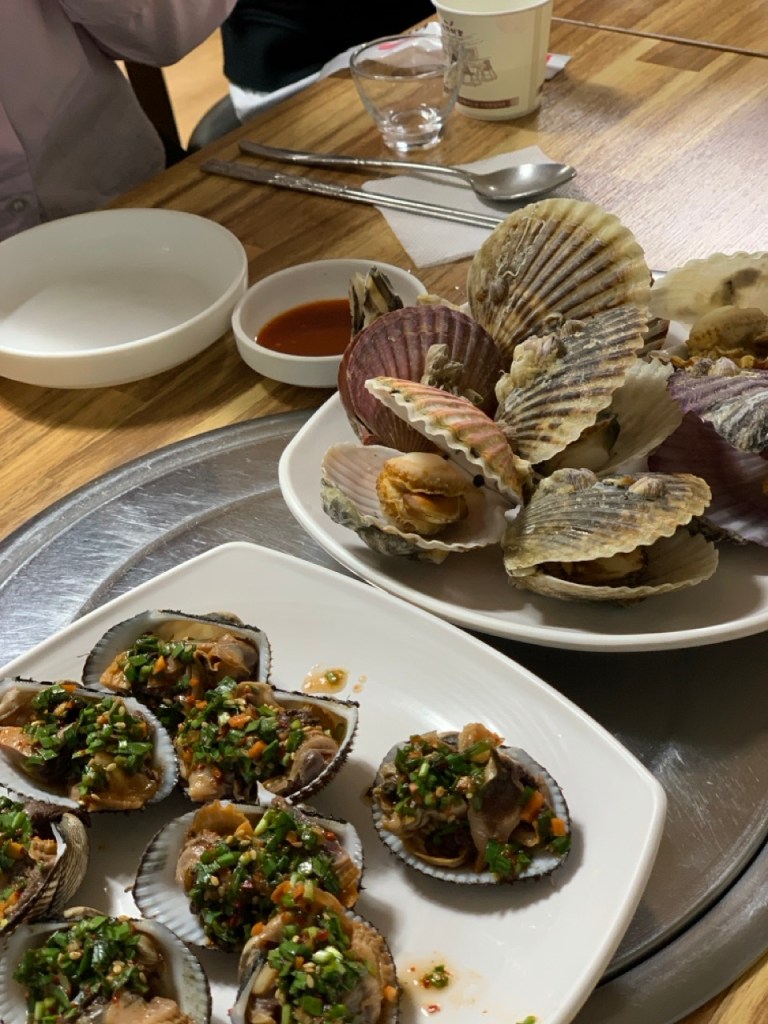
To kick things off, the first dishes to hit the table were Steamed Scallops and Boiled Cockles topped with a savory seasoned sauce. The freshness of the ocean was the perfect way to start our night! ;)
A Taste of Nostalgia – Steamed Skate (Hongeo-jjim)
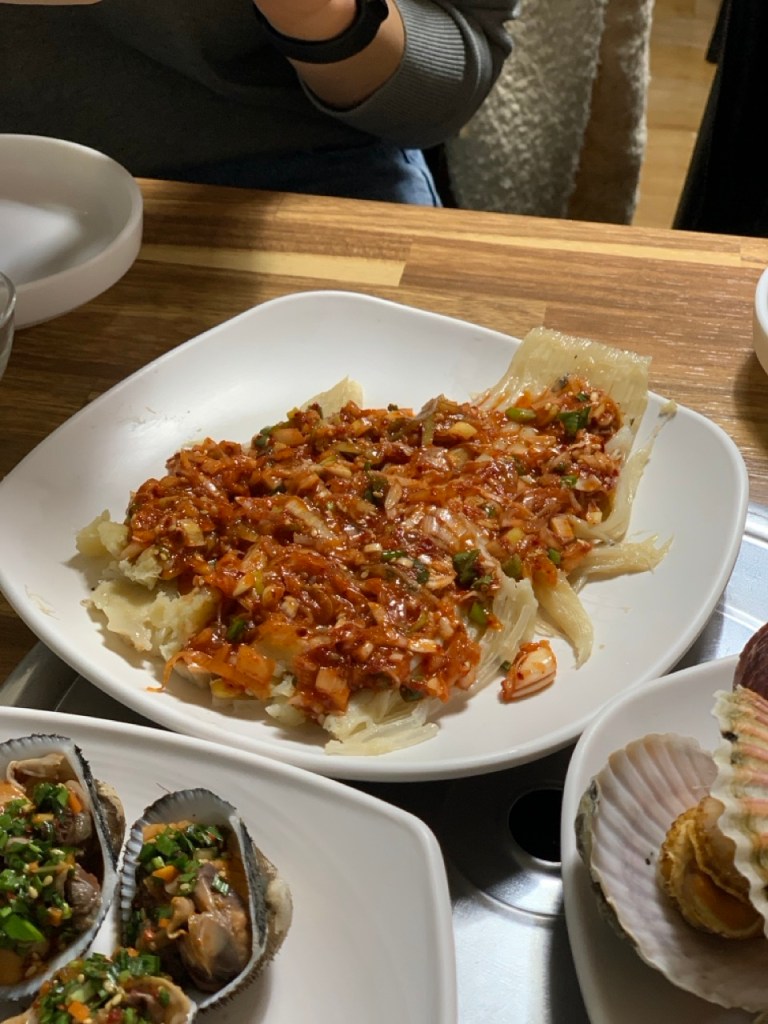
The next dish to arrive was Steamed Skate (Hongeo–jjim). For many, this might be a simple seafood dish, but for me, it’s a portal to my childhood.
Growing up, I only ever tasted this dish during the holidays. My late maternal grandmother always prepared it as part of the traditional ritual table (Charye–sang). I loved how the tender, mild white meat would effortlessly pull apart in perfect flakes. Even the bones are soft enough to chew, adding a unique texture that I’ve always enjoyed.
Since my grandmother passed away, this has become a “lost flavor”—something I can no longer find at home. Finding it here in the middle of Yeouido felt like a warm, unexpected hug from the past.
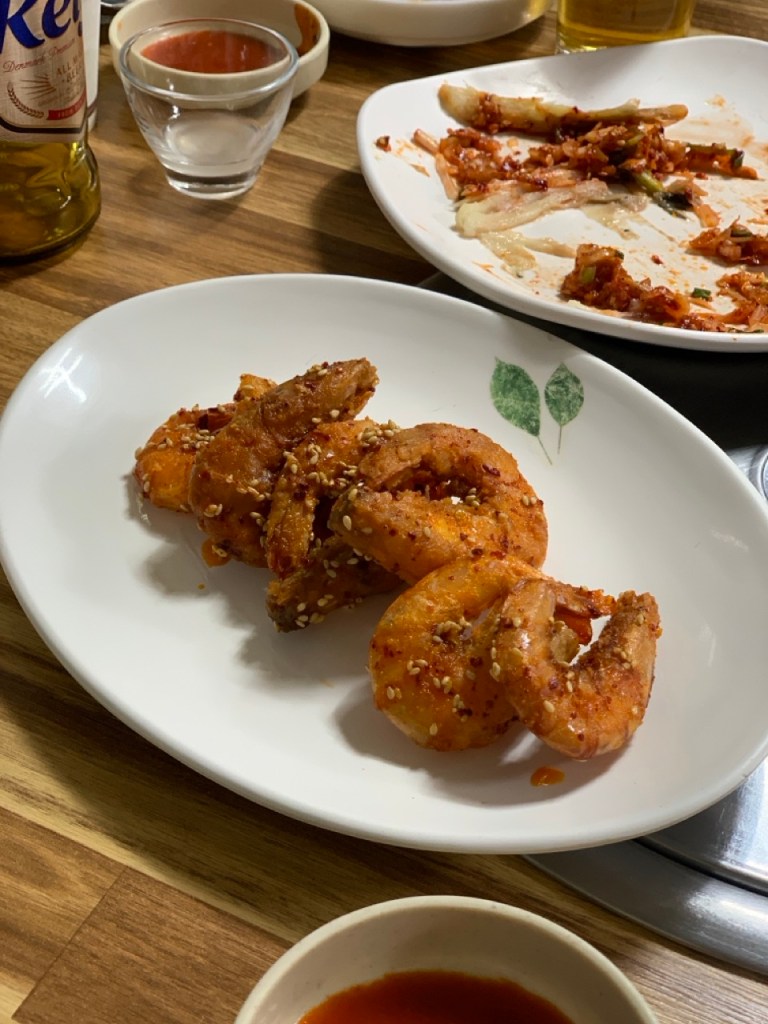
After the sentimental moment with the flatfish, a plate of Seasoned Fried Shrimp made a quick but delightful guest appearance.

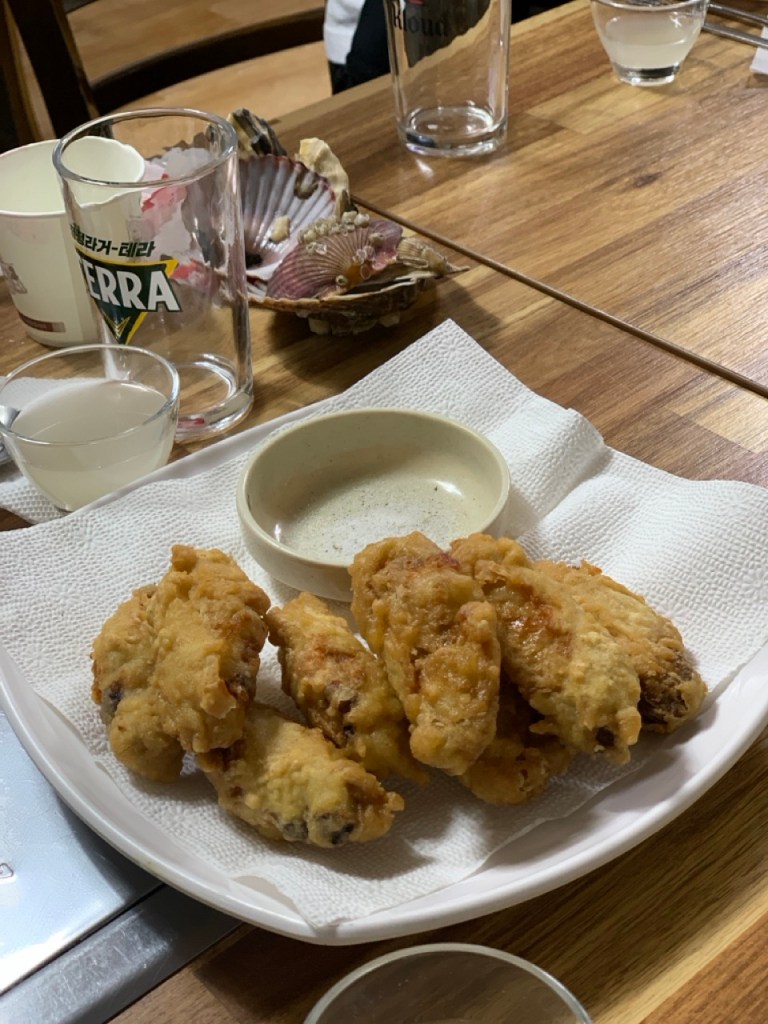
Next up were two heavy hitters that are absolute essentials for any Korean gathering: Deep-fried Oysters and the legendary duo of Samgyeopsal (Pork Belly) with Stir-fried Kimchi.
In Korea, Samgyeopsal restaurants are usually the no.1 choice for evening meetups. However, the owner here makes sure you don’t feel like you’re missing out on a BBQ night. Instead of making you grill the meat yourself at the table, she serves it perfectly grilled and pre-sliced, accompanied by savory, perfectly tart stir-fried kimchi. It’s all the flavor of a BBQ joint with none of the smoke or effort!
Then came the Deep-fried Oysters. Rather than masking the flavor with heavy sauces, they were served with a simple side of salt. This small but thoughtful “sense” allows the natural, briny sweetness of the seasonal oysters to truly shine. It’s these little details that keep me coming back to this place again and again!
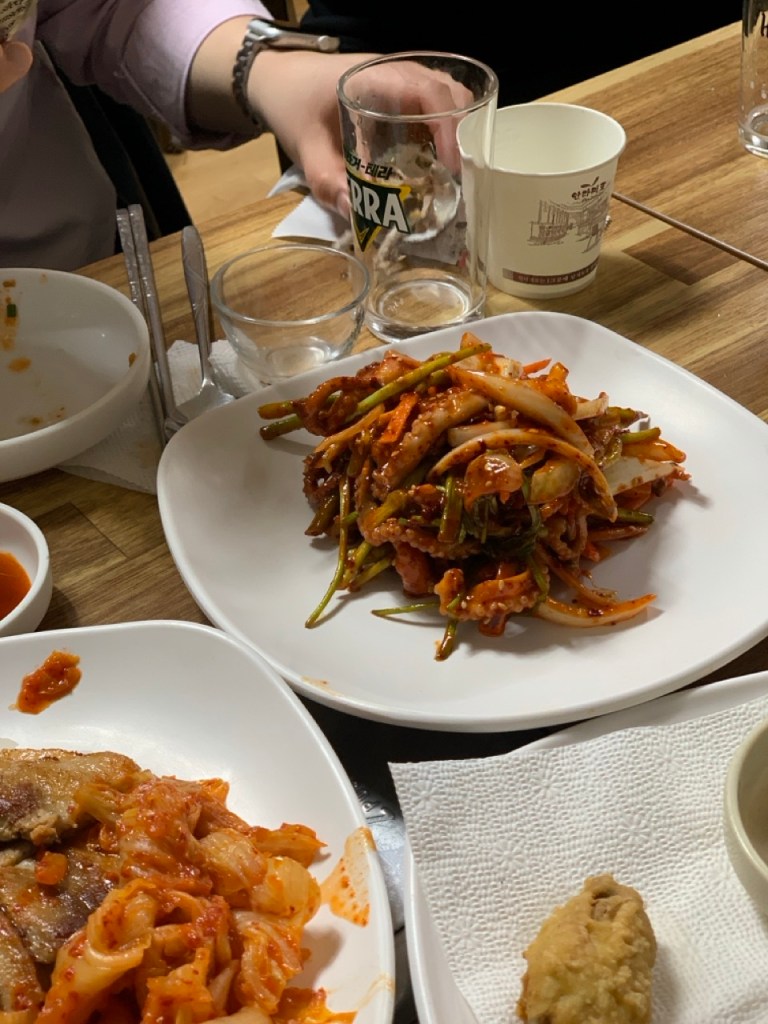
The Ultimate Palate Cleanser – Spicy & Sour Squid Salad]
After the rich and savory journey with fried oysters and pork belly, it was time for a refreshing change of pace. The next dish was Ojing–eo Chomuchim (Spicy & Sour Squid Salad). This dish features lightly blanched, tender squid tossed with fresh water parsley (Minari) and a variety of crisp vegetables in a tangy red chili sauce (Cho–gochujang). The vibrant, acidic profile of the sauce cuts through the richness of the previous courses, instantly refreshing your palate. It’s like a “reset button” for your taste buds, getting you ready for the next round!
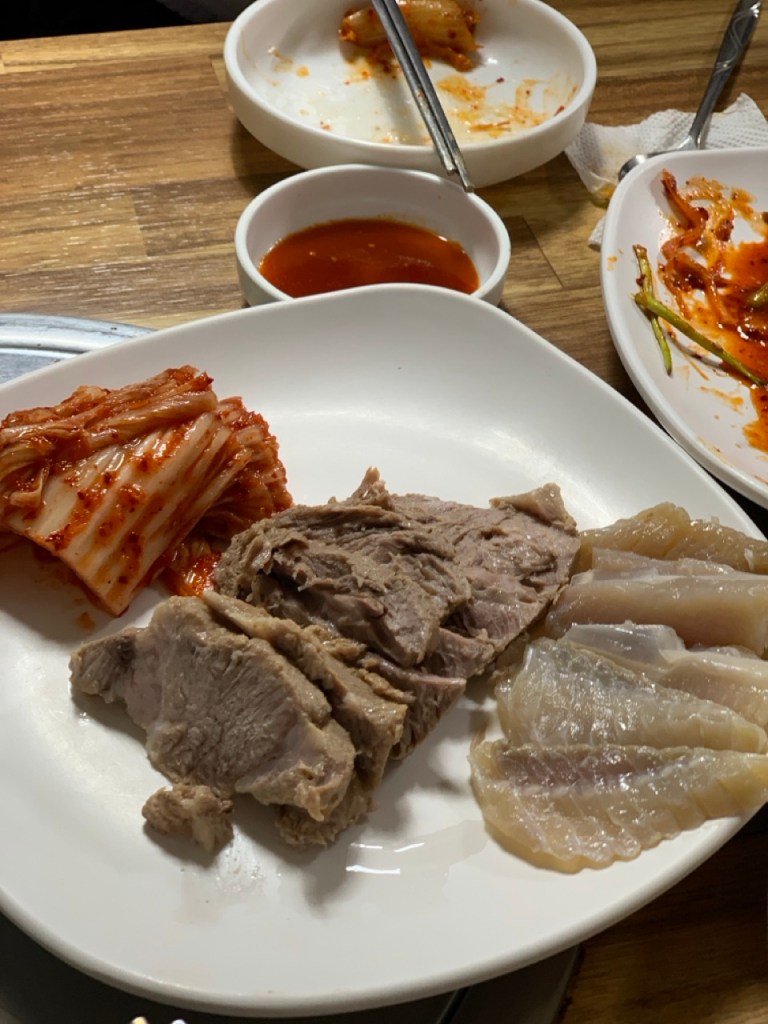
The Ultimate Challenge – Samhap (The Holy Trinity)
Now, we’ve reached the “Master Level” of Korean cuisine: Samhap.
Samhap literally means “three harmonies,” referring to the combination of three distinct ingredients eaten in a single bite: tender boiled pork (Suyuk), aged Kimchi, and fermented skate (Hongeo). While you might be familiar with the pork and Kimchi duo (Bossam), the fermented skate is a whole different story.
To be honest, even many Koreans struggle with fermented skate! It is one of the most challenging foods due to its pungent aroma, unique texture, and sharp flavor. Depending on the level of fermentation, it can range from mild to “eye-watering.”
Personally, I can handle the lightly fermented ones, but the heavily aged skate? It’s an experience that defies description—it’s a sharp, tingling sensation that zaps your nose. You truly have to taste it to understand!
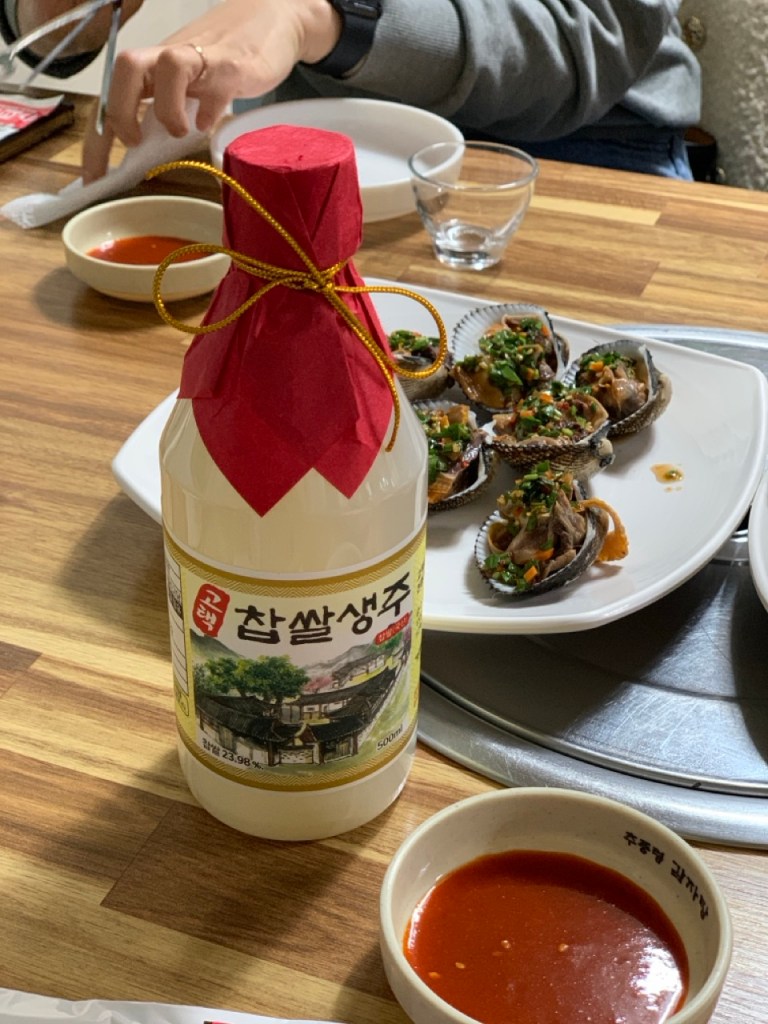
The Perfect Match – Makgeolli & Jeolla Cuisine
All these dishes—especially the ones from Jeolla Province—have one perfect soulmate: Makgeolli. Makgeolli is a traditional Korean rice wine that is milky, slightly sparkling, and has a delicate balance of sweet and tangy flavors. In Korea, there’s a long-standing tradition of pairing Jeolla-style feasts with this rustic rice wine because its smooth texture beautifully complements the bold and fermented flavors of the food.
Naturally, we couldn’t resist! We selected a bottle of local Makgeolli to kick off our feast.
The Grand Finale – The “Secret” Seafood Ramyeon
I think our feast started winding down after all those incredible dishes—to be honest, the memory is a bit hazy because of the drinks. ^^;;
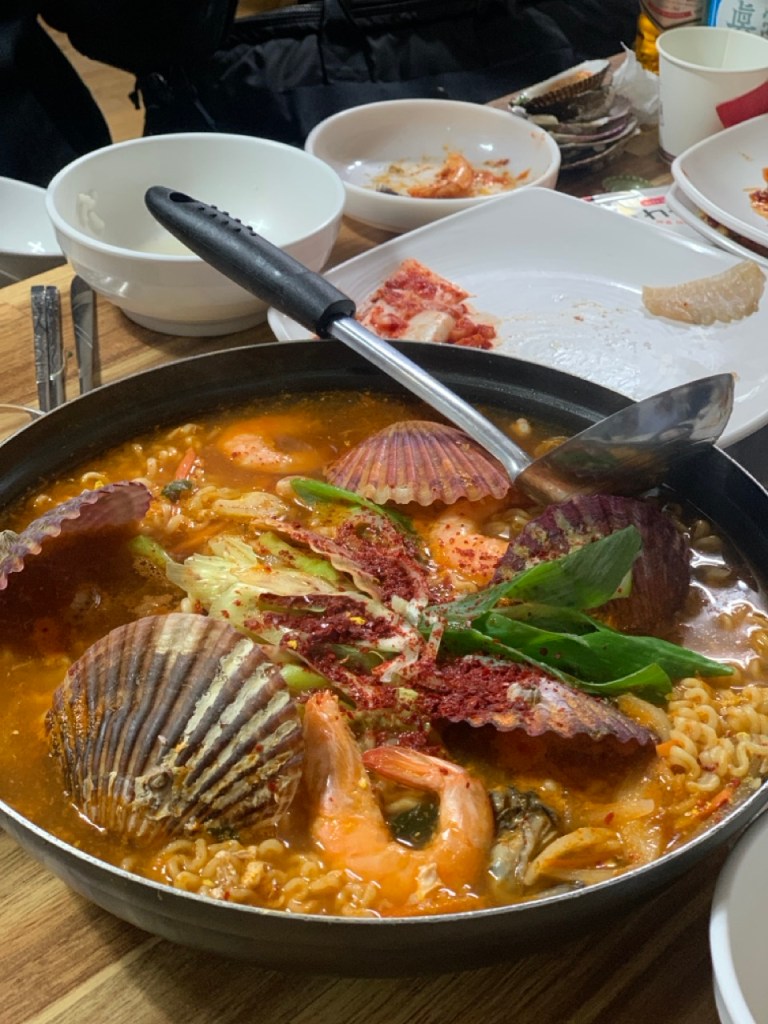
But at this point, every Korean knows there’s only one way to truly wrap up a marathon of food and drinks. The ultimate finale is always… Ramyeon!
Craving some hot broth and noodles, we took a chance and asked the “Imo” Can we have some Ramyeon, even though it wasn’t on the official menu. To our absolute surprise, she brought out a masterpiece! It wasn’t just instant noodles; it was a luxurious Seafood Ramyeon packed with leftover gems from the sea. This is exactly why I can’t help but fall in love with this place I visit!
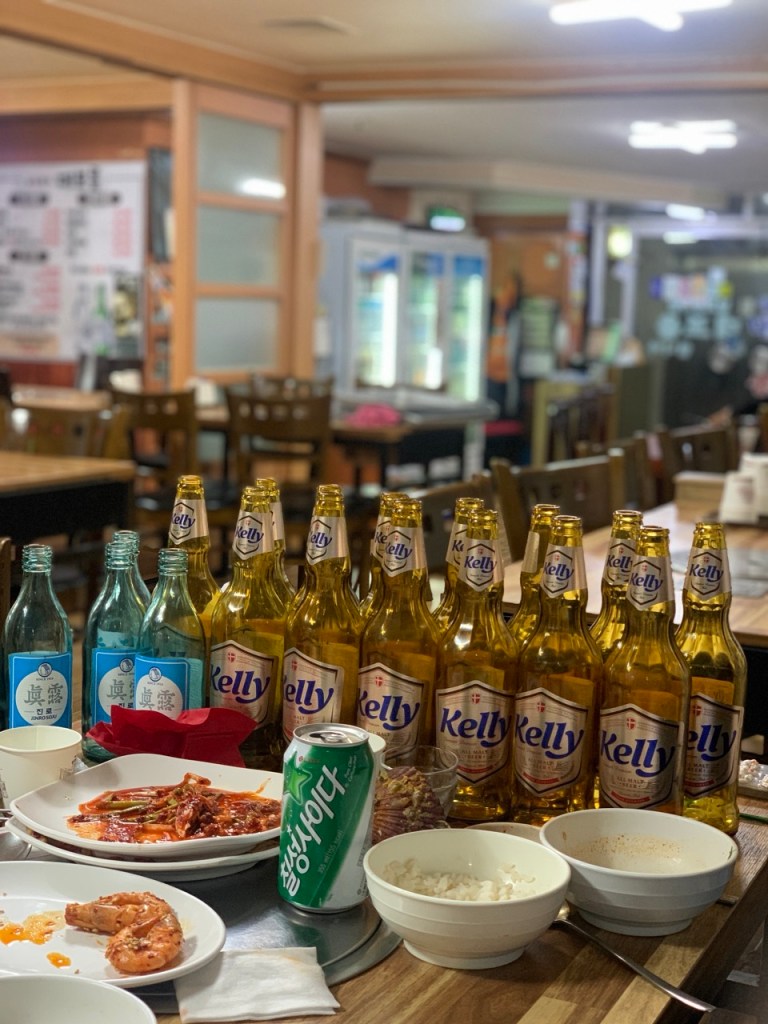
And that’s how our epic dinner marathon came to an end! It was an incredibly satisfying experience that stayed with us long after we left the underground corridors.
If you’re someone who wants to try a variety of authentic Korean dishes in one sitting, an “Imokase” is a fantastic alternative to visiting a traditional market. There’s a certain thrill in not knowing exactly what’s coming next—the menu changes daily, which adds an element of delightful surprise to every visit.
Plus, there’s an old saying in Korea that “Seasonal food is as good as medicine.” Being able to enjoy a drink alongside fresh, seasonal ingredients is something I’m always truly grateful for. ;)
Before Planning Your Visit
Before you rush to Yeouido, there’s one important thing to remember: Daeboreum is closed on weekends. Since Yeouido is a business district, the neighborhood feels almost empty once the work week ends. Most local favorite restaurants, including this one, close their doors during the weekend.
If you happen to visit on a weekend and find it closed, don’t be too disappointed! Just head straight to the nearby Hanriver Park. Korea’s 24/7 delivery culture is always standing by, 365 days a year. A picnic by the river with world-class delivery food is a classic Seoul experience in its own right! ^^
MJay from Seoul
Leave a Reply