A Culinary Journey to Busan: Hidden Gems from My Google Maps
It’s the perfect season for traveling. Since my husband’s best friend and his family live in Busan, we find ourselves visiting this beautiful coastal city quite often. Every time we go, I make it a point to check off one or two spots from my carefully curated “Busan Must-Visit” list on Google Maps.
Busan is a city overflowing with incredible flavors, and today, I’m excited to share some of the absolute “must-eat” dishes that define this city. Join me as we dive into a delicious food tour through Busan! ;)

Busan’s 100-Year Legacy: Pyeongsan-ok
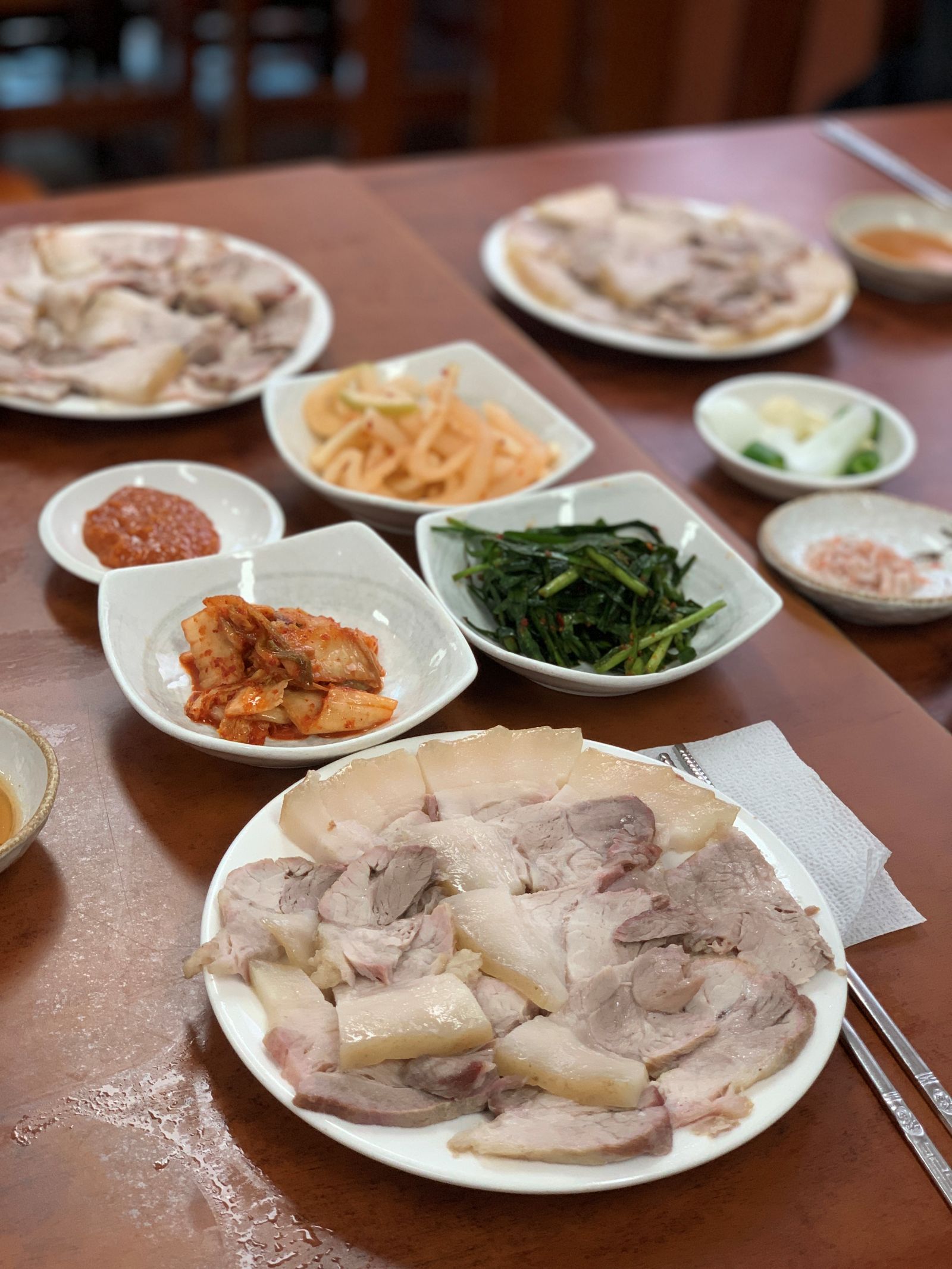
After a 2 hour and 24 minute KTX ride from Seoul, the hunger and excitement for Busan’s culinary scene kick in. To satisfy those cravings immediately, I head straight to Pyeongsan-ok, located just a 10-minute walk from Busan Station.
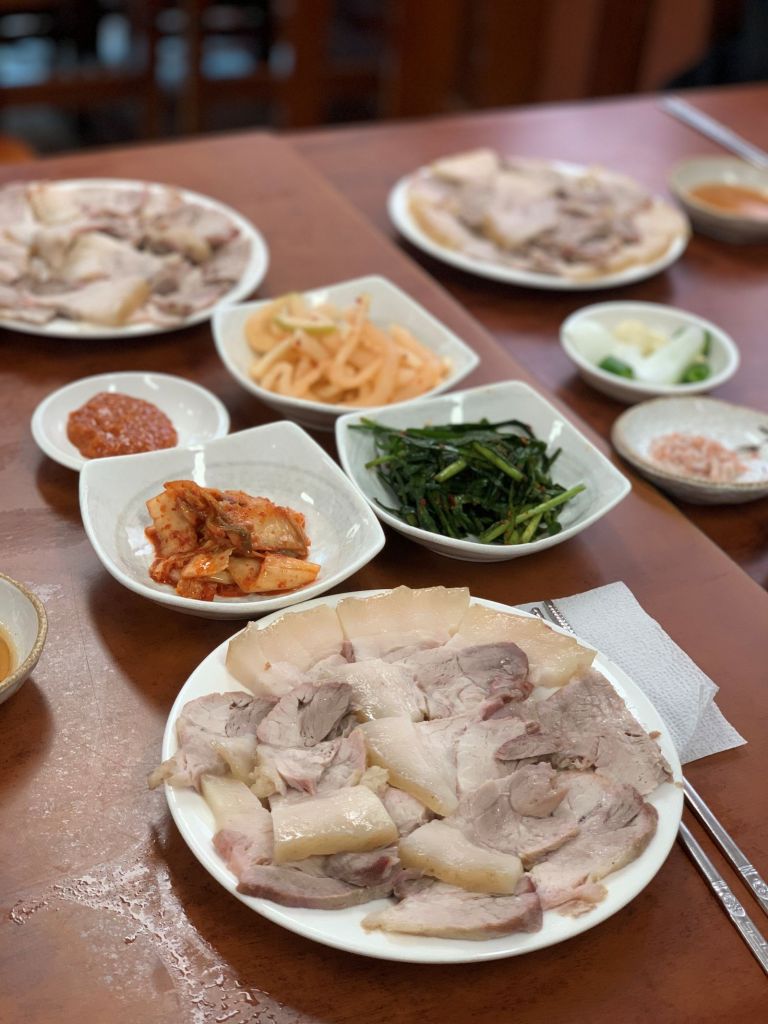
The value here is incredible—a generous serving of Suyuk (boiled pork) is only $8 (10,000 KRW)! While the portion is quite large for one person, the restaurant’s policy is one serving of Suyuk per person, so make sure to pace yourself. The menu is simple and focused, offering only Suyuk and noodles, which truly speaks to their expertise.
The tender, thinly sliced pork is delicious when dipped lightly in salted shrimp (saeujeot) or paired with seasoned chives. For a bit of a kick, try it with a slice of garlic and green chili dipped in ssamjang.


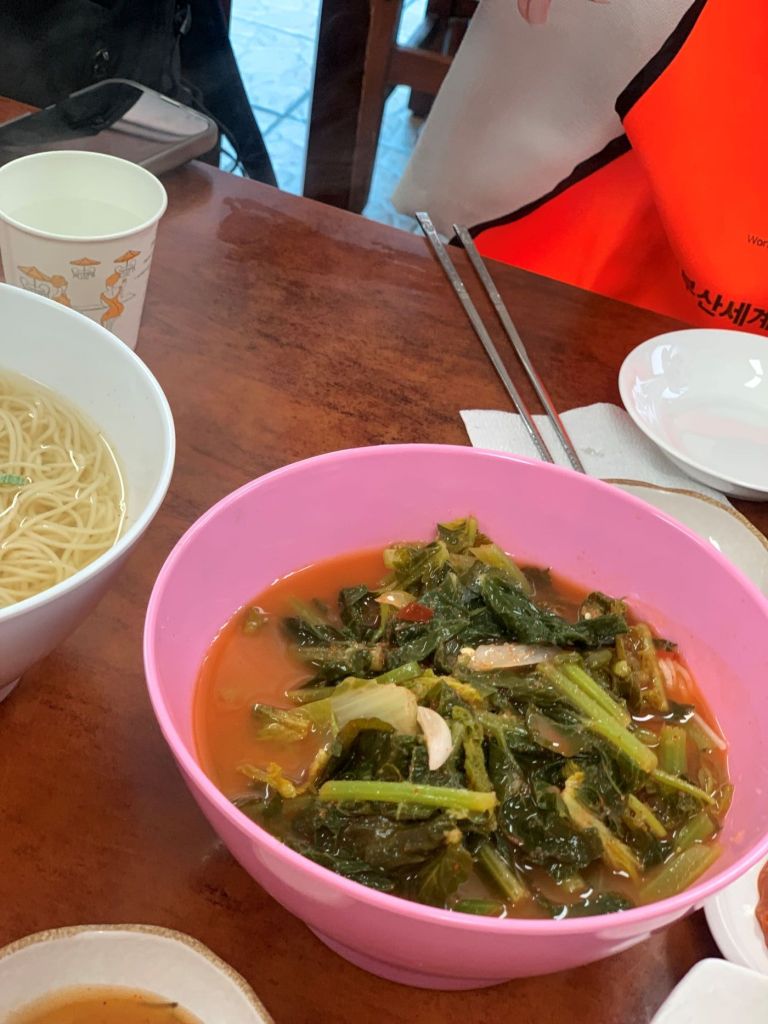
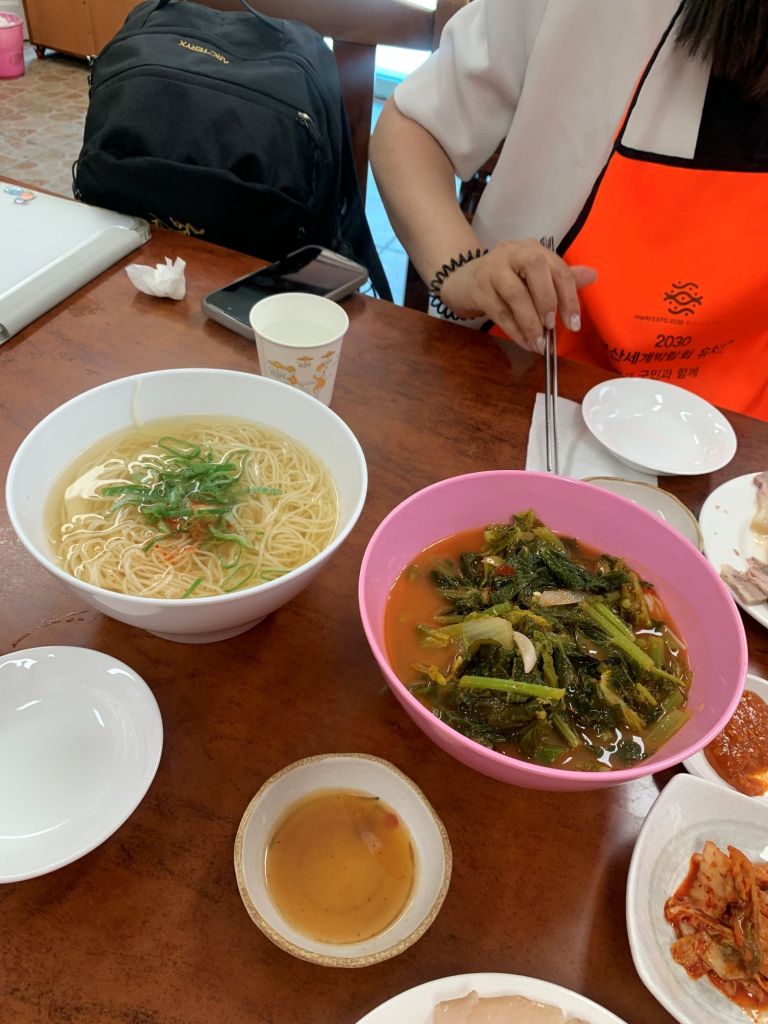
To finish off the meal, sharing a bowl of noodles between two people is the perfect palate cleanser. In the summer, the refreshing Yeolmu-guksu (noodles in young summer radish kimchi broth) provides a cool finish, while in the winter, the savory and comforting Janchi-guksu (warm banquet noodles) completes the meal perfectly. ;)

The Secret of Busan’s Bold Tteokbokki: Sangkuk-ine
Now, let me introduce a spot near the famous Haeundae Beach. Interestingly, Busan is home to an incredible number of famous Tteokbokki shops. I suspect it might be because of the “bold and intense” seasoning typical of coastal cities, or perhaps they use a rich seafood-based broth instead of plain water! (That’s just my personal theory, though. ^^)
Even though Tteokbokki is a dish you can find anywhere in Korea, the Busan version has a unique vibe that I crave every time I visit. While Sangkuk-ine and Dari-jip are two of the most iconic names, today I’ll focus on Sangkuk-ine, which is very easy to visit if you’re in the Haeundae area.
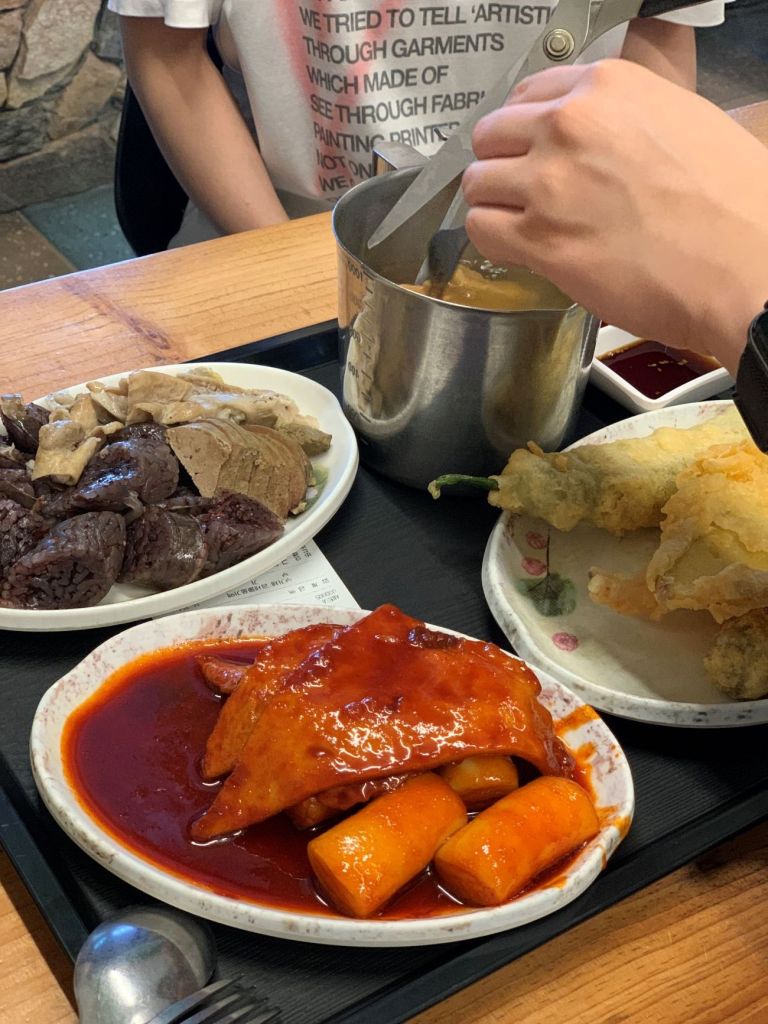
The first thing you’ll notice is the color—a deep, vibrant crimson sauce that looks incredibly spicy but offers a perfect harmony of sweet and savory. The rice cakes are thick and wonderfully chewy, having soaked up all that concentrated flavor. It’s the perfect snack to grab while strolling through the local market!

A Hidden Gem in Haeridan-gil: Uiryeong Sikdang
While wandering through the trendy streets of Haeridan–gil, I stumbled upon a place called Uiryeong Sikdang. If you’re familiar with the famous Korean ballad singer Sung Si-kyung, you probably know he’s a renowned gourmet. He even starred in a Netflix series introducing top restaurants in Korea and Japan and regularly shares his favorite eateries on his popular YouTube segment, “Mogultende“
Knowing he had featured this spot, I couldn’t just walk past it. Even though my group wasn’t even hungry, we found ourselves walking in and ordering a bowl of Dwaeji–gukbab (Pork Rice Soup) each! Haha.
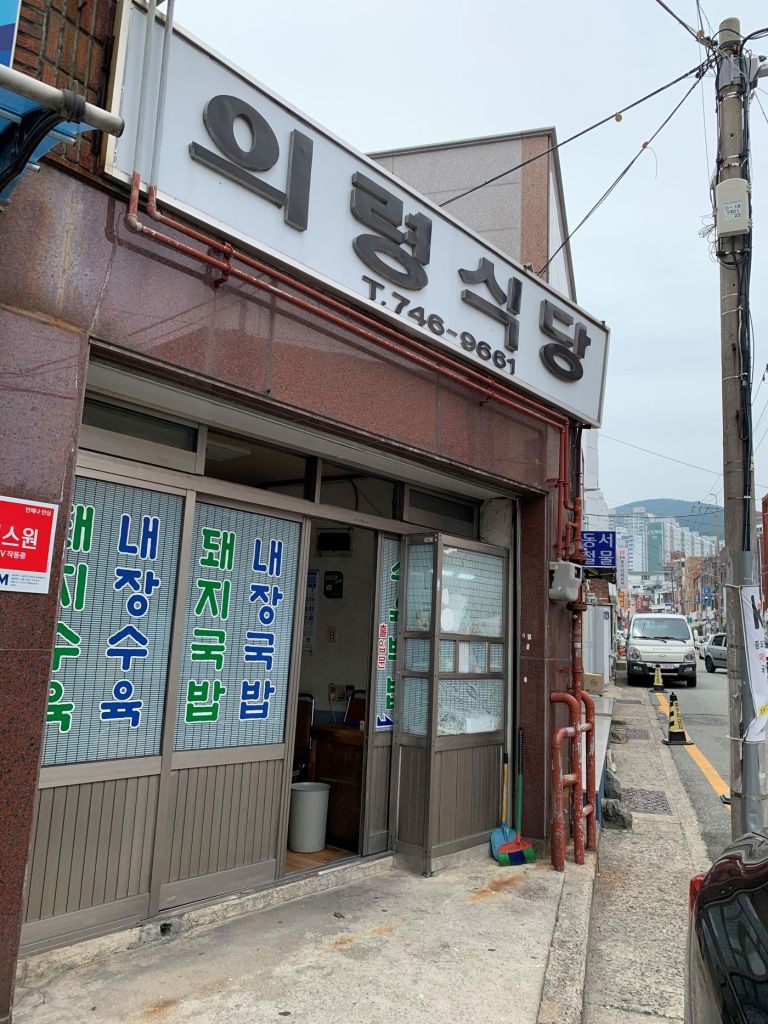
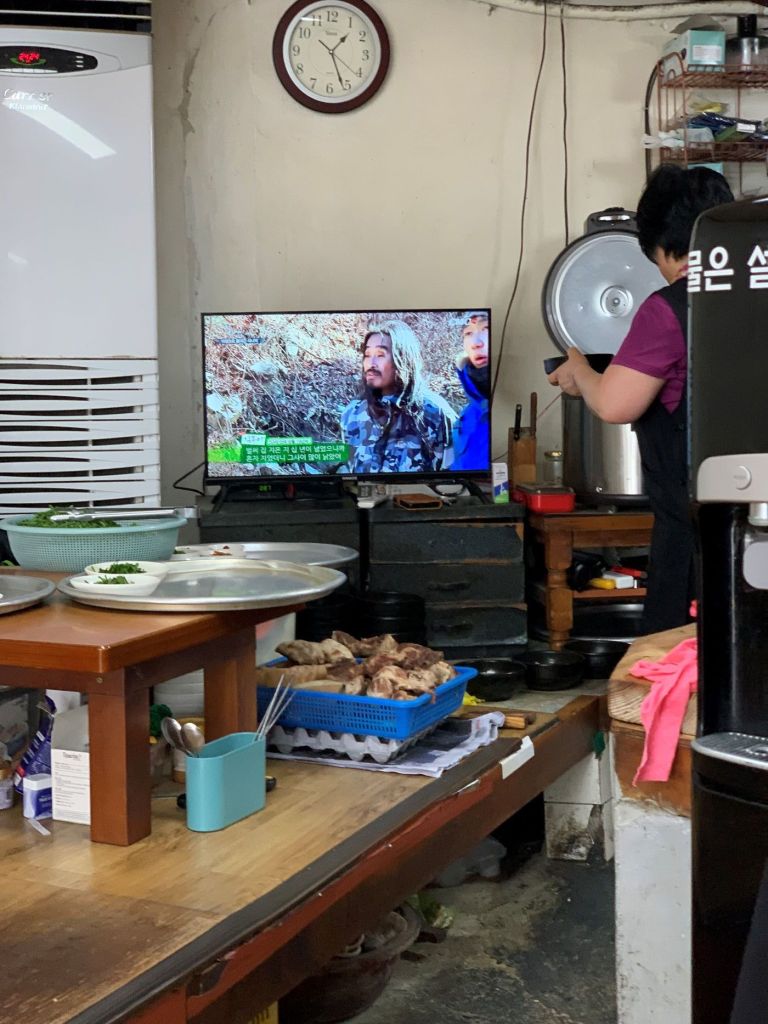
This place has been around for over 40 years, and it radiates an authentic, “old-school” (Nopo) atmosphere. It isn’t flashy, but there’s a certain soulful vibe that touches your heart—a taste that has stood the test of time.
- A Quick Tip: Dwaeji–gukbab has a distinct pork aroma. While many enthusiasts (like me!) love this richness, it might be a bit challenging for first-timers or those sensitive to strong scents. If it’s your first time trying pork soup, keep this in mind before you visit!
The Ultimate Busan Night: Gopchang, Daeseon Soju, and K-Dessert
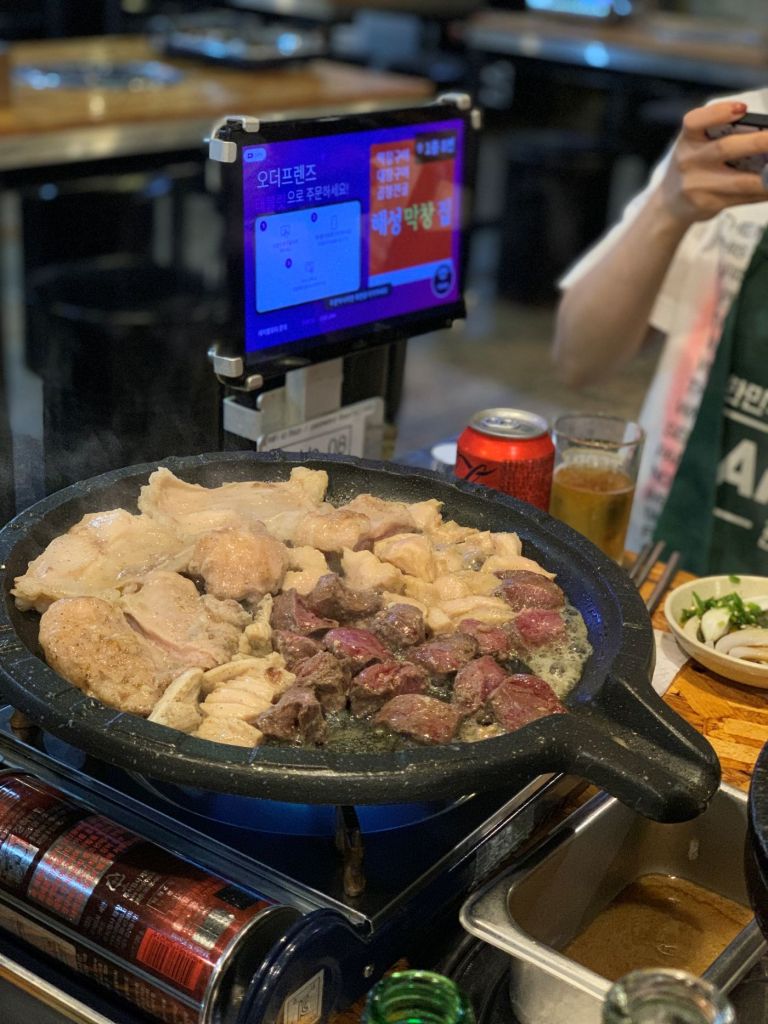
Now, it’s time for a drink! For dinner, we ordered the Assorted Grilled Platter (Modeum-gu-i), which comes with a delicious mix of Gopchang (small intestines), Daechang (large intestines), Yeomtong (heart), and Makchang (abomasum). It arrives pre-grilled on a sizzling stone plate. Just a little tip: the oil can splatter quite a bit, so keep a safe distance—but don’t be scared, the taste is worth it! ;)
The Names Might Scare You, But the Taste Won’t!
I know, I know—the names “Daechang” and “Gopchang” might sound a bit intimidating or even “scary” if you translate them literally. ^^; But believe me, once you take that first bite of the rich, buttery fat and the chewy, savory texture, all your fears will melt away.
I’ll stop describing the taste right here—partly because words can’t do it justice, but mostly because just talking about it is making me crave it so much right now! ^^ You’ll just have to come to Busan and try this legendary combination for yourself.

To fully embrace the Busan vibe, we paired the savory, melt-in-your-mouth intestines with a glass of Somaek (a cocktail of Soju and Beer) mixed in a 1:3 ratio. And for the true Busan experience, we chose ‘Daeseon,’ the representative local soju brand.
Why are there different Soju brands in each region?
In Korea, each region traditionally had its own “One Distillery per Province” rule. This system was designed to protect local businesses and prevent monopolies, leading to the birth of iconic regional brands. While this rule is long gone, the loyalty remains! That’s why you’ll find Daeseon in Busan, while Seoul mostly serves Chamilsul or Chum-Churum. Tasting a local soju is a must-do for any traveler!
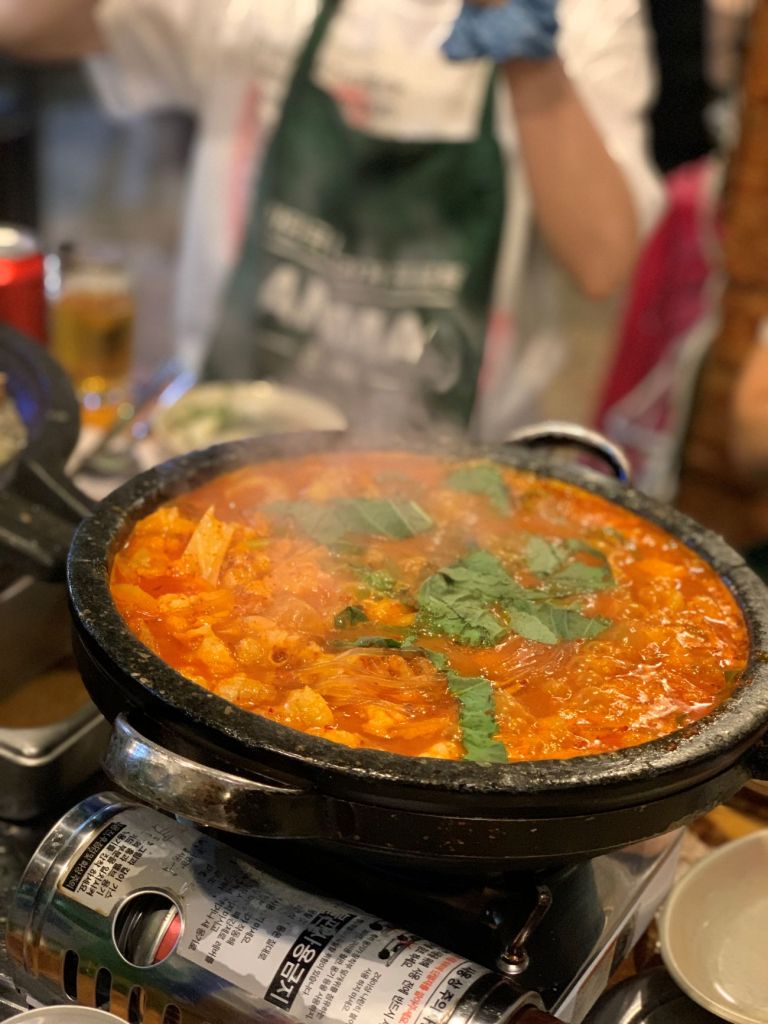
When things start to feel a bit rich, it’s time to call in the Gopchang-jeongol (Beef Intestine Hot Pot). The spicy, flavorful broth cuts through the greasiness perfectly. We added Udon noodles for that essential carb fix, which led to even more Somaek—it just goes down so smoothly! ^^ We finished the night with Bokkeumbap (Fried Rice), the legendary “K-Dessert.”
By the time you’re done, you’ll feel a proud sense of accomplishment—like you’ve truly “conquered” the meal! Hahaha.

Bonus Tip: The Ultimate Korean Hangover Cure
If you find yourself struggling with a hangover the next morning, you simply must experience the Korean way of “Hae-jang” (hangover cure)! Since you’re in Busan, Dwaeji-gukbap (Pork Soup with Rice) is an absolute must-eat.
I found the famous main branch right near where I stayed. This place is unique because they use pork jowl in their soup.
Typically, traditional Dwaeji-gukbap uses leaner cuts like pork shoulder or leg, but pork jowl is prized for its tender, fatty, and slightly crunchy texture, making the broth incredibly rich.
Even if you can’t visit this specific spot, I highly recommend finding a local “Gukbap” restaurant near your accommodation. Koreans always turn to hot, steaming broths to soothe their stomachs after a night of drinking. See for yourself if the hangover truly disappears! ;)
The soup is served in a Ttukbaegi (traditional earthenware pot), which keeps the broth boiling hot until your very last bite. It’s the ultimate comfort food that stays warm and soul-satisfying throughout the entire meal.
Hungry for More? The Ocean is Coming!
Wait—you didn’t think I’d forget the seafood in a coastal city like Busan, did you?
I know you’ve been waiting for the fresh catch of the day! There are just so many incredible dishes to share that I’ve decided to dedicate my entire next post to Busan’s legendary seafood scene. From hidden local favorites to the freshest ocean treasures, it’s going to be a feast you won’t want to miss.
Stay tuned and just wait a little bit longer! I’ll be back with the salty, delicious flavors of the sea very soon
Leave a Reply