The Cozy Hearth of Winter: Return to “Babette” (Part 2)
Hello everyone! It feels like it’s been a minute, hasn’t it?! ^^
I was actually away for a few days on a wonderful trip to Shanghai! Now that I’m back and fully recharged from eating my way through all the incredible flavors of Shanghai, I am so excited to dive right back into introducing some delicious Korean cuisine for you all.
In my last post, I introduced you to the lovely spring casual dining experience at Babette. As promised, today we are traveling back in time to my winter visit to see how this beautiful one-table restaurant transforms its menu using the best winter seasonal ingredients.

While the signature flow of the meal remains the same—starting with a comforting porridge, followed by delicate side dishes, a hearty main meat, satisfying rice and soup, and finally traditional desserts—the exact menu elements shift subtly according to the season. You will notice a completely different lineup of ingredients this time, especially when it comes to the fresh winter Namul (seasoned herbal greens) that thrive in the colder months!
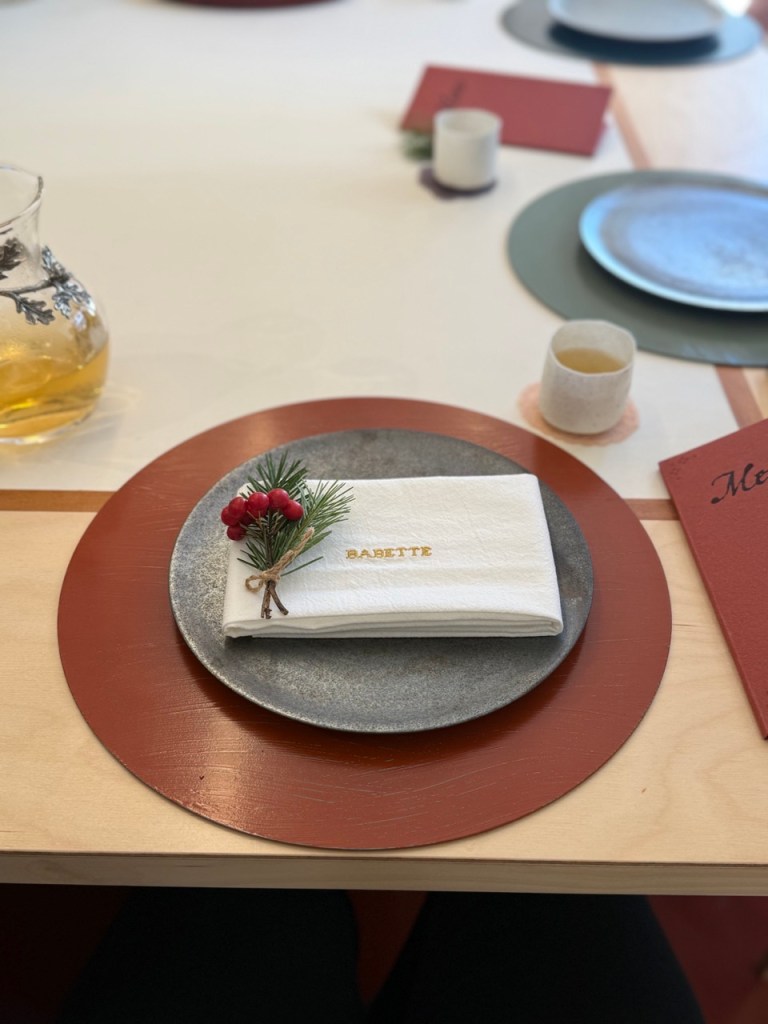
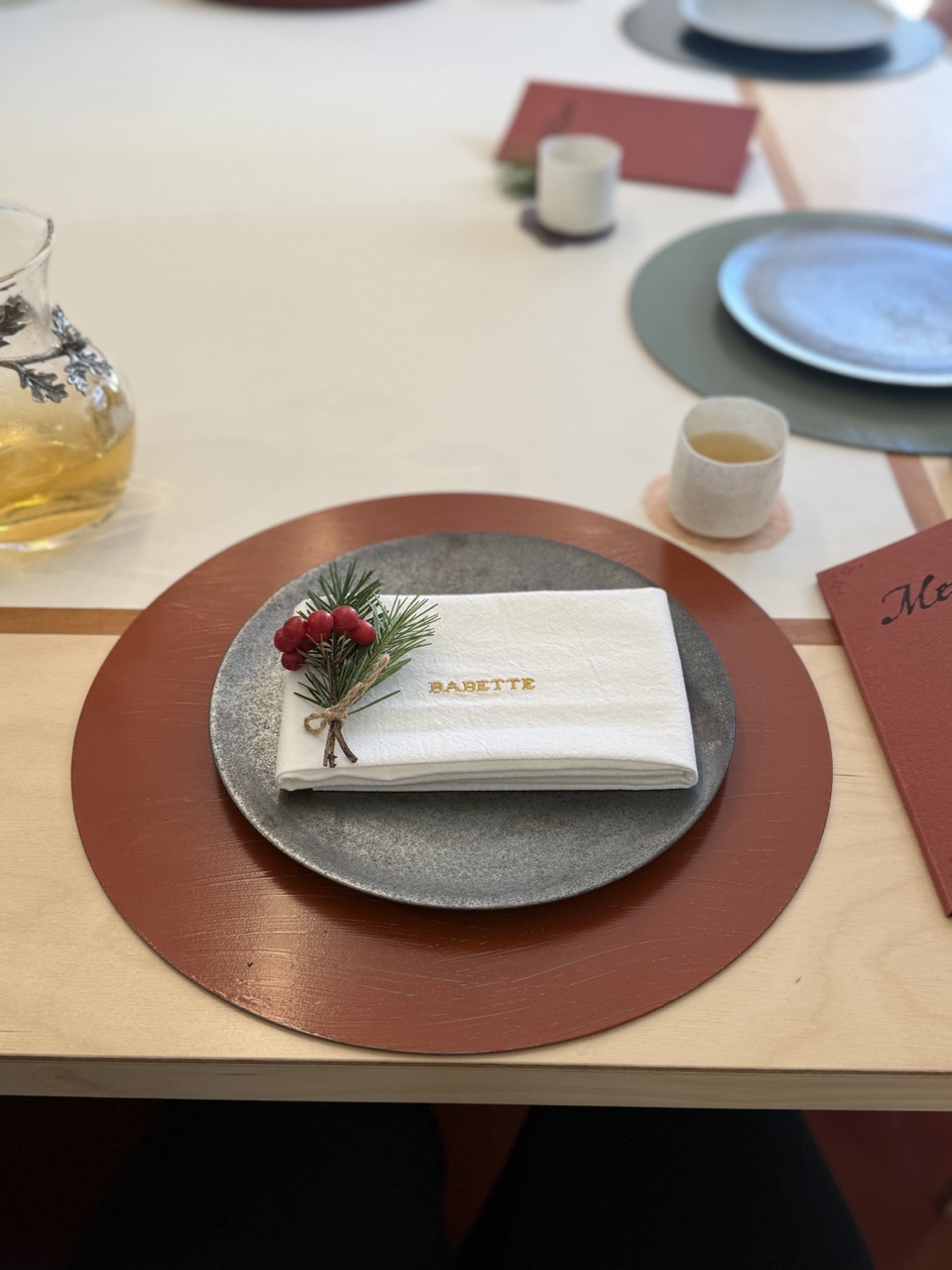
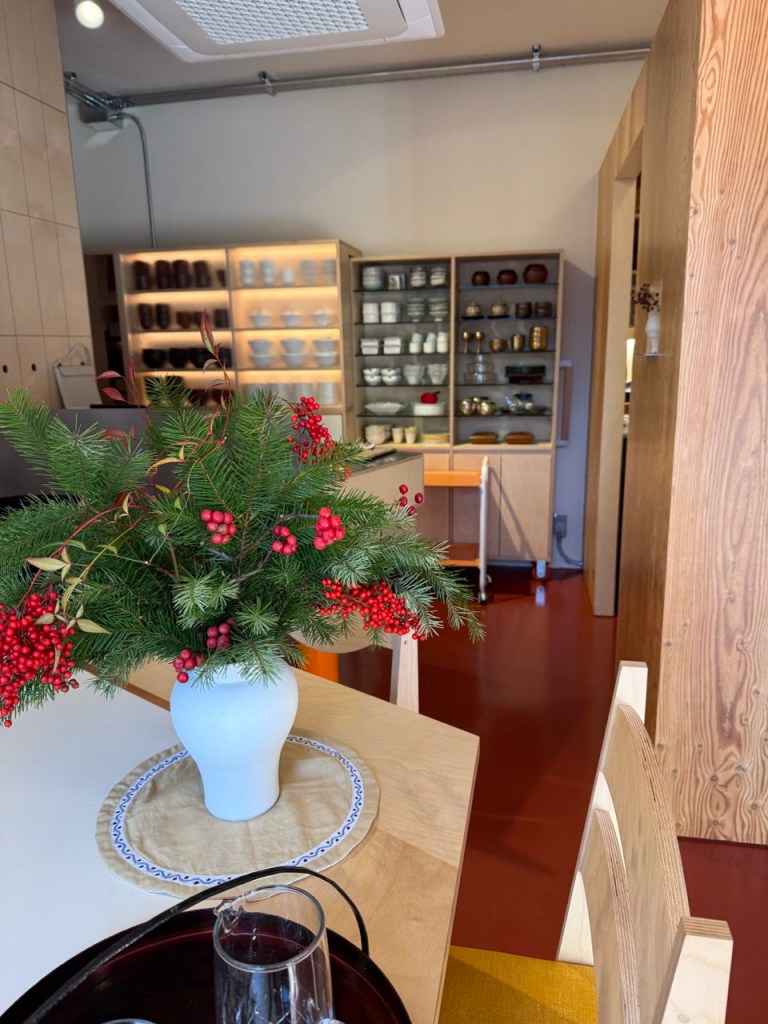
Because my winter visit took place right around Christmas, the entire restaurant was beautifully dressed in a vibrant red color scheme!
The moment I stepped inside, the warm, festive decor made us feel less like we were entering a commercial restaurant and more like we were exclusive VIP guests invited to an elegant, private holiday party. That striking touch of Christmas red against the wooden interior instantly melted away the winter chill and heightened our anticipation for the festive meal ahead.

The Elegant Opening: Royal “Tarak-juk” (Milk Porridge)
Our festive winter feast officially opened with a beautifully smooth, snow-white bowl of Tarak-juk (타락죽).
Tarak-juk is a traditional, royal Korean porridge made by slowly simmering finely ground rice with milk. Back in the Joseon Dynasty when milk was an incredibly rare and luxurious ingredient, this nutrient-rich dish was served exclusively to the King as a premium health tonic.
This was actually my very first time trying Tarak-juk. It had this incredibly velvety, comforting texture that felt like a hybrid between a refined Western cream soup and a wholesome Korean rice porridge. Starting the meal with something so wonderfully warm and rich instantly put us in the best mood, setting a highly sophisticated tone for the rest of the winter course.
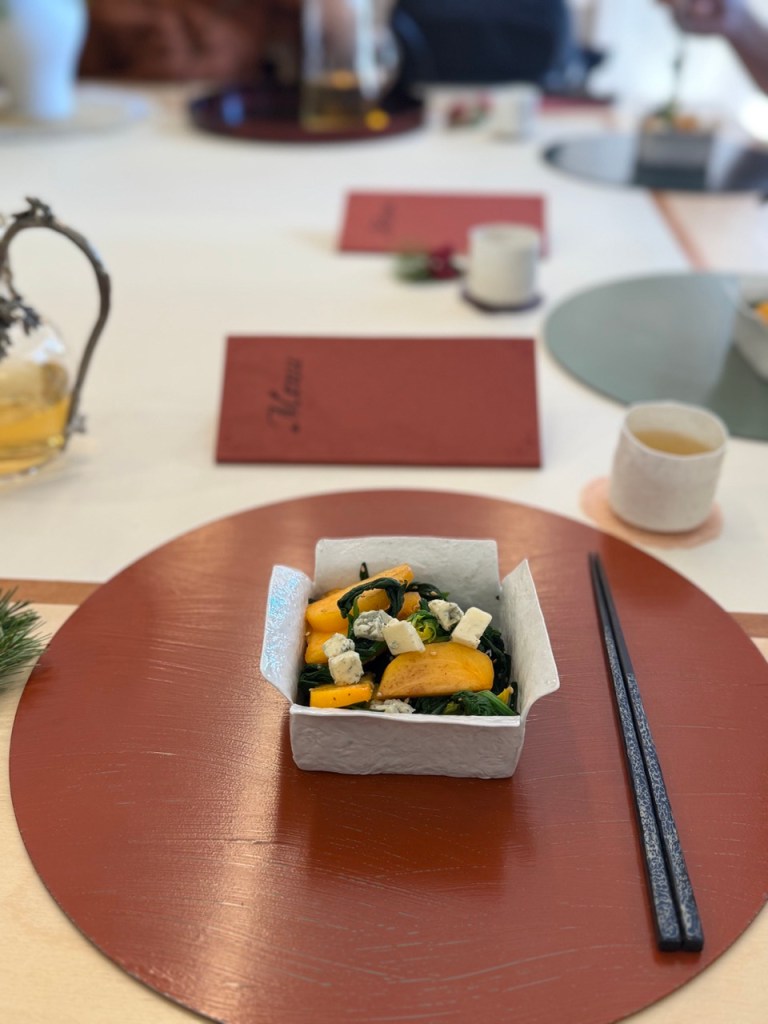
Winter’s Condensed Sweetness: A Spinach, Sweet Persimmon, and Cheese Salad
Next up was a beautifully fresh salad that perfectly captured the essence of the cold season: crisp winter spinach, sweet persimmon, and rich cheese.
For some of my global readers, Sweet Persimmon (단감) might be a bit unfamiliar. During my travels around the world, I rarely came across places where people enjoyed persimmons fresh like we do in Korea!
Seeing the sliced persimmons on my plate instantly unlocked a flood of precious childhood memories. My grandmother’s house in the countryside had several massive persimmon trees. Every Chuseok (Korean Thanksgiving), one of our biggest and most exciting duties as kids was harvesting those high-hanging fruits! We would use long wooden poles specially designed with a split tip to twist and snap the stems. It felt like a thrilling game to us back then.
If we tucked those freshly harvested persimmons under the warm Anraetmok (the warmest part of the traditional Korean heated floor) for just a few days, they would ripen into a deeper orange, becoming incredibly crunchy and sweet.
We also had different varieties: some were flat and stout like Saturn peaches, while others—the fist-sized Daebong (대봉) persimmons—were kept much longer until they turned a fiery orange-red and transformed into Hongsi (홍시). Hongsi is a super soft, ripe persimmon with a texture like honey-sweet jelly that you have to gently slurp up. It was always one of the greatest culinary joys waiting for us right after the autumn harvest season. ^^
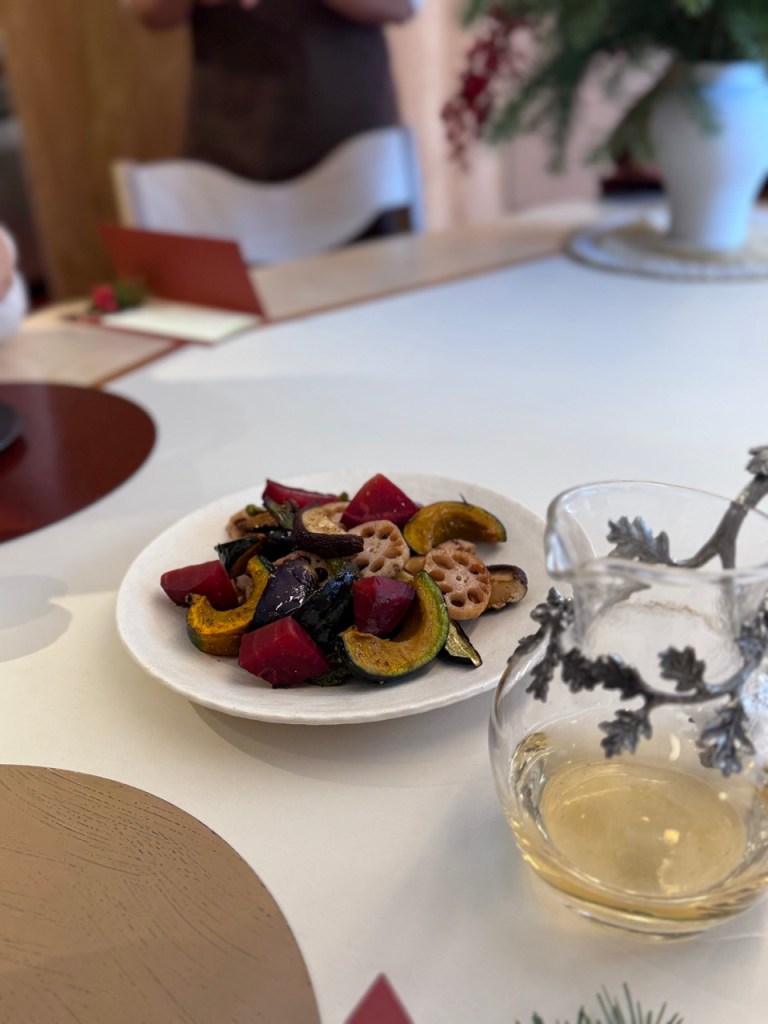
Next came a platter of assorted grilled vegetables, and honestly, it tasted so spectacular that it brought up a familiar cooking mystery: Why is it that when you grill vegetables at home, they never taste this good?
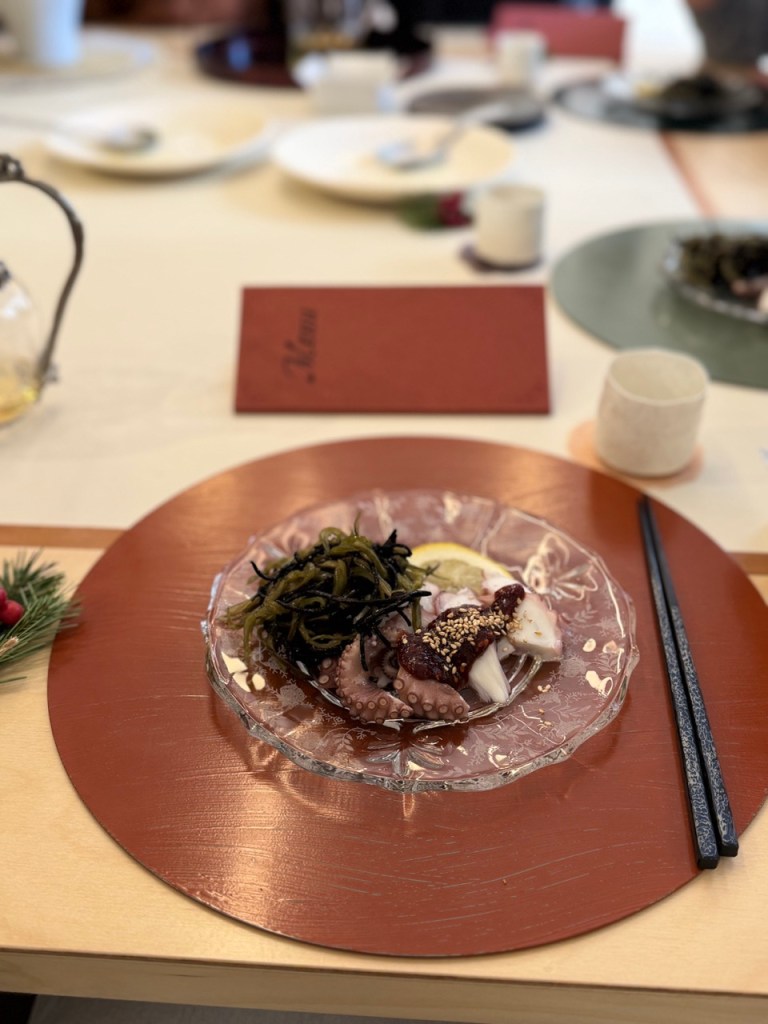
Before moving on to the heavier courses, we were treated to a refreshing oceanic delight: perfectly poached, tender Octopus (문어 숙회) served alongside a vibrant variety of fresh Seaweed (해초).
I absolutely adore seaweed! There is something so incredibly satisfying about its snappy, crunchy, and popping texture. When you dip that fresh seaweed and a slice of melt-in-your-mouth octopus into Chogochujang (초고추장)—the classic Korean sweet and tangy vinegared chili paste—it instantly triggers an explosion of flavors that wakes up every single taste bud. It was the absolute ultimate winter appetizer, completely cleansing our palates and getting us incredibly excited for what was coming next.

The Masterpiece of Care: A 2-Day Labor of Love, Galbi-jjim
For the grand main course, the undisputed king of Korean cuisine made its grand return: Galbi-jjim (갈비찜), the rich and savory braised beef short ribs.
In Korean food culture, Galbi–jjim is not just an everyday dish; it is a sacred menu reserved strictly for special celebratory days or when you want to show someone the absolute highest level of hospitality and respect.
The reason it carries such a high status is because of the sheer time and dedication required to make it. To do it right, the process easily takes two full days, starting from hours of carefully drawing out the blood from the meat, trimming the fat, to hours of slow-simmering in a rich marinade.
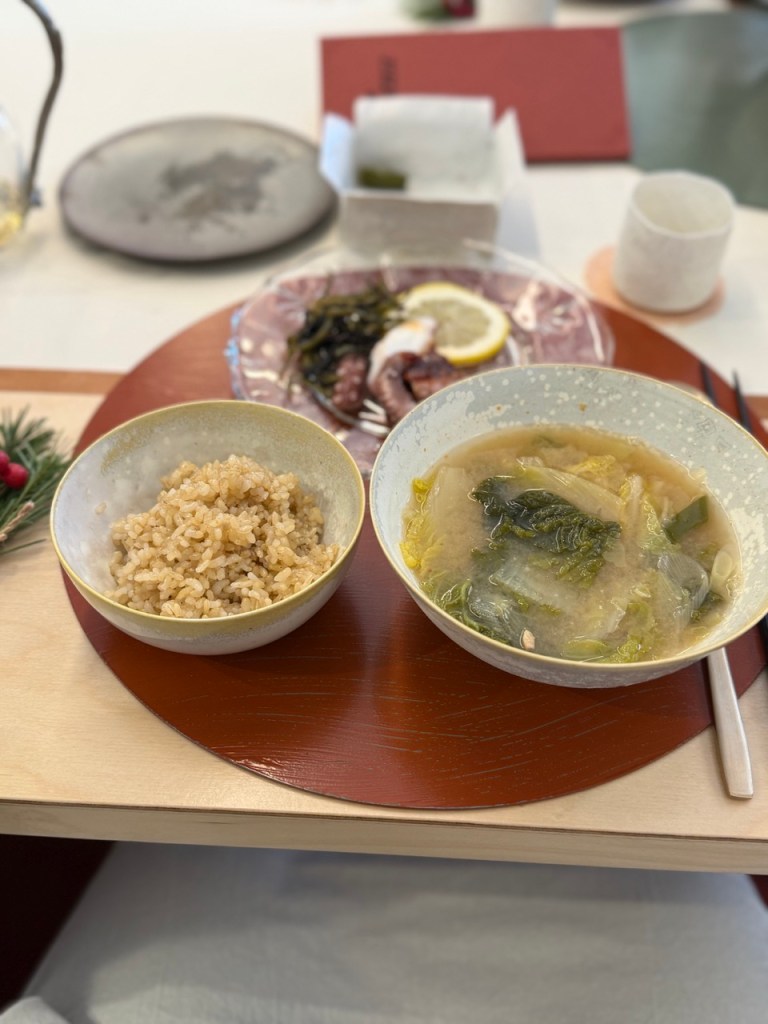
To accompany our magnificent Galbi-jjim, the chef served a health-conscious bowl of freshly cooked Jabgok-bap (잡곡밥)—Korean multigrain rice—paired with a steaming, fragrant bowl of Baechu-Doenjang-guk (배추된장국), which is a traditional soybean paste soup brewed with sweet winter napa cabbage
In Korea, as the weather turns freezing cold, families gather for an annual event called Gimjang (김장)—the massive, communal process of making a whole year’s worth of Kimchi. During this season, napa cabbage shrinks in size but concentrates its sugars, becoming incredibly sweet and crisp. Naturally, we use the tender leftover cabbage leaves to brew this comforting soup all winter long.
The recipe is beautifully simple yet exceptionally flavorful. You start with a deeply savory anchovy stock, dissolve a generous spoonful of traditional Korean soybean paste (Doenjang), toss in rough-cut pieces of sweet winter cabbage, and bring it to a rolling boil (Bareureuk). It’s an effortless, everyday dish, but the depth of comfort it provides is unmatched. (I definitely need to share my own recipe for this on the blog sometime soon!)
The Exquisite Grand Finale: Artisanal Korean Tea & Confections
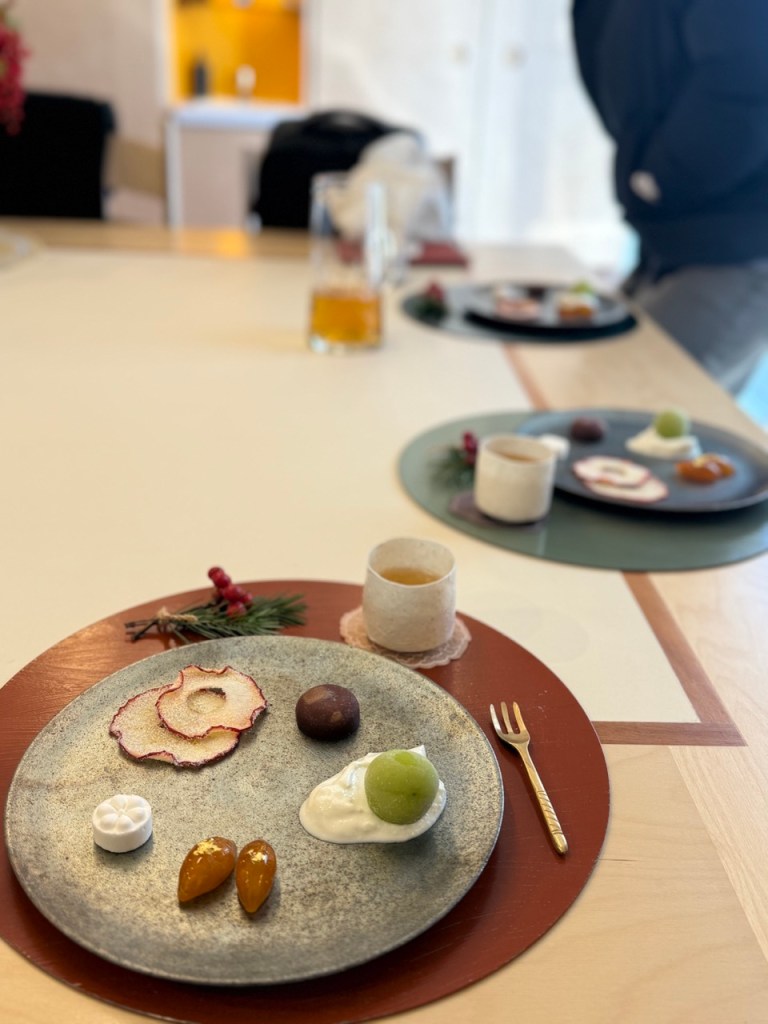
To officially bring this magnificent winter feast to a close, the chef presented us with a stunning, house-made platter of traditional Korean confections, known as Dagwa (다과), paired with a cup of warm, aromatic tea.
Let me tell you, making traditional Korean Dagwa from scratch is an absolute labor of love that requires an unbelievable amount of patience, time, and precision. It is less about standard cooking and more like a delicate form of edible art.
Dasik (다식): Delicate, melt-in-your-mouth tea cakes made by kneading fine powders (like sesame seeds or grain) with raw honey, then meticulously pressing them into intricate, hand-carved wooden molds to imprint traditional longevity patterns.
Bam-jorim (밤조림): Plump chestnuts that are painstakingly peeled by hand, then slow-braised over days in a rich, sweet syrup until the sugar fully permeates to the very core, creating a glossy, velvet-soft jewel.
Sliced Apple & Kumquat Preserves (사과 절임 & 금귤조림): Fruits that are micro-sliced, gently simmered, and candied to lock in their vibrant winter brightness and concentrated tart-sweetness.
Every single element on this plate took days of meticulous preparation. Tasting these exquisite sweets alongside a cup of warm tea was the most comforting, luxurious exclamation point to our holiday meal. It felt like receiving a heartfelt, edible thank-you note from the chef.
The Ultimate Gift of “Jeong (정)”: A Beautifully Wrapped Surprise
Just when we thought this magical evening couldn’t possibly get any better, the chef completely melted our hearts with one final, unexpected gesture.
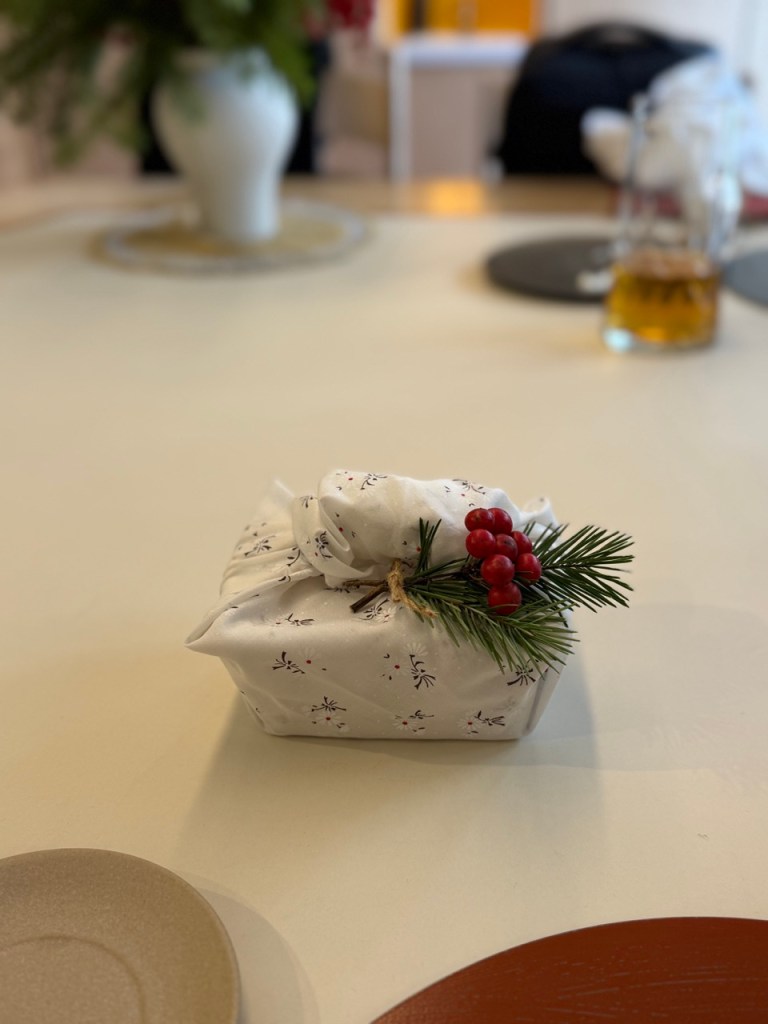
As we were preparing to leave, the chef handed us a surprise package. While cooking our multi-course meal, she had intentionally made extra portions of our favorite side dishes and that incredible Geotjeori (fresh kimchi), and she packed them all into takeaway containers for us to enjoy at home!
To make it even more special, the boxes weren’t just tossed into a plastic bag—they were meticulously wrapped in a gorgeous, traditional Bojaki (보자기)—a Korean silken wrapping cloth. It honestly felt like receiving a precious, beautifully wrapped holiday gift.
In Korea, we have a deep spiritual and emotional concept known as Jeong (정)—a profound feeling of attachment, affection, and warmhearted bond. More often than not, Koreans express this Jeong through food. Feeding someone well, and ensuring they leave with a full stomach and a happy heart, is our ultimate love language.
To experience that pure, unfiltered essence of traditional Korean Jeong from a restaurant chef was deeply moving. Walking out into the chilly winter night with that warm, beautiful Bojaki bundle in my hands, I felt an overwhelming wave of gratitude. It was a beautiful reminder of how food can truly heal, connect, and comfort the soul.
Leave a Reply