
The Irony of K-Summer: Fighting Fire with Fire on Boknal
Seoul has officially crossed into that season where the heavy, humid summer heat hits you the moment you step outside. While having four distinct seasons is beautiful, entering the dead center of a Korean summer can easily leave your body feeling drained and exhausted. When the heat saps your energy, what is your go-to cure? An ice-cold Americano? A scoop of refreshing ice cream?
Well, what if I told you that Koreans fight this brutal humidity by eating steaming, boiling, scorchingly hot food? Sounds crazy, right? I know it’s hilarious because in my very last posts, I was just shouting from the rooftops about ice-cold Chogye-tang and chilled noodles. But this paradox is actually the ultimate secret to Korean summer survival!
[ 🌡️ The Ancient K-Survival Philosophy ]
• The Phrase ──> Iyeol-chiyeol (이열치열 — Controlling heat with heat)
• The Science──> Sweating it out with a boiling hot bowl of soup actually triggers your body’s natural cooling mechanism, balancing your internal temperature with the scorching weather outside!
What is Iyeol-chiyeol? Iyeol-chiyeol (이열치열) is a traditional Korean philosophy and culinary wisdom that translates to “fighting fire with fire,” meaning one overcomes the oppressive summer heat by consuming hot, nourishing foods.
To make things even more fascinating, Korea actually has designated seasonal days on the lunar calendar specifically for practicing this philosophy, known as Boknal (복날).
What is Boknal? Boknal refers to the three hottest, most energy-draining days of the summer season, during which Koreans traditionally eat high-protein, nutrient-dense stamina foods to replenish their vitality.
These scorching days are meticulously broken down into three distinct phases across a month-long period:
- Cho-bok (초복): The official entrance marking the very beginning of the peak summer heatwave.
- Jung-bok (중복): The absolute dead center and climax, representing the most humid and oppressive days of the year.
- Mal-bok (말복): The final hurdle, signaling the last stubborn stretch of heat before autumn gently takes over.
On each of these three crucial days, lines stretch entirely around the block at local restaurants as everyone rushes to get their boiling hot herbal soups.

The Ultimate K-Soul Food for Chobok: Samgyetang (Ginseng Chicken Soup)
As a matter of fact, Chobok (초복) is just around the corner on July 15th! When that day officially arrives, you can almost certainly find me sitting in front of a boiling, stone pot of Samgyetang. To get you perfectly prepared for this massive national food day, I am dedicated this post to breaking down Korea’s undisputed champion of summer stamina!
I have heard that in many Western countries and cultures, when you are feeling under the weather or exhausted, people instinctively whip up a warm, comforting bowl of classic chicken soup. It’s comfort food that restores your spirit.
Think of Samgyetang as the ultimate, hyper-boosted premium version of that universal chicken soup.
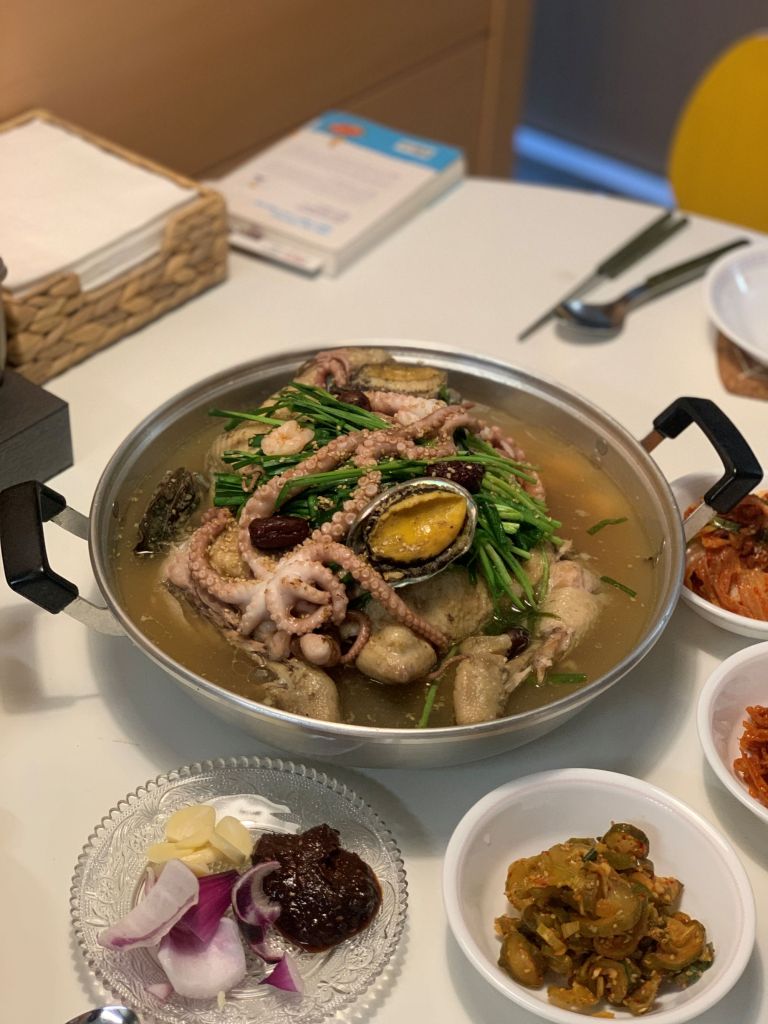
Instead of the usual Western chicken soup, Korean Samgyetang features a whole tender young chicken stuffed tightly with sweet glutinous rice. This stuffed chicken is then slow-simmered for hours alongside potent medicinal roots and fruits, most notably whole Korean ginseng and sweet red jujubes.
As these premium ingredients boil together in a traditional clay pot, the meat becomes incredibly soft, and the liquid transforms into a rich, milky broth. The combination of ginseng and garlic creates an aromatic herbal medicine that revitalizes your body and helps you sweat out the summer sluggishness. It is the absolute gold standard of the Iyeol-chiyeol philosophy, and it’s exactly what you need to survive the peak summer heatwave.
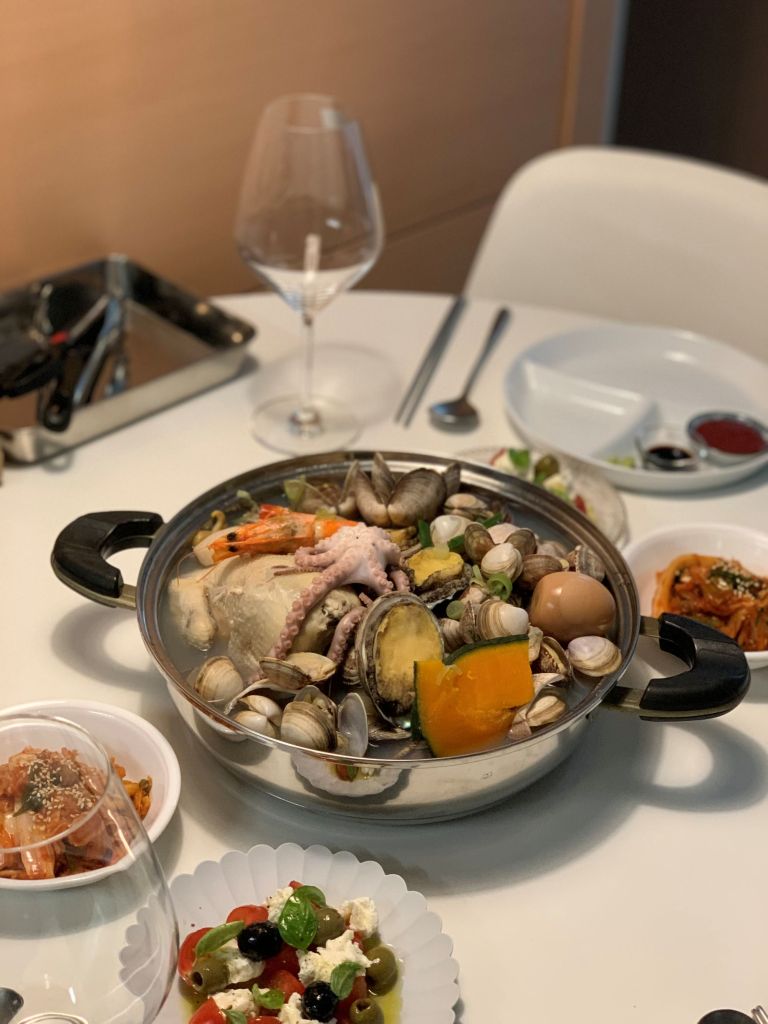
The photos I am sharing today might all look somewhat similar at a glance, but they actually represent a precious collection of the various Samgyetang versions I’ve eaten over the years for Chobok, Jungbok, and Malbok.
To be honest, these aren’t from a famous restaurant. Working a busy corporate job makes it incredibly hard for me to cook these traditional seasonal dishes for myself. Knowing this, my mother lovingly brews a massive pot of this herbal chicken soup every single summer and insists that I take it home. I can feel her silent, warm prayer in every spoonful—a mother’s heart hoping her child stays strong and healthy through the exhausting summer days.
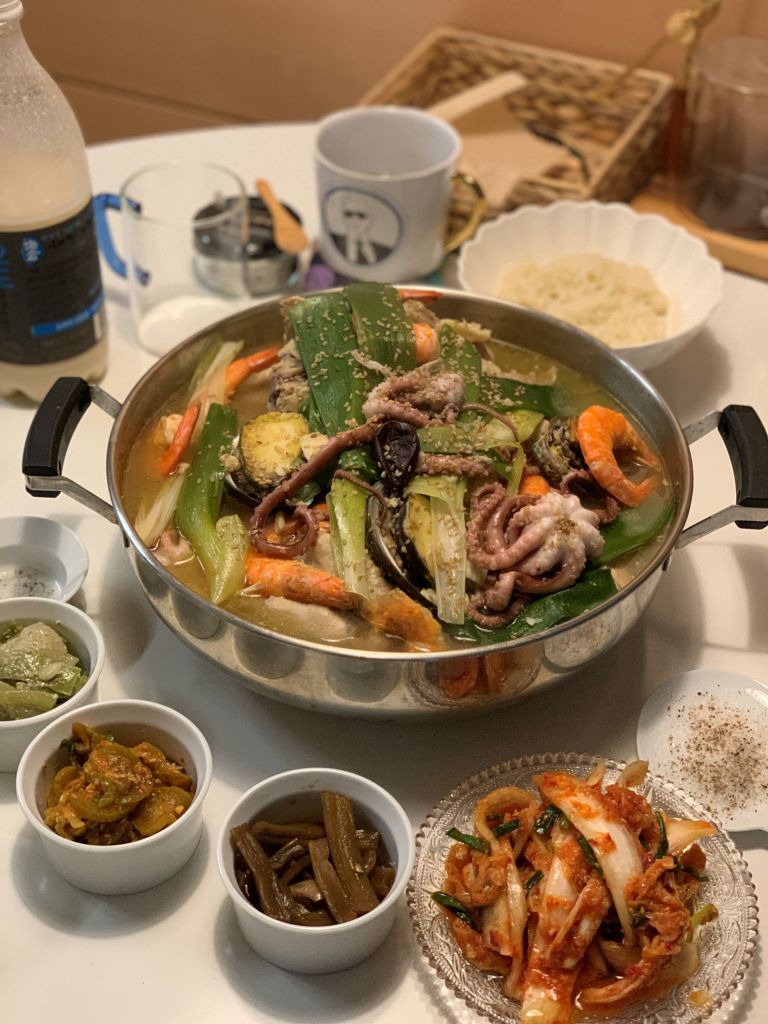
While the classic version focuses entirely on chicken and land herbs, Samgyetang can also evolve beautifully depending on what luxurious ingredients you add next. For an extra boost of stamina, many Korean households add fresh abalone or chewy whole octopus into the boiling pot. Some even throw in plump shrimp and sweet clams, creating a spectacular surf-and-turf broth where the rich energy of the land perfectly harmonizes with the refreshing vitality of the sea.

The Ultimate K-Summer Escape: Dining by the Mountain Valleys
Actually, the Samgyetang dishes you see here were enjoyed at a rustic restaurant right next to a cool mountain valley. In Korea, mountain streams are packed with traditional open-air restaurants during the peak summer months. It is a massive part of our seasonal culture to go splash around in the refreshing water, or simply dip your feet into the freezing stream, and then head up to a shaded wooden platform to recharge your stamina with a boiling hot poultry dish.
The Crown Jewel of Wild Herbs: Rare Neungi Mushroom Baeksuk
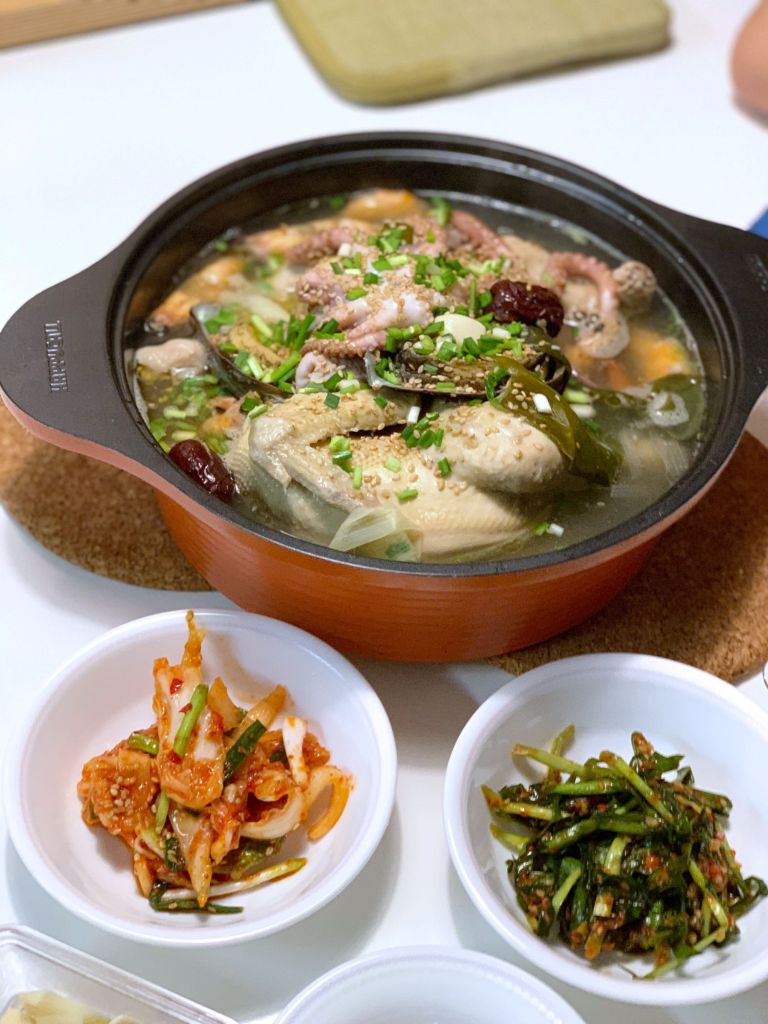
The specific masterpiece we ordered at this valley oasis was a premium whole-chicken soup infused with rare, wild Neungi mushrooms (능이버섯 — Black Pine Chanterelles). In Korea, there is an old culinary proverb stating that Neungi is the absolute number one among all wild mushrooms due to its deep, earthy aroma and medicinal health benefits. The dark, savory broth completely soaked up the woody, rich essence of the mushrooms, creating a deeply comforting elixir that made us instantly forget about the humid summer heat outside.
The Unbeatable Sidekicks: Why Koreans Need Kimchi with Every Bite
While a rich bowl of Samgyetang is incredibly comforting, eating nothing but tender chicken and milky broth can eventually feel a bit heavy or monotonous on the palate. When that moment hits, there is only one ultimate savior that every Korean instinctively reaches for: a plate of vibrant, spicy Kimchi. Whether it is classic baechu-kimchi (napa cabbage), pungent pa-kimchi (green onion), fresh buchu-kimchi (chives), crunchy kkakdugi (diced radish), or even just a tangy Western pickle in a pinch, we simply cannot survive a rich meat meal without the sharp, refreshing kick of red pepper seasoning.
The Secret Welcome Drink: Why Samgyetang Comes with Free Ginseng Wine
Another fascinating tradition you will encounter at authentic Samgyetang restaurants is that they almost always serve a complimentary shot of house-brewed Insam-ju (인삼주 — Ginseng Wine) right before your main meal arrives. This isn’t just a random freebie; it serves a brilliant functional purpose. This shot of highly aromatic, herbal alcohol is meant to instantly stimulate your appetite, warm up your digestive tract, and prepare your stomach to efficiently process the incredibly rich, high-protein chicken broth that is about to follow.
Elevating the Feast at Home: Pairing with Traditional Bekseju
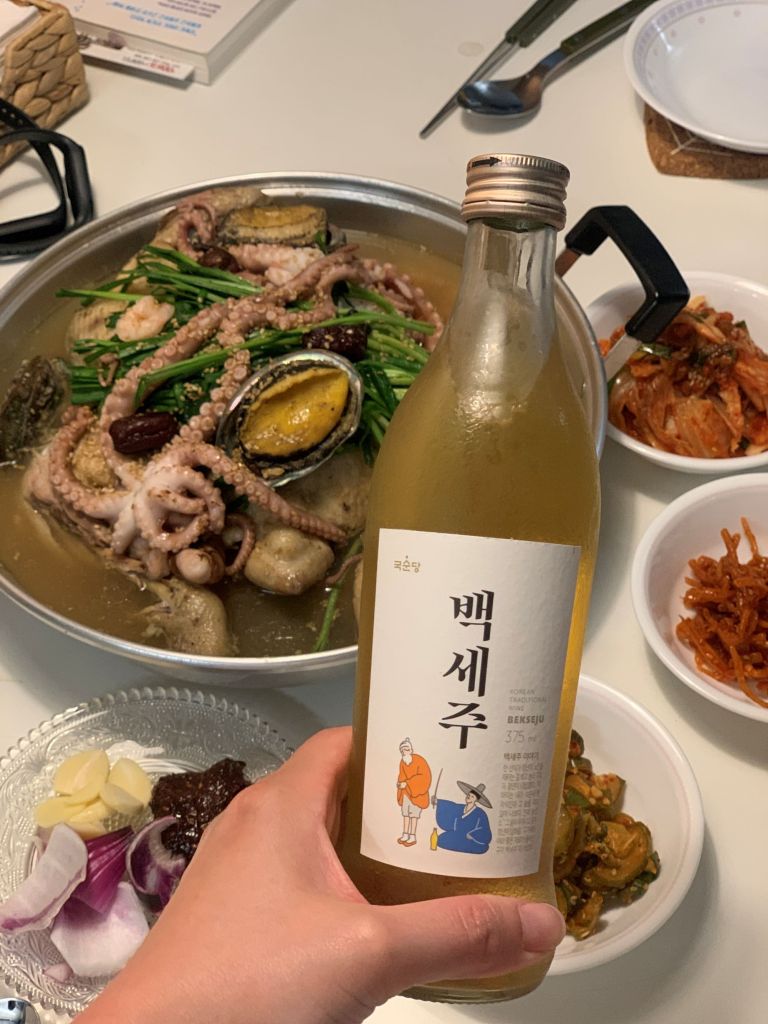
Since I am enjoying my feast at home today, I decided to pair my soup with a chilled bottle of Bekseju (백세주).
Bekseju is a premium, traditionally brewed Korean rice wine infused with a blend of twelve medicinal herbs, featuring a smooth, bittersweet profile and a distinct ginseng aroma that closely mirrors the character of authentic Insam-ju.
The Ice-Cold Alternative: Chilled Mustard & Vinegar Chicken Noodles
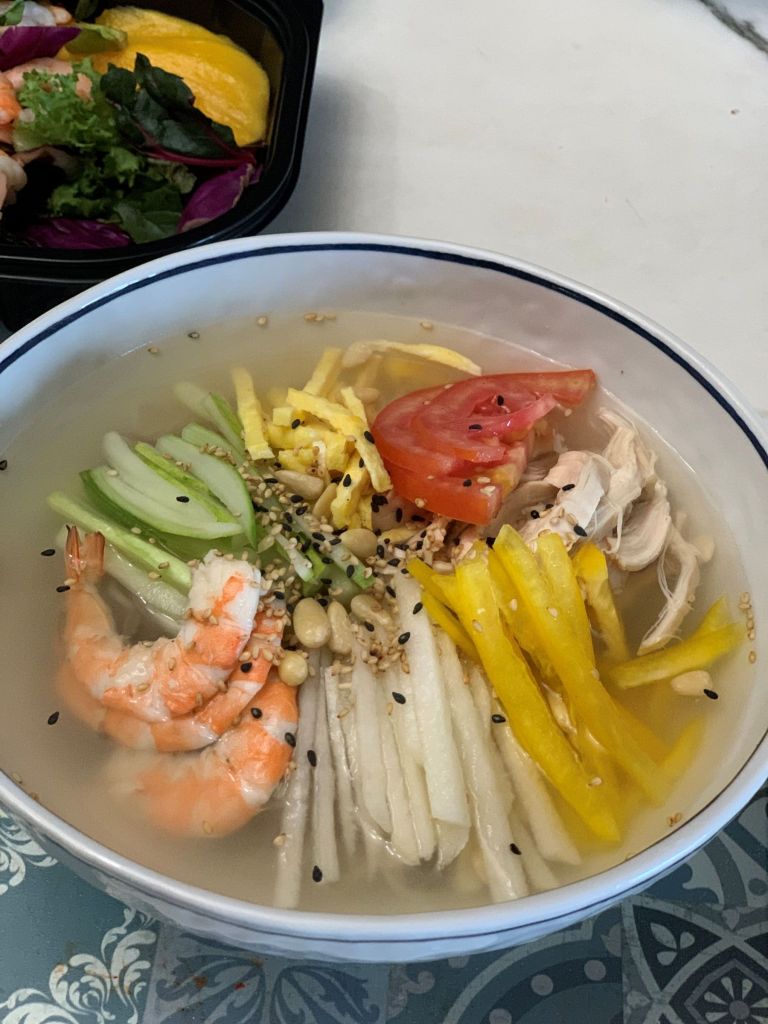
If the mere thought of sipping boiling hot broth in the dead of a humid summer sounds absolutely unbearable to you, don’t worry—there is a spectacular cold alternative! You can easily transform the rich Samgyetang broth into a refreshing summer oasis. Simply let the broth cool completely down in the refrigerator, meticulously skim off the top layer of oil until it’s crystal clear, and then season it heavily with sharp mustard and tangy vinegar. Shred the tender chicken meat on top and serve it ice-cold over a bed of chewy wheat noodles or a bowl of fluffy rice.
The natural acidity of the vinegar acts as an instant palate-waker, cutting through any residual heaviness and immediately reviving an appetite completely lost to the oppressive heatwaves. It’s an incredibly clever, refreshing twist that delivers all the deep nutrients and protein of the traditional stamina soup, but with a frosty, bone-chilling thrill that will make you forget the summer ever existed.
Simplicity at Its Best: Anyone Can Brew This Energy Boost
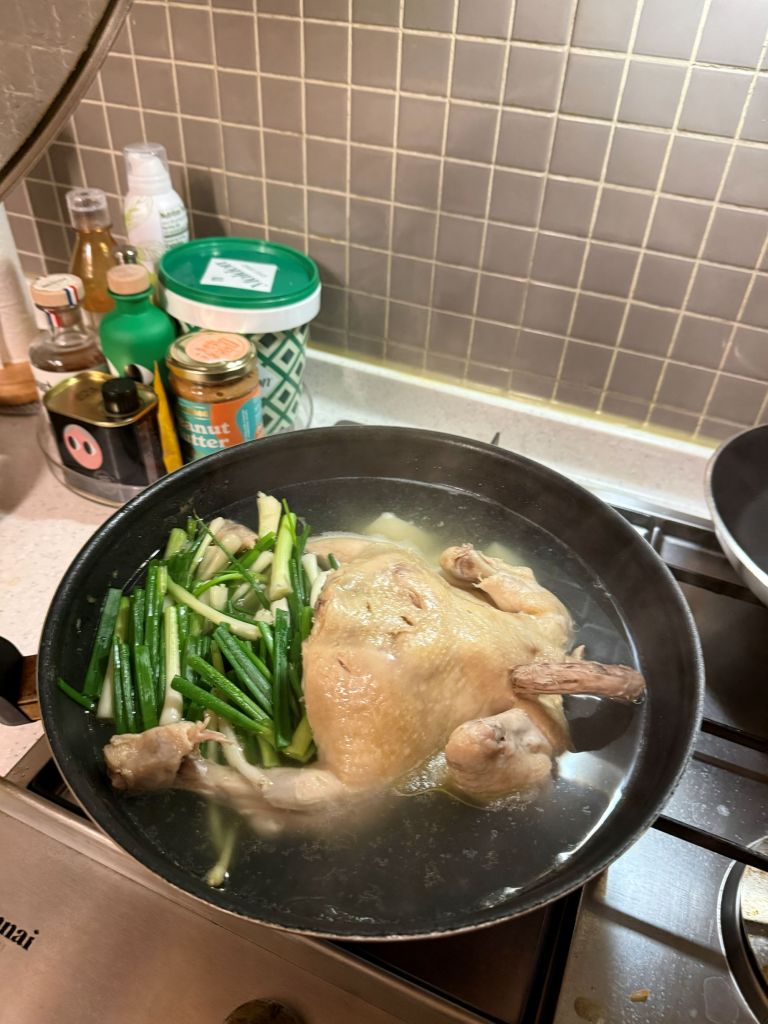
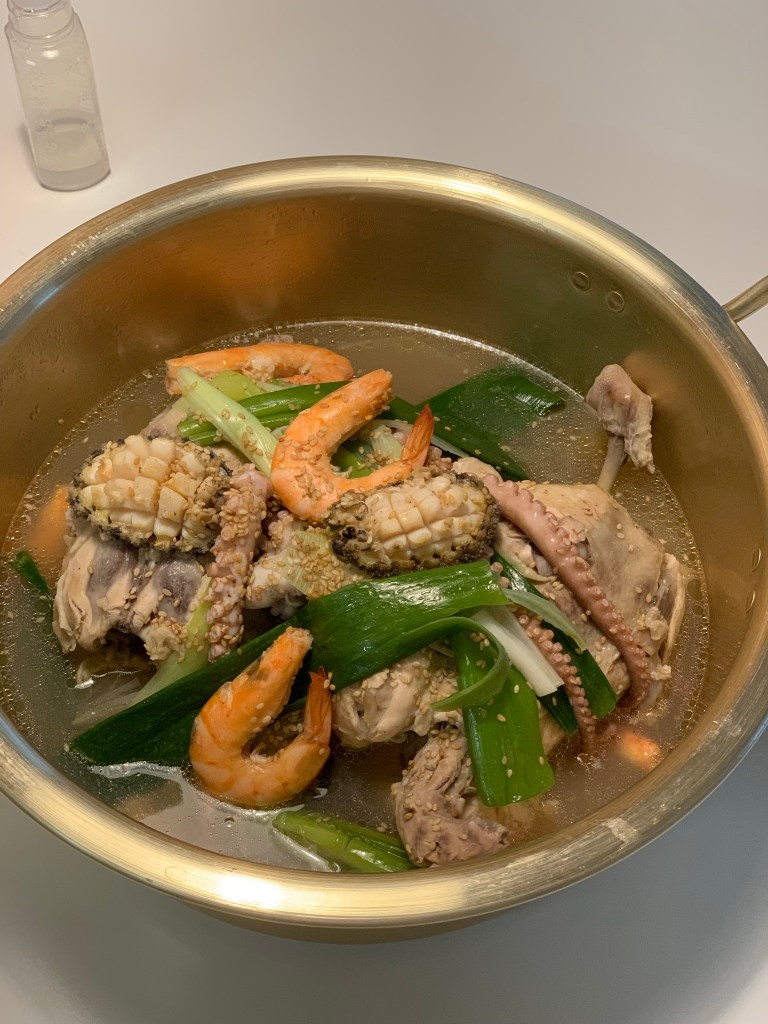
At the end of the day, the absolute best part about Samgyetang is how deceptively simple it is to make. There is no complicated culinary technique involved—honestly, you just put a whole chicken in a pot of water, toss in the herbs, and let it boil away! If you have been feeling completely drained by the recent heat, I highly encourage you to give this a try in your own kitchen; you will be amazed at how quickly it restores your inner energy.
❄️ What’s Next? The Winter Flipside: I-naeng-chi-naeng
This unique cultural wisdom of fighting a hot summer with sizzling food actually has a fascinating twin sister in the winter. Just as we use heat to conquer heat, Koreans also practice I-naeng-chi-naeng (이냉치냉), which means “controlling cold with cold”—eating ice-cold delicacies in the dead of winter!
I have linked one of my favorite previous posts right below, so definitely check it out to dive into the cool and crispy world of Korea’s winter food culture. Stay healthy, enjoy your cooking, and I’ll see you in the next episode!
Leave a Reply