Bringing the Viral K-BBQ Home: My Homemade Chadol Gujeolpan Recipe
In one of my previous posts, I introduced an unforgettable K-BBQ spot in Apgujeong-dong famous for its Chadol Gujeolpan (차돌구절판 — Thinly Sliced Beef Brisket Platter with 9 Delicacies). When I visited back then, the restaurant was already packed with international travelers falling in love with its interactive dining experience!
Seeing how much everyone enjoyed it, a thought struck me: “Even if you can’t visit Seoul right now, shouldn’t everyone get to experience this amazing dish?” That sweet thought inspired me to share a special, step-by-step home recipe so you can recreate this lavish feast right in your own kitchen—making it even more generous and customized with all your favorite ingredients!

Adding to the specialness, this was also the day I cooked a loving meal for my parents after a long time. Cooking this colorful, interactive dish at home brought so much warmth, laughter, and joy to our family dinner table.

The Royal Heritage: What is Traditional “Gujeolpan”?
Before we dive into the meaty goodness of thin brisket, it’s worth understanding the royal history behind this dish.
Traditional Gujeolpan (구절판) is one of the most iconic, visually stunning masterpieces of Joseon Dynasty Korean Royal Court Cuisine. The name literally translates to a “nine-sectioned octagonal plate” (Gu = 9, Jeol = section, Pan = plate). In Korean culture, the number 9 holds a profound significance, symbolizing harmony, completeness, and perfection.
The dish features an intricately crafted wooden platter divided into nine compartments:
- The Center: Holds paper-thin, delicate wheat crepes called Miljeonbyeong (밀전병).
- The Surrounding Eight Sections: Arranged with eight finely shredded, colorful cooked ingredients—usually meat, mushrooms, and seasonal vegetables (like carrots, cucumbers, and egg ribbons).
The Art of Balance: Obangsaek (Five Traditional Colors)
Gujeolpan isn’t just about feeding the body; it’s an art form representing Obangsaek (오방색)—the five traditional Korean colors (white, black, red, yellow, and blue/green) aligned with the five elemental forces of the universe.
Diners gently place a bit of each colorful ingredient onto a thin crepe, wrap it up into a tiny bundle, and dip it in a savory mustard or soy sauce. It is a slow, mindful, and elegant eating experience designed for royalty—a harmonious balance of color, texture, temperature, and nutrition.
By replacing the delicate crepes with sizzled thin beef brisket (Chadolbagi), modern K-BBQ has brilliantly transformed this ancient royal elegance into a mouth-watering, interactive feast!

The Ultimate Party Food: Royal Elegance Meets Modern Convenience
Now that you know the noble meaning behind Gujeolpan, you can see why I am so obsessed with recommending it as the ultimate home party menu! Offering a meal rooted in wishes for harmony, health, and completeness is genuinely one of the most heartwarming ways to welcome beloved guests into your home.
The beauty of this modern version lies in its brilliant simplification. Traditional Gujeolpan is notorious for being labor-intensive, requiring endless fine chopping and delicate crepe-pan frying.
However, Chadol Gujeolpan preserves the traditional aesthetic of balance and color while re-engineering it for total modern convenience!
Cook Together, Feast Together: The Joy of One-Pan Dining
Instead of spending hours stressed out in the kitchen before guests arrive, all you need is one large round griddle or flat pan placed right in the center of the dining table!
Everyone gathers around, watching the thin beef brisket sizzle and release its savory, flavorful fats. You toss in your favorite veggies, mushrooms, and sides, letting them absorb that rich richness right before your eyes.
The host doesn’t miss out on the conversation, and the guests get an incredibly fun, interactive culinary experience. It turns a simple dinner into a memorable live cooking show filled with sizzling sounds, incredible aromas, and shared laughter!
Okay, Here is everything you need to recreate this magnificent feast at home for a family or group of four


🛒 Ingredients List for 4 Servings
[Main Star]
- Thinly sliced Beef Brisket (Chadolbagi / 차돌박이): 600g ~ 800g
[The Colorful Surroundings]
- Water parsley (Minari / 미나리): 150g
- Blanched bracken (Gosari / 데친 고사리): 150g
- Soybean sprouts (Kongnamul / 콩나물): 200g
- Well-ripened Kimchi (Gimchi / 김치): 200g (bite-sized slices)
- Eggs (Gyeran / 계란): 4 eggs (1 per person)
*** If you are cooking outside Korea and struggle to find fresh Water Parsley or Fernbrake, don’t worry! You can easily substitute them with ingredients available in any local supermarket: - Instead of Water Parsley (Minari): Use fresh Watercress, Cilantro (Coriander), or Baby Spinach combined with finely sliced Green Onions (Scallions). Watercress offers that same herbal, peppery kick!
- Instead of Bracken (Gosari): Use sliced Brown Beech Mushrooms (Shimeji), Cremini Mushrooms, or Portobello Mushrooms. Their earthy tone and chewy texture make a fantastic match for beef brisket fat!
[The Wraps]
- Small Tortillas (Ttottia / 또띠아): 1 pack (8–12 small tortillas)
[The Must-Have Gear]
- A Large Round Griddle or Flat One-Pan (대형 그리들 / 원팬): Placed right in the middle of your dining table (ideally with a portable burner) to create an interactive live-cooking stage!


🔪 Detailed Step-by-Step Prep Work
Before firing up the griddle, spend a few minutes prepping your vibrant ingredients like a pro:
- Water Parsley (Minari): Trim off the overgrown leafy tops (leaving mostly the crunchy stems). Wash thoroughly in cold water and cut into neat 5–7cm pieces.


2. Bracken (Gosari): Store-bought pre-blanched bracken is super easy! Rinse well in cold water, align the stems, and cut into uniform lengths (about 5–7cm).


3. Soybean Sprouts (Kongnamul Seasoning): Blanch the soybean sprouts in boiling water briefly until tender-crisp. Drain well, then gently mix with the following seasoning
–Gochugaru (Korean Chili Flakes): 2 tbsp
–Salt: 1 tsp
–Sesame Oil: 1 tsp
–Toasted Sesame Seeds: To taste
4. Kimchi: Chop your well-ripened kimchi into bite-sized pieces, matching the length of the other veggies.
5. Eggs: Whisk all 4 eggs thoroughly in a bowl with a pinch of salt until smooth and ready to pour.


6. Tortillas: Stack and cut small tortillas into quarters for easy bite-sized wraps. Microwave them briefly for 30–40 seconds just before serving to keep them soft and pliable!
💡 Pro-Tip: Make It Your Own! There are no strict rules when it comes to vegetables! If you can’t find a specific green, simply skip it or swap in your absolute favorites like sliced mushrooms, zucchini, or bell peppers. Customize it to your heart’s desire!
Step-by-Step Cooking Guide
Now for the fun part—cooking live right at the table! Place your large griddle on a portable burner and follow these easy steps:

Step 1: The Brisket Sizzle & Fragrant Water Parsley
Spread the thinly sliced beef brisket (Chadolbagi) evenly across the pan and place the chopped water parsley (Minari) right in the center. And then, turn on the heat. As the beef cooks, it will render out rich, savory fat while the fragrant aroma of water parsley fills the room!


Step 2: Searing the Veggies in Beef Fat
Once the brisket is fully cooked, move the crispy meat slices toward the outer rim of the griddle to keep them warm. Now, utilize that liquid gold—the rendered beef fat—in the center to quickly sear each ingredient one by one:
- Water Parsley: Quickly toss and move it next to the beef.
- Bracken (Gosari): Lightly sauté until tender, then arrange it on the side.
- Soybean Sprouts (Kongnamul): Stir-fry briefly for that satisfying crunch, and push to the outer rim.
- Kimchi: Stir-fry the sliced kimchi until slightly translucent and caramelized, then set aside along the rim.
Step 3: The Fluffy Egg Centerpiece
With all your beautifully cooked meats and colorful veggies now forming a vibrant outer ring, pour your seasoned, beaten egg mixture directly into the empty center of the griddle. Lower the heat slightly and let the egg gently puff up into a soft, fluffy, cloud-like center.
Step 4: Warm Tortillas & Feast!
Grab a warm tortilla slice, pile on a bit of juicy beef, seasoned veggies, caramelized kimchi, and a spoonful of fluffy egg, roll it up, and enjoy!

Pure Flavor Perfection: Skipping the Sauce for Natural Harmony
Searing the vegetables and pouring the beaten eggs directly into that rich, rendered beef brisket fat creates an unbelievable layer of depth, richness, and nutty aroma. Every single ingredient absorbs that savory goodness!
Traditionally, Chadol Gujeolpan is served with a side dipping sauce made of soy sauce and vinegar. However, I found that wrapping everything together with the pan-seared Kimchi rendered any extra sauce completely unnecessary! The tangy, caramelized Kimchi naturally balanced the rich beef fat, while a heavy dipping sauce only masked the delicate flavors.
By skipping the sauce, you get to truly appreciate the distinct texture, freshness, and natural taste of each individual ingredient working in perfect harmony. I highly encourage you all to try it this way—letting the pure, rich flavors shine on their own!
🍶The Perfect Pairing: Sake, Family, and Pure Happiness
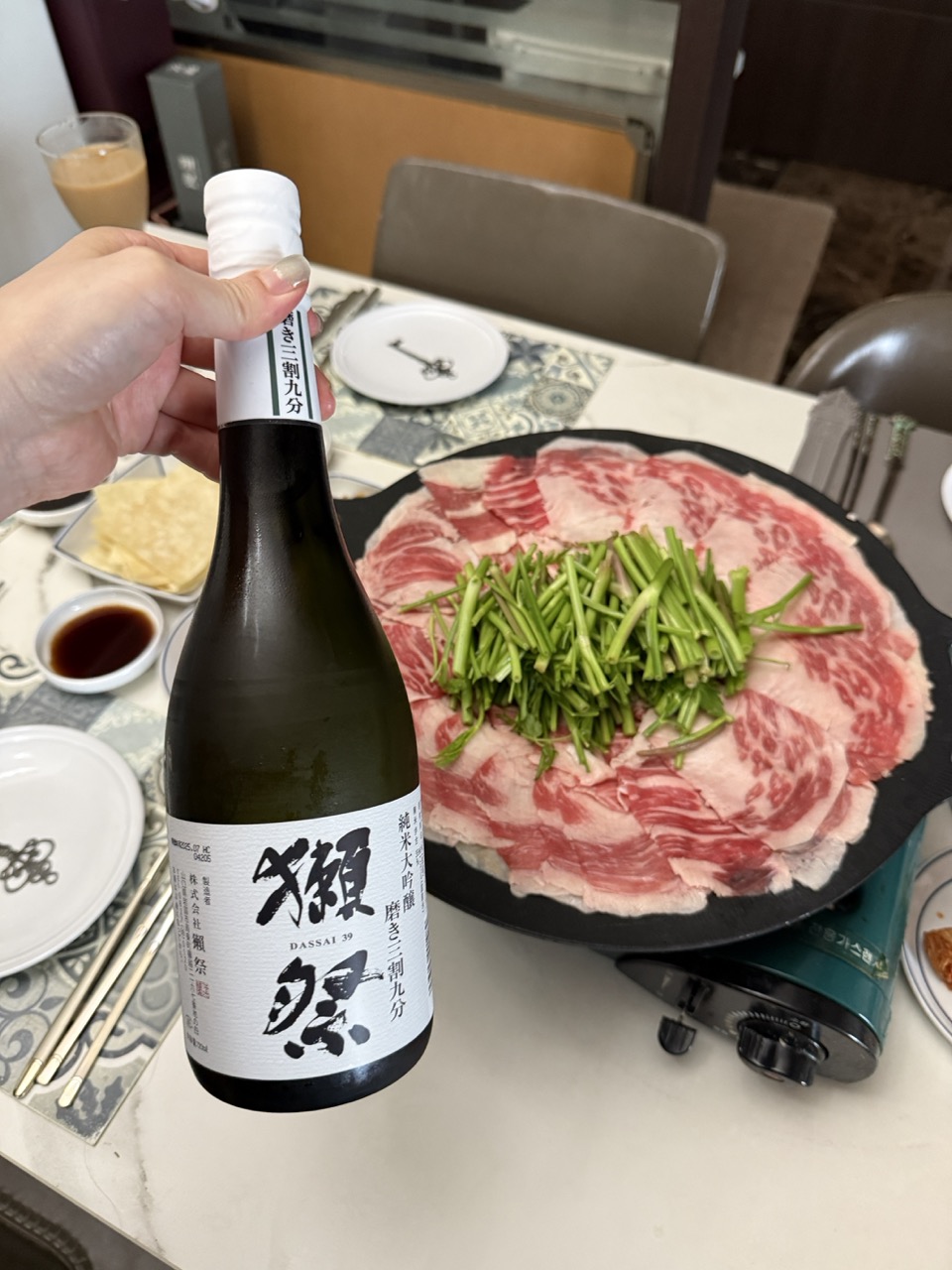
Instead of a dipping sauce, we paired this rich, savory dish with Nihonshu (Sake)!
It was a special bottle I had brought back as a gift for my father from my recent trip to Japan. Enjoying this fine sake alongside the homemade Chadol Gujeolpan, surrounded by family, made the dinner feel infinitely more fulfilling and warm. There is truly nothing quite like treating your parents to a delicious, home-cooked meal prepared with so much love and respect.
Try It at Home or Visit in Person!
This dish is surprisingly easy to prep, visually impressive, and guaranteed to bring immense joy, laughter, and interactive fun to any gathering. If any of you decide to recreate this recipe at home, please share your photos and experiences with me in the comments! I would love to see your unique creations!
For those currently in or planning a trip to Seoul, who want to taste the absolute “pro-level” version made by top chefs, check out my previous review of the famous Apgujeong restaurant below! 👇
And if you are curious about other authentic Korean feast tables and hosting ideas, don’t forget to explore my other linked posts as well! Happy cooking and cheers!
Leave a Reply