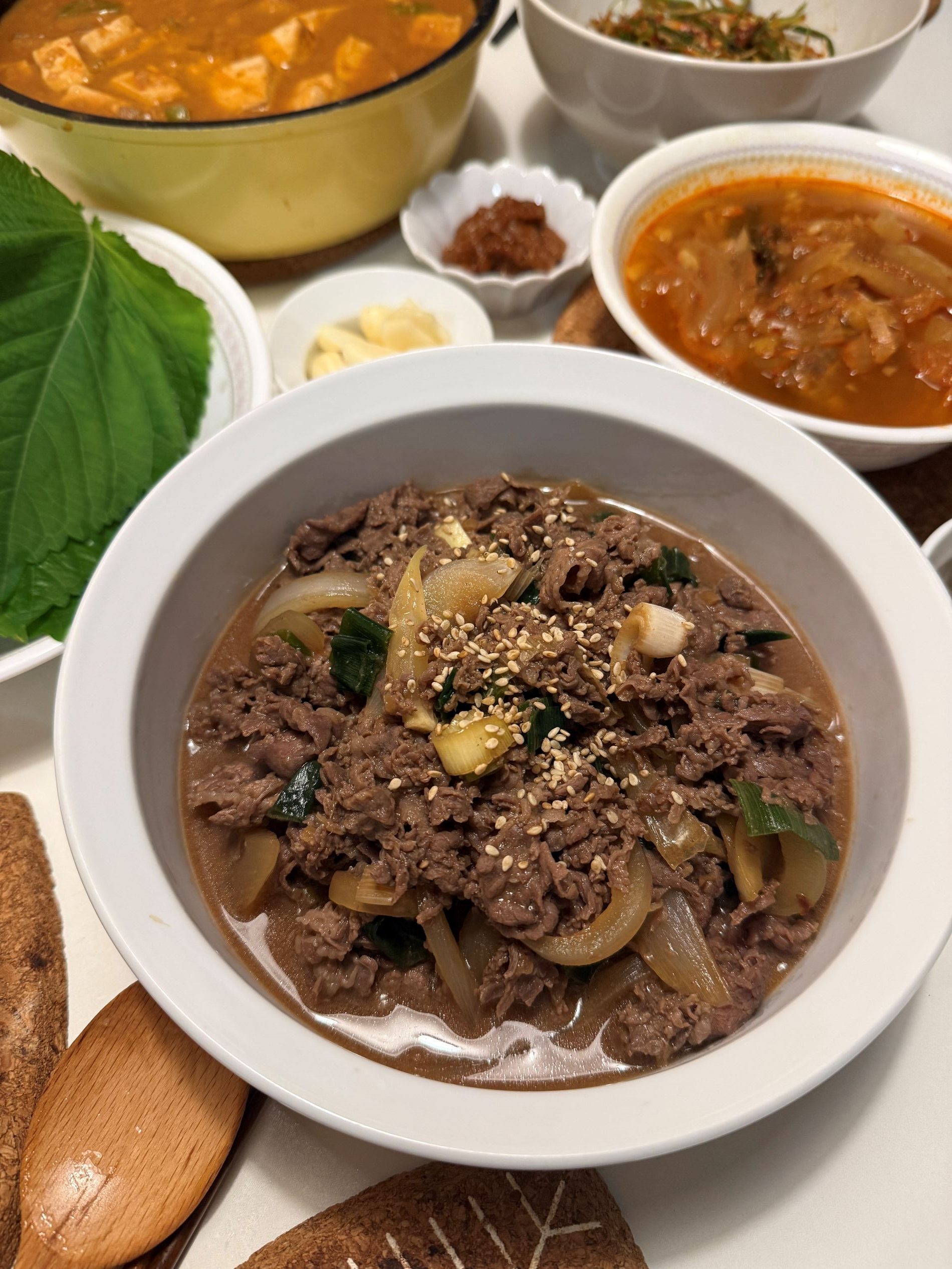
10-Minute Bulgogi Recipe — A Simple & Delicious Weekend Feast
This past weekend, my husband casually mentioned how much he was craving Bulgogi wrapped in fresh lettuce greens (Bulgogi Ssam)!
When you use a store-bought marinade sauce, making authentic Korean Bulgogi becomes unbelievably quick and effortless! With just a quick prep of fresh vegetables, this entire dish comes together in under 10 minutes!
I’ve put together a simple step-by-step guide so all of you can easily recreate this cozy weekend meal at home!

🛒 Simple Ingredients list (1-2 Servings)
–Thinly Sliced Beef for Bulgogi — 300g~400g
–Onion — 1/2 whole
-Green Onion — 1 stalk
–Store-bought Bulgogi Sauce — 4-5 tbsp
💡 Chef’s Quick Tip!
Buying pre-sliced beef specifically labeled for Bulgogi or Shabu-shabu saves so much time! Also, opting for a quality store-bought marinade completely removes the guesswork, guaranteeing that rich, sweet-and-savory restaurant quality in minutes!
🍳 Step-by-Step: The Ultimate 10-Minute Bulgogi
Honestly, from this point on, it’s almost too easy to even call it “cooking”! As long as you can chop an onion and slice a green onion, you’re essentially done.
(And hey, if knife skills aren’t your strong suit, kitchen scissors will do the trick just fine!)

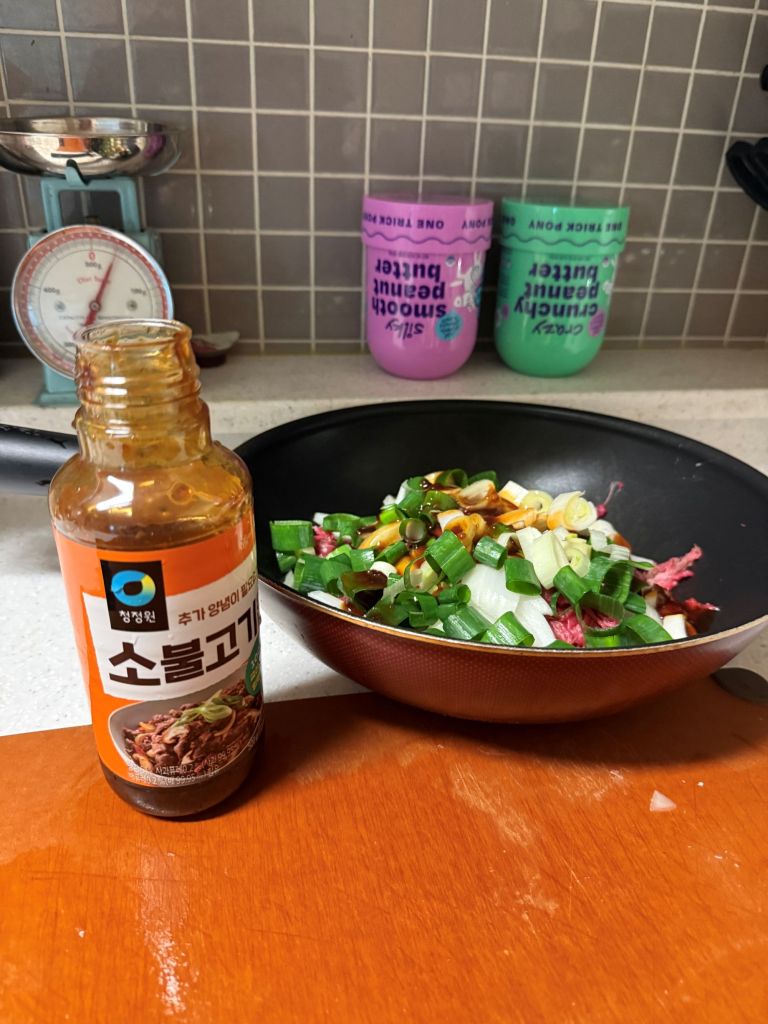


- Prep the Fresh Vegetables:Knife or kitchen scissors — whatever works best!.Thinly slice half an onion to match the texture of the beef, and cut the green onion into easy, bite-sized pieces.
Tip: Keeping the onion slices relatively thin ensures they soften quickly and release their natural sweetness into the broth during the short cooking time! - Combine Everything in One Bowl:Zero fuss, single-bowl technique.In a spacious mixing bowl or directly inside your cooking pan, place the thinly sliced beef along with your prepped onions and green onions.
- Pour a generous amount of your favorite store-bought Bulgogi sauce right over the top. Gently mix or toss with your hands (or tongs) so every strip of beef gets nicely coated in that savory-sweet glaze!
- Simmer & Cook to Perfection:Watch it sizzle on medium-high heat.Set your stove to medium-high heat and let everything cook together! As the pan heats up, the beef will release its rich juices while the vegetables drop their natural moisture, creating a heavenly, bubbling broth naturally. Stir occasionally until the meat is fully cooked through and tender—and you’re done!

Look at how rich and flavorful that broth turns out without adding a single extra drop of water!
The natural sweet juices from the onions combined with the savory beef render a perfectly balanced glaze that pairs like a dream with a crisp basket of fresh lettuce and warm rice!
The Ultimate Upgrade: Chunky Cheonggukjang Stew
Before bringing the food to the table, there’s one non-negotiable step: making the absolute perfect companion stew for Bulgogi!

This is actually an upgraded version of the Doenjang-jjigae (Soybean Paste Stew) that I introduced in my previous post alongside Jeyuk-bokkeum (spicy stir-fried pork)—the legendary soul food of Korean men!
The cooking method is practically identical, but simply adding a spoonful of Cheonggukjang instantly elevates your standard soybean paste stew into a rich, deep Cheonggukjang-jjigae!
💡 What Exactly is Cheonggukjang?
Cheonggukjang (청국장) is a traditional Korean fast-fermented soybean paste.
Unlike regular Doenjang, which is salted and fermented over months or even years, Cheonggukjang is made by fermenting boiled whole soybeans with Bacillus subtilis bacteria at a warm temperature for just 2 to 3 days without added salt.
Because of this rapid, uninhibited fermentation process, the proteins break down intensely into rich amino acids, producing a much stronger, pungent, and funky aroma than standard miso or doenjang.
Honestly, even for many Koreans, that initial scent can feel pretty intense and borderline stinky! ^^
BUT HERE’S THE MAGIC: the moment you taste it, the flavor profile is completely different from its smell! It delivers an unbeatable, hearty, nutty, and savory depth that regular soybean paste just can’t match. savory goodness at its finest!
🌶️ A Note for Korean Cuisine Beginners & Explorers:
- For Beginners: Standard Doenjang-jjigae is more than enough! Feel free to check out my previous post for the basic Doenjang-jjigae recipe and start there.
- For High-Level K-Food Experts: If you feel like tackling the ultimate level of authentic Korean home cooking, simply mix in Cheonggukjang as shown below!
(Note for international readers: While it’s readily available at every grocery store in Korea, it might be tricky to find depending on your local Asian market inventory overseas.)
⚠️ MOST IMPORTANT WARNING: The cooking aroma can be strikingly pungent to unsuspecting neighbors! Make sure your kitchen ventilation is on full blast, and only give this a try if you’re ready for the full olfactory experience!
Deep & Savory Cheonggukjang Stew
Making this deep, comforting stew couldn’t be simpler thanks to a trusty pouch of pre-made stew base! The secret to a perfect bowl lies in letting the dense root vegetables soften first before adding the soft tofu and Cheonggukjang near the end.

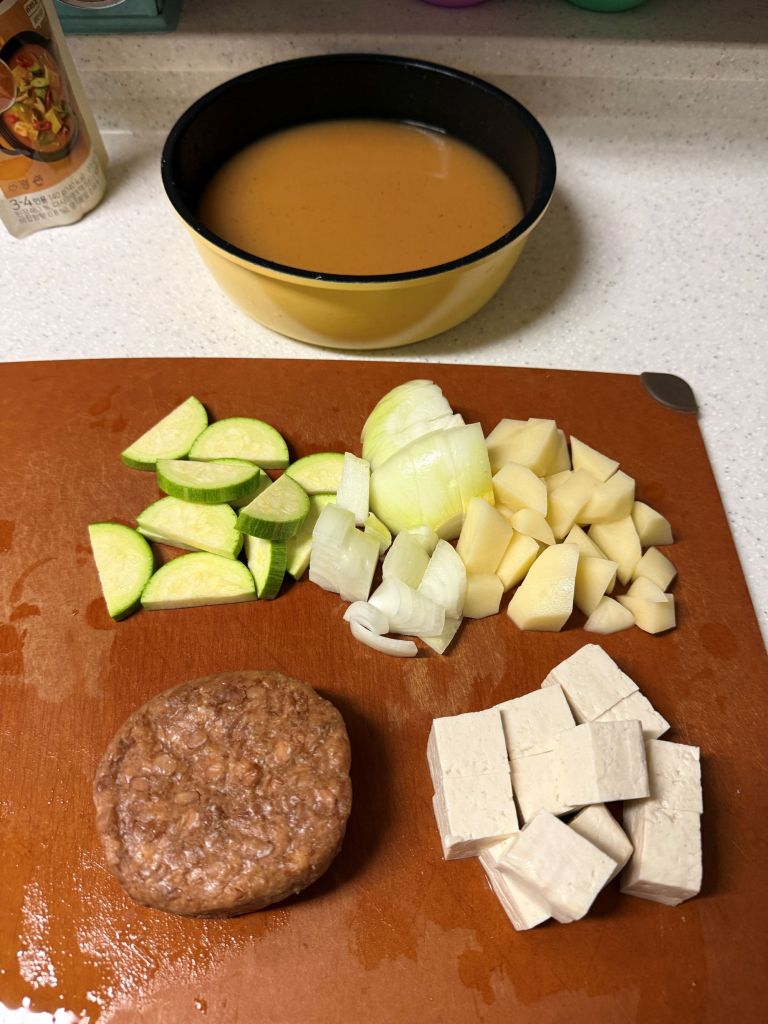
🛒 Ingredients List (2 Servings)
–Commercial Stew Base/Stock Pouch — 1 pouch
–Water — as directed on the pouch
–Potato — 1/2 whole, diced
–Onion — 1/2 whole, diced
–Zucchini — 1/3 whole, diced
–Tofu — 1/2 block, cubed
–Cheonggukjang Paste (청국장) — 1/2 block


- Prep the Vegetables & Tofu:Match the size for even cooking. Dice the potato, onion, zucchini, and tofu into bite-sized cubes.
Tip: Cut the potatoes slightly smaller or thinner than the other vegetables so they cook through quickly without turning the rest to mush!
2. Simmer Stock with Potatoes & Onions: Root vegetables need a head start.Pour your pouch of pre-made stew base and required water into a pot or earthenware bowl.
Add the diced potatoes and onions first, then bring to a boil over medium-high heat until the potatoes begin to soften.
3. Add Zucchini, Tofu & Cheonggukjang: Preserve the fresh texture & probiotics.Once the potatoes are nearly cooked through, toss in the zucchini and cubed tofu.
Finally, scoop in half a block of Cheonggukjang and gently break it apart with your spoon, stirring until it fully dissolves into the broth. Let it simmer gently for another 2 to 3 minutes, and your rich, aromatic stew is complete!

And just like that, our cozy, delicious weekend table is fully set!
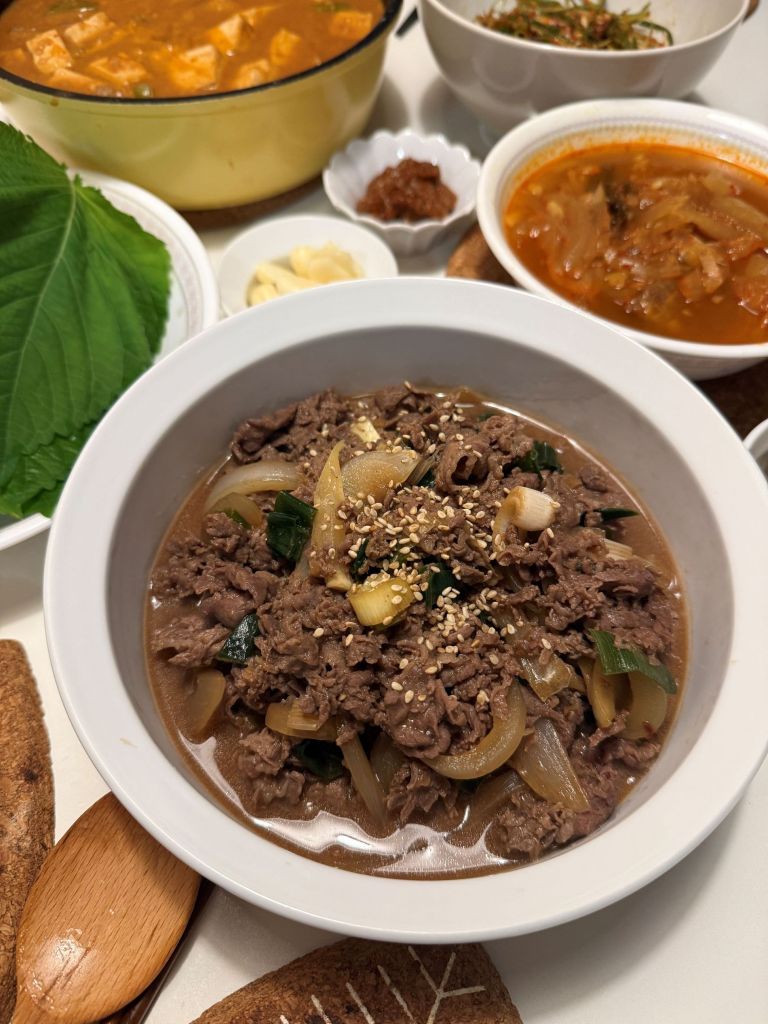
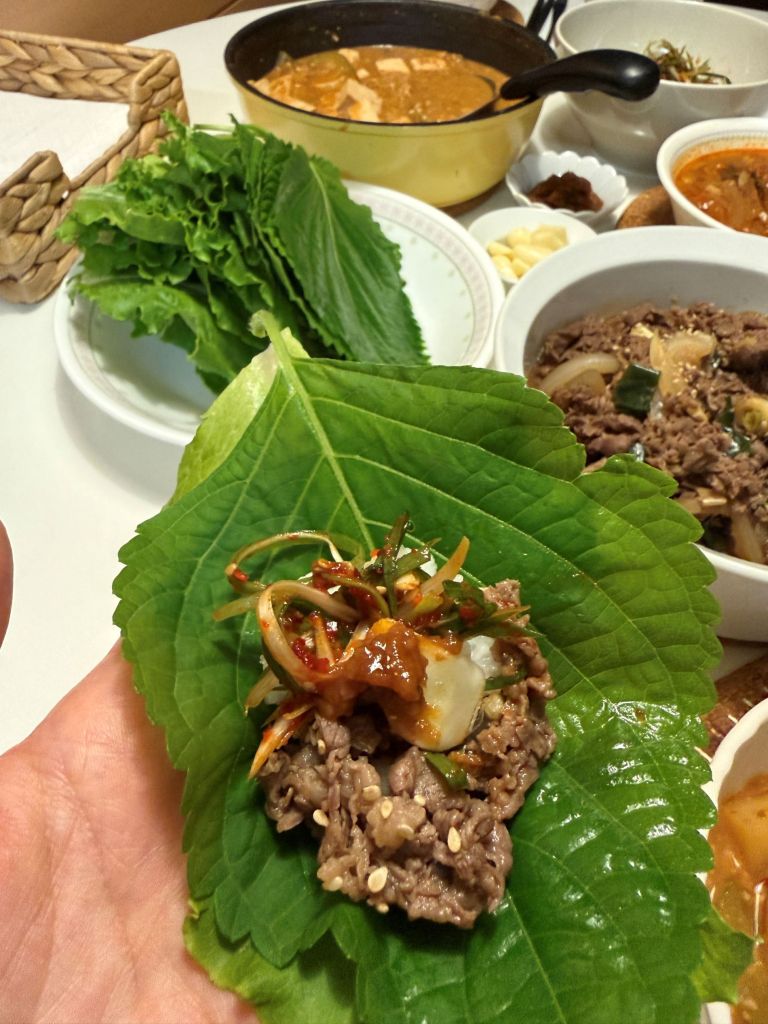
The Ultimate Bite: Perfect Ssam & Deep Stew Pair
Exactly as my husband wished!
Layering fresh lettuce and fragrant perilla leaves, piling on that juicy Bulgogi, and topping it off with zesty green onion salad (pajeori) and a dab of garlic, ssamjang… taking one big, heavenly bite—there is simply no way this couldn’t be delicious!
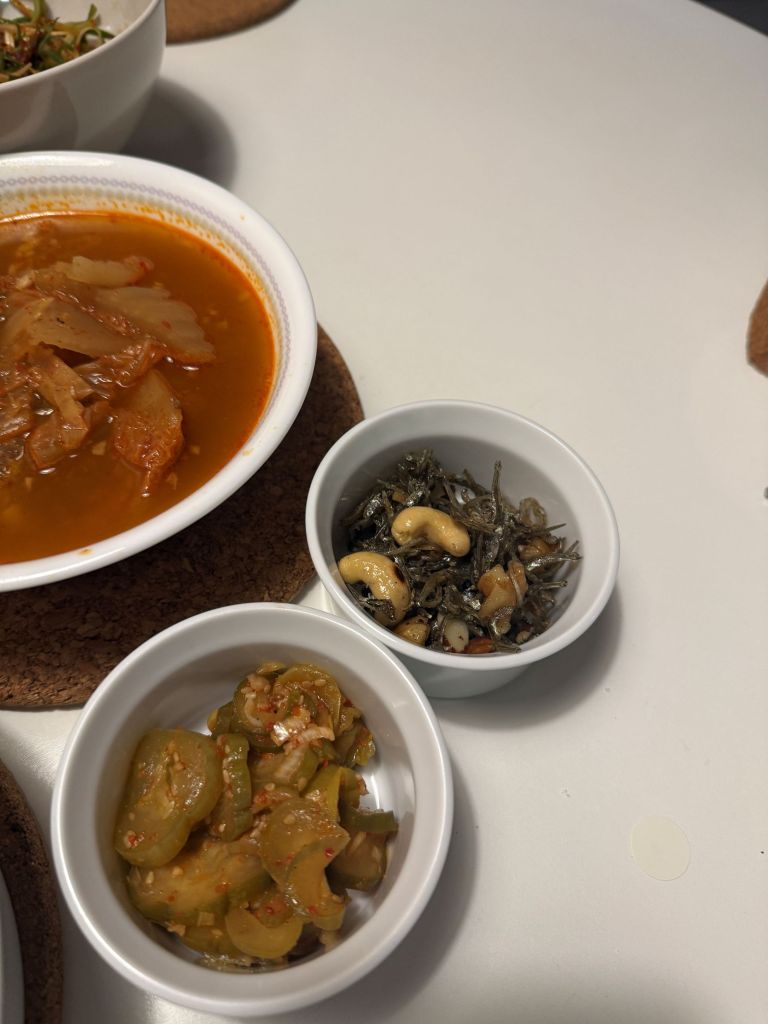
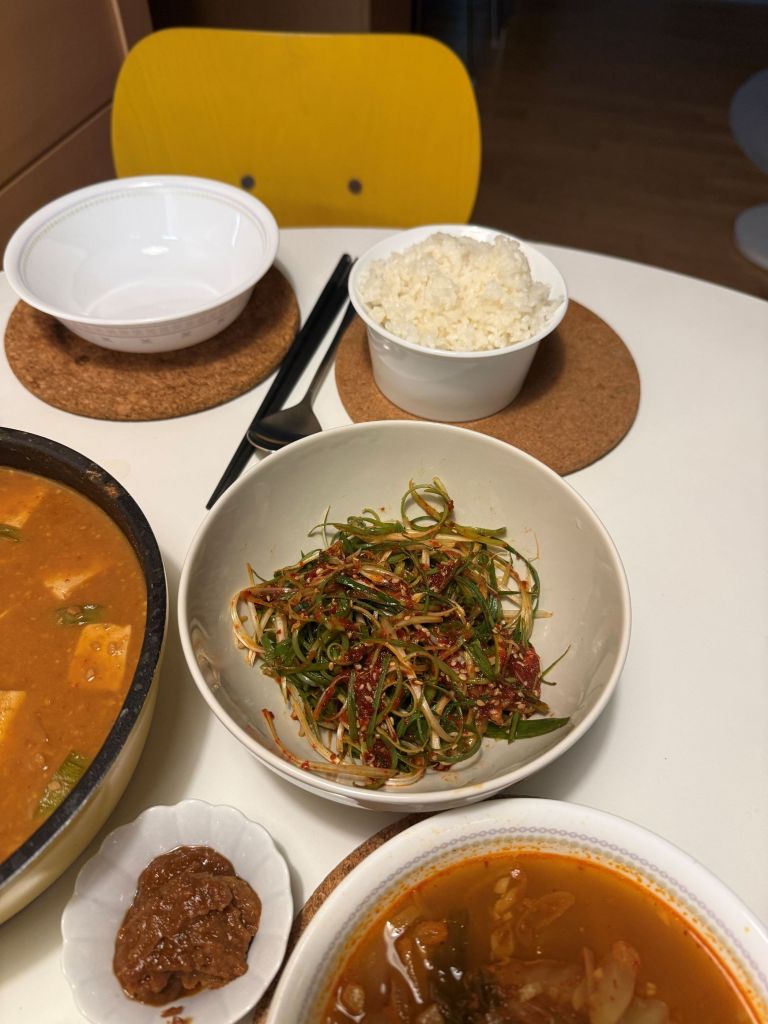
And right when your cheeks are full with that perfect wrap, taking a steaming spoonful of deep, nutty Cheonggukjang stew… honestly, is there any culinary combination greater than this?!
Paired with my absolute favorite green onion salad and an array of simple side dishes, it was a truly satisfying, heartwarming weekend meal.
Easy, Delicious Home Cooking for Everyone
Be sure to try making a convenient, mouthwatering meal using a trusty store-bought sauce! To be completely honest, I’m not a professional chef, nor do I cook overly complex dishes. Leave those intricate, highly technical recipes to the culinary experts out there!
My goal will always be to share simple, stress-free, and approachable ways to enjoy delicious Korean home cooking right in your own kitchen!
📌 Related Easy K-Food Recipes You Might Love
Leave a Reply