Why Do Koreans Crave Hot Soup on Rainy Days?
The last couple of days in Seoul have been filled with a gentle spring rain. After a brief spell of sunny weather, this sudden rain has brought a bit of a chill back to the air. When I met a close friend for lunch, she immediately suggested something warm, so we headed out for a steaming bowl of Mandu-guk (Dumpling Soup).
Have you ever wondered why Koreans instinctively crave hot, bubbling soups or crispy pancakes (Jeon) the moment it starts to rain? Is it just a Korean thing?
Rainy days often come with a drop in temperature and high humidity. In Korea, we say the rain makes your body feel “euseul-euseul” (chilly and achy). A hot bowl of soup helps raise your core body temperature and provides a sense of physical comfort that a cold meal just can’t match.
The Sound of Rain vs. The Sound of Cooking
There’s a famous theory in Korea that the pitter-patter of rain sounds exactly like the sizzling of oil in a pan or the bubbling of a stew. This auditory association triggers our appetite, making us crave those exact sounds in the form of food!


Warmth in a Bowl: Homemade Mandu-guk at Daeyeop
As I mentioned, Daeyeop is famous for its Pyongyang Naengmyeon, but today, my heart was set on something else. Since this place is notorious for long lines—especially during the warmer months—we hurried over right at the opening time, 11:30 AM. It was a smart move! By noon, the place was packed with local office workers seeking shelter and a warm meal from the spring rain.

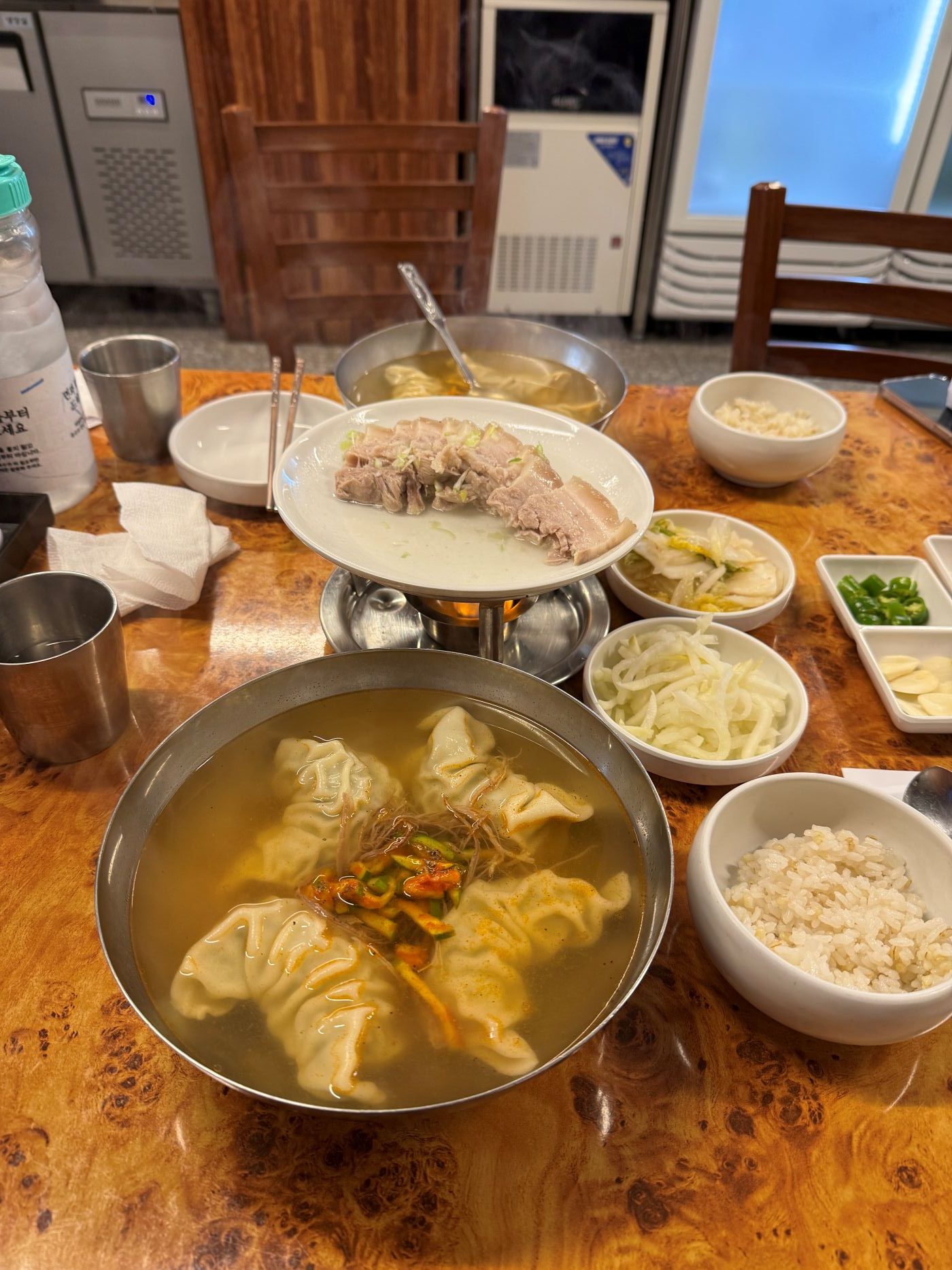
We ordered exactly what we came for: a steaming bowl of Mandu-guk (Dumpling Soup) and a half-portion of Suyuk (Boiled Beef) to share.
The dumplings here are truly special—they are hand-made (Son-mandu) right in the shop. Unlike factory-made dumplings, the skins are thin and delicate, and the filling is incredibly generous. You can really taste the fresh, crunchy vegetables in every bite.
It reminded me of the days when I used to sit at the kitchen table with my mom, wrapping dumplings together. While modern life often leaves me reaching for a convenient bag of “Bibigo” frozen dumplings, nothing can ever truly replicate the nostalgic flavor of a homemade dumpling made with love.

The broth was exceptionally clean and clear, topped with tender, hand-shredded beef tossed in a light red pepper seasoning. That tiny kick of spice was exactly what I needed! As I sipped the hot broth, that “euseul-euseul” chill from the rain simply melted away, replaced by a cozy, pleasant drowsiness. ;)


Perfect Pairings: Sides You Can’t Miss
If you’ve picked your main dish, let me suggest some incredible sides to complete your meal.
Suyuk vs. Jeyuk: What’s the Difference?
Many travelers get confused between these two, but here’s the simple breakdown:
- Suyuk (Boiled Pork/Beef): This is meat boiled in a flavorful broth until tender and then thinly sliced. It has a clean, savory taste.
- Jeyuk (Boiled Pork): While often associated with spicy stir-fry, in traditional cold noodle spots like this, Jeyuk usually refers to boiled pork slices (specifically pork belly or shoulder), whereas Suyuk often refers to beef.
Take a thin slice of meat and top it with a tiny bit of Saeu-jeot (salted shrimp). Then, follow it immediately with a piece of raw garlic or a green chili dipped in Ssamjang (savory soybean paste). The burst of flavors is legendary!
And I personally love the Modeum-jeon (Assorted Pancakes) or the Shrimp Pancakes here. Most restaurants use regular cooking oil, but Daeyeop uses Lard (pork fat). This creates a much deeper, richer, and nuttier aroma that regular oil simply can’t replicate.
If you didn’t choose the dumpling soup as your main, I highly recommend the Mandu-jijim (Pan-fried Dumplings). Imagine those plump, handmade dumplings pan-fried in lard until golden and crispy—it’s the ultimate savory treat!

The Perfect Harmony: Spicy Yukgaejang & Rainy Day Vibes
Looking back at my recommendations, I realized they all have one thing in common: they pair perfectly with Makgeolli (Korean rice wine)! I’m getting hungry just thinking about a cold glass of Makgeolli with those lard-fried dumplings. Haha.
If you’re craving something warm but want to experience that famous Korean spicy kick, I have one last recommendation: Yukgaejang. It’s a hearty, spicy beef soup simmered for hours with shredded beef, scallions, bean sprouts, and gosari (fernbrake). It’s deep, spicy, and incredibly soul-warming.
Actually, I have a special memory of this dish. A pregnant friend of mine was struggling with severe morning sickness and couldn’t eat much. But when she visited me and we went to Daeyeop, she finished an entire bowl of their spicy Yukgaejang! Seeing her eat so well made me so happy and proud. ; )
As a Seongsu office worker, this is my real-life rainy day routine. Usually, on rainy mornings, my first thought is, “I need a warm Café Latte as soon as I get to work!” There’s something so peaceful about watching the rain through a window with a creamy latte in hand.
But today, instead of a latte, I chose to fill my soul with warm broth. Now that our stomachs are full, in my next post, I’ll introduce you to my top 3 favorite latte spots in Seongsu-dong!
I hope this spring rain brings a warm and beautiful weekend for everyone. Have a wonderful one!
From a rainy Seoul, MJay
Leave a Reply